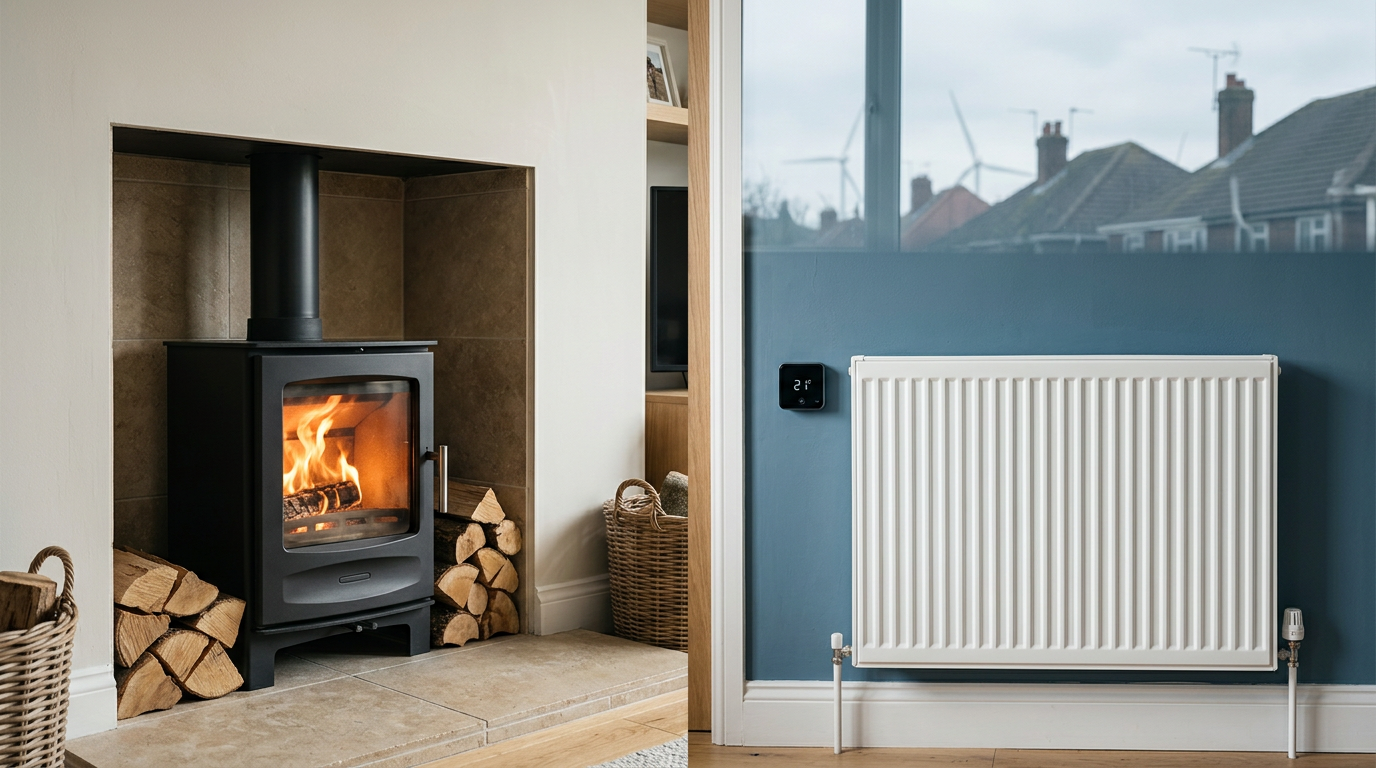
Wood Burning Stove vs Central Heating: 2026 UK Cost Comparison
Updated: May 2026 — Power Guardian UK Editorial Team
Are log burners still cheaper than gas central heating in 2026? Real costs, Defra rules and savings explained. This guide gives you the latest 2026 unit rates, real-world UK examples and a clear bottom line so you can decide what's right for your home.
Current Supplier Watch
Quick answer
Under the April 2026 Ofgem price cap, electricity costs around 27p per kWh and gas around 6.5p per kWh for a typical UK direct-debit customer. Standing charges are about 60p/day for electricity and 31p/day for gas. We use those figures throughout this article — your exact rates will be on your latest bill.
What this article covers
- The 2026 cost numbers that matter
- A like-for-like comparison table for typical UK homes
- The main mistakes households make
- What to do next, step-by-step
- FAQ for the questions we get most often
The 2026 cost numbers that matter
| Item | 2026 figure | Why it matters |
|---|---|---|
| Electricity unit rate | ~27p/kWh | Drives running cost of all electric appliances |
| Gas unit rate | ~6.5p/kWh | Heating and hot water for ~85% of UK homes |
| Electricity standing charge | ~60p/day | You pay this even with zero usage |
| Gas standing charge | ~31p/day | Same — applies to all dual-fuel homes |
| Typical dual fuel bill | ~£1,720/year | Ofgem TDCV 2,700 kWh elec + 11,500 kWh gas |
← Swipe to see more →
These are national averages. Northern Scotland, North Wales and the South West tend to be 5–10% above the average; East Midlands is usually cheapest.
A worked UK example
Take a typical 3-bed semi in the Midlands using 2,700 kWh of electricity and 11,500 kWh of gas a year. At April 2026 cap rates:
- Electricity: 2,700 × £0.27 = £729 + 365 × £0.60 = £219 standing → £948
- Gas: 11,500 × £0.065 = £748 + 365 × £0.31 = £113 standing → £861
- Total: £1,809/year (slightly above the headline because Ofgem uses slightly lower assumed unit rates in its TDCV calc)
The main mistakes UK households make
- Comparing only unit rates — standing charges add over £330/year before you switch on a single light.
- Ignoring the small print — exit fees of £50/fuel are still common on fixed deals in 2026.
- Sticking on the price cap by default — fixed deals from Octopus, EDF and OVO have averaged 4–8% below the cap throughout early 2026.
- Forgetting Warm Home Discount — £150 in 2026 if you're on certain benefits, applied automatically by most suppliers.
- Not submitting meter readings — even smart meters drift; one missed reading can mean a £200 catch-up bill.
What to do next
- Find your latest bill or app and write down your unit rate and standing charge for both fuels.
- Multiply your last 12 months of kWh by the figures above to sanity-check what you'd pay on the cap today.
- Run a comparison on a whole-of-market site (or our bill calculator) and look for a fix at least 3% below your current rate.
- If you're vulnerable, in fuel poverty or on benefits, check the Warm Home Discount and Priority Services Register.
- Submit a meter reading on the day your tariff changes.
How often do UK energy prices change in 2026? The Ofgem price cap is reviewed every 3 months (January, April, July, October). Fixed deals stay the same for the length of your contract — usually 12 or 24 months.
Is the price cap a maximum bill? No — it caps unit rates and standing charges, not your total bill. Use more energy and you pay more.
Should I fix my tariff in 2026? Most independent forecasts (Cornwall Insight, EnAppSys) expect the cap to stay broadly flat through 2026 with mild seasonal moves. A fix gives certainty; the cap gives flexibility. If a fix is 3%+ below the current cap with no exit fees, it's usually worth it.
Recommended Smart Heating Product
Control heating remotely and reduce wasted energy with one of the UK’s most popular smart thermostats.
View on Amazon UKWhere can I get help if I'm struggling? Citizens Advice, your supplier's hardship fund, the Household Support Fund through your council, and the Warm Home Discount. We cover all of these in our fuel poverty guide.
Power Guardian UK independently tracks the price cap, regional unit rates and major suppliers. We don't sell energy and we don't take commission on switches. Data sources: Ofgem, BEIS, Cornwall Insight.
Frequently Asked Questions
What are the typical 2026 unit rates for electricity and gas in the UK?
As of April 2026, under the Ofgem price cap, electricity costs around 27p per kWh and gas is about 6.5p per kWh for direct-debit customers. This does not include standing charges.
How much are the daily standing charges for electricity and gas?
The daily standing charge for typical UK electricity customers is around 60p, and for gas it is approximately 31p. These charges are paid regardless of energy usage.
Recommended Smart Heating Product
Control heating remotely and reduce wasted energy with one of the UK’s most popular smart thermostats.
View on Amazon UKIs a fixed energy deal better than staying on the 2026 price cap?
Independent forecasts suggest the cap will remain broadly flat through 2026. A fixed deal offers certainty, but it's generally only worth considering if it's 3% or more below the current cap and has no exit fees.
What is the Warm Home Discount and who is eligible in 2026?
The Warm Home Discount is a £150 rebate for eligible households in 2026, typically those on certain benefits. Most suppliers apply this discount automatically.
Where can I find help if I'm struggling with energy costs in the UK?
Support is available from Citizens Advice, your energy supplier's hardship fund, the Household Support Fund via your local council, and the Warm Home Discount scheme. You can also consult a detailed fuel poverty guide.
Recommended kit
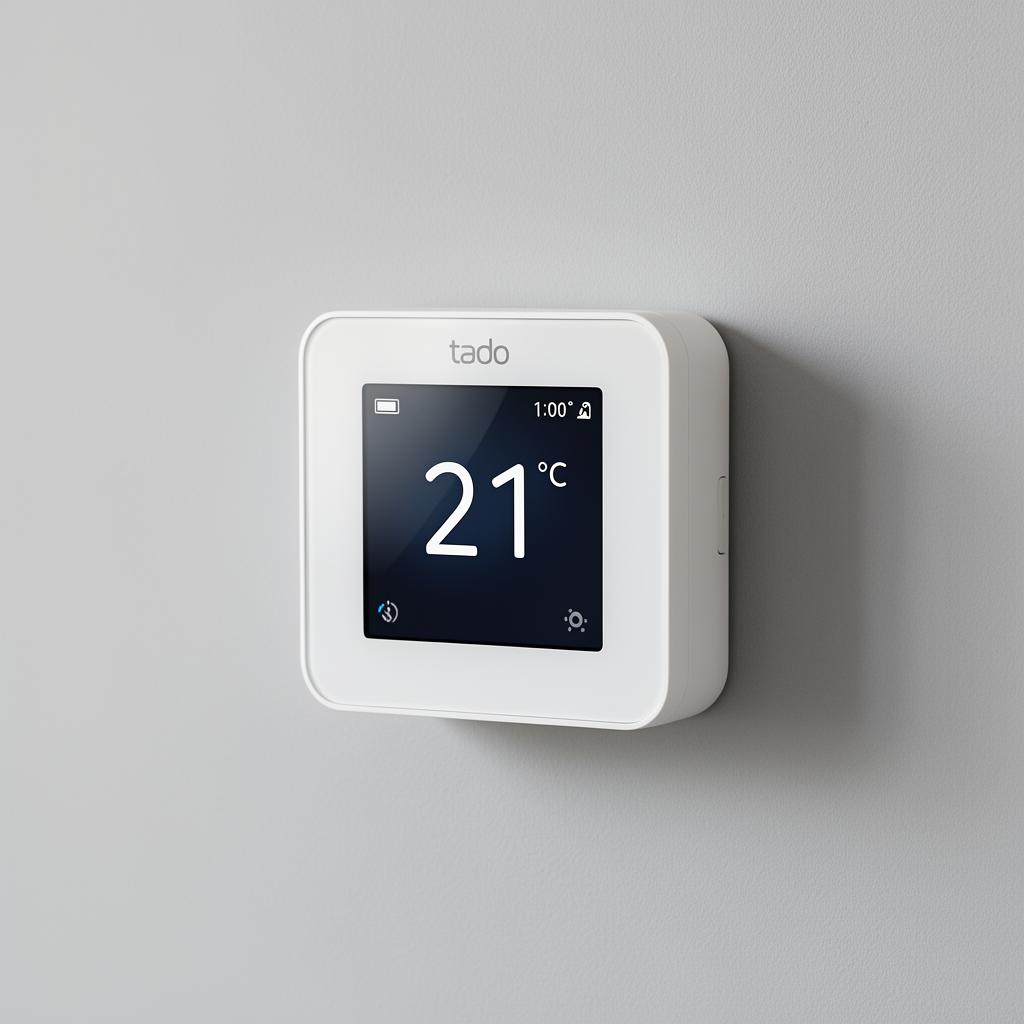
tado Smart Thermostat X
Schedule, zone and remote-control your heating — independently shown to cut heating bills by up to 28%.
Shop on Amazon