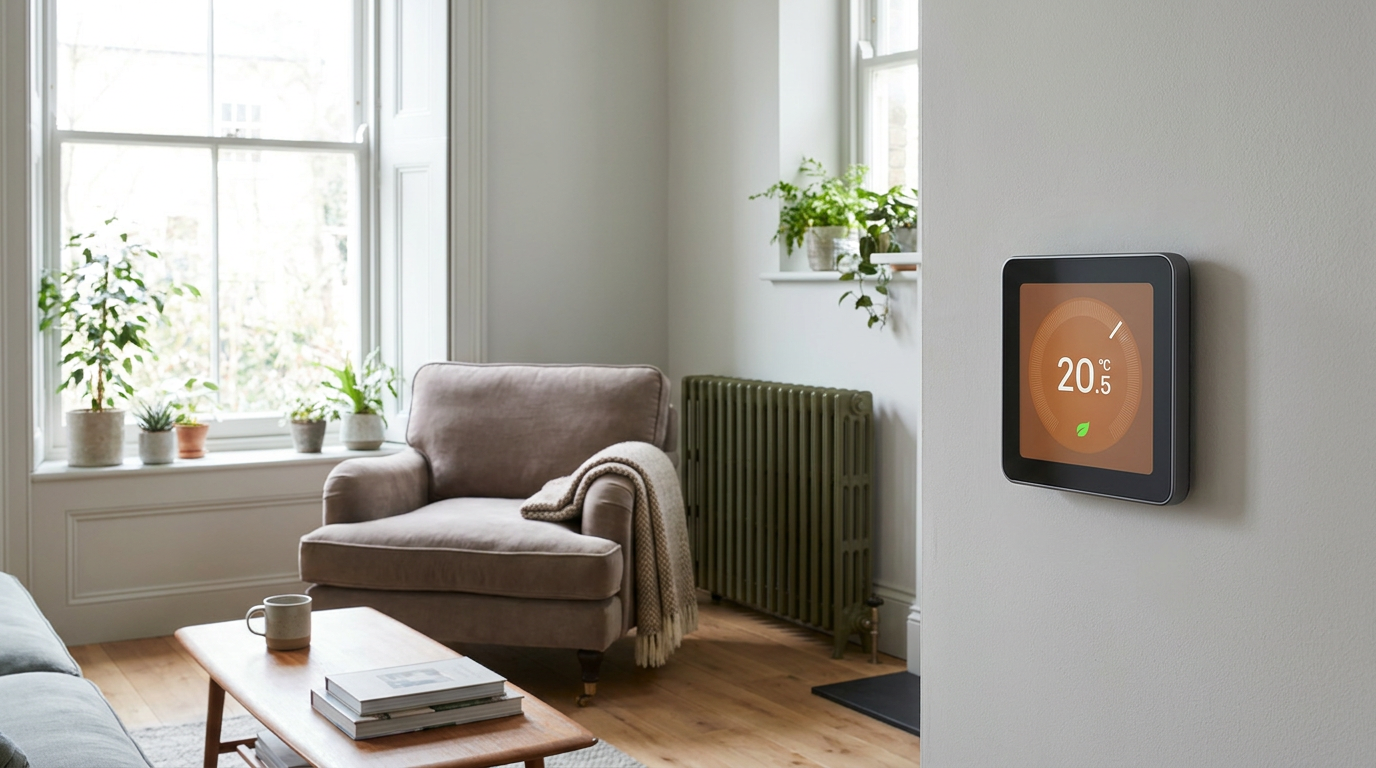
Smart Heating Savings in Real UK Homes
The amount saved depends heavily on:
- Property size
- Insulation quality
- Boiler efficiency
- Existing heating habits
- Household routines
According to the Energy Saving Trust, better heating controls can save many households between £75 and £150 per year depending on the setup and how inefficient the old system was.
In real-world terms:
- A busy family out during the day may save quite a lot
- Someone already careful with heating may save much less
- Larger homes with unused rooms often benefit most
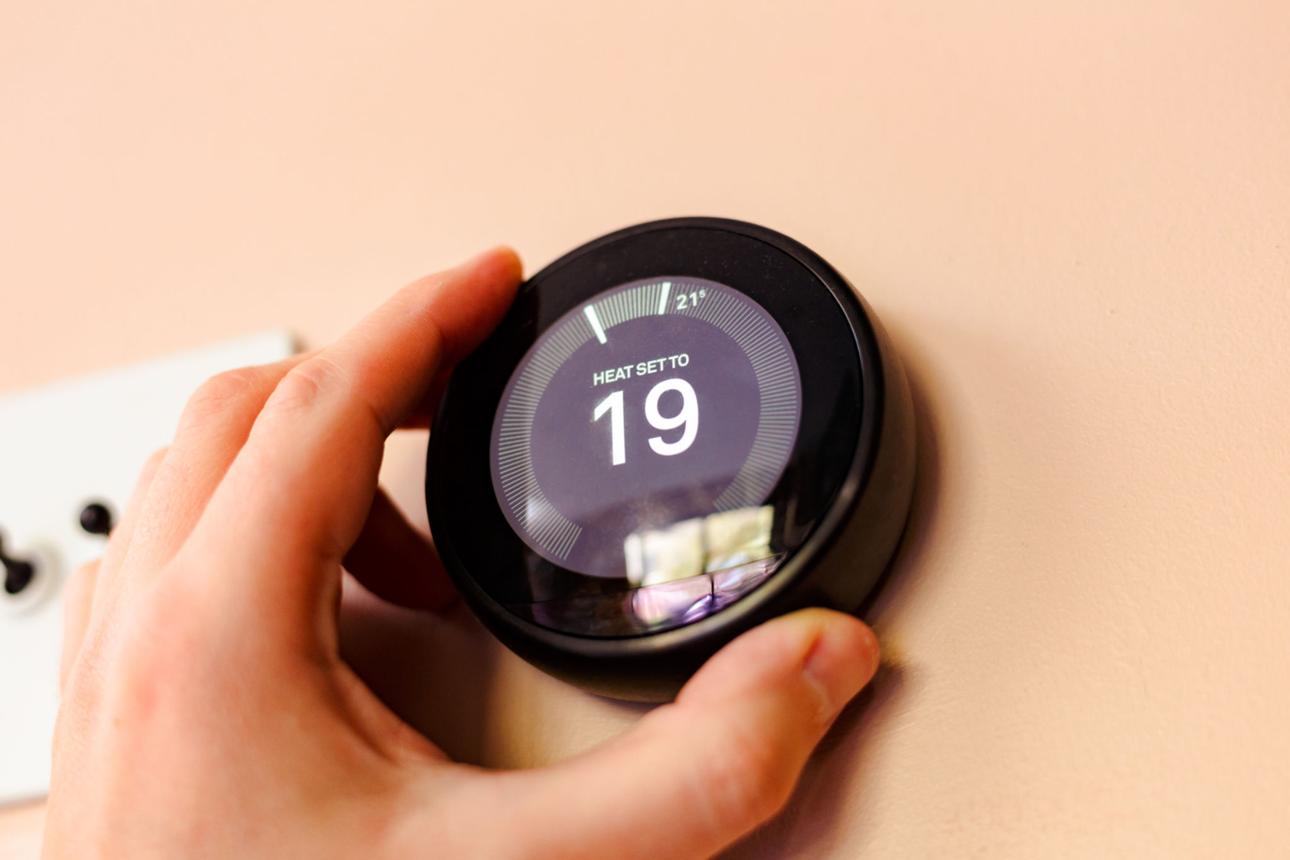
What Smart Heating Actually Does
Smart heating systems usually include:
- Smart thermostats
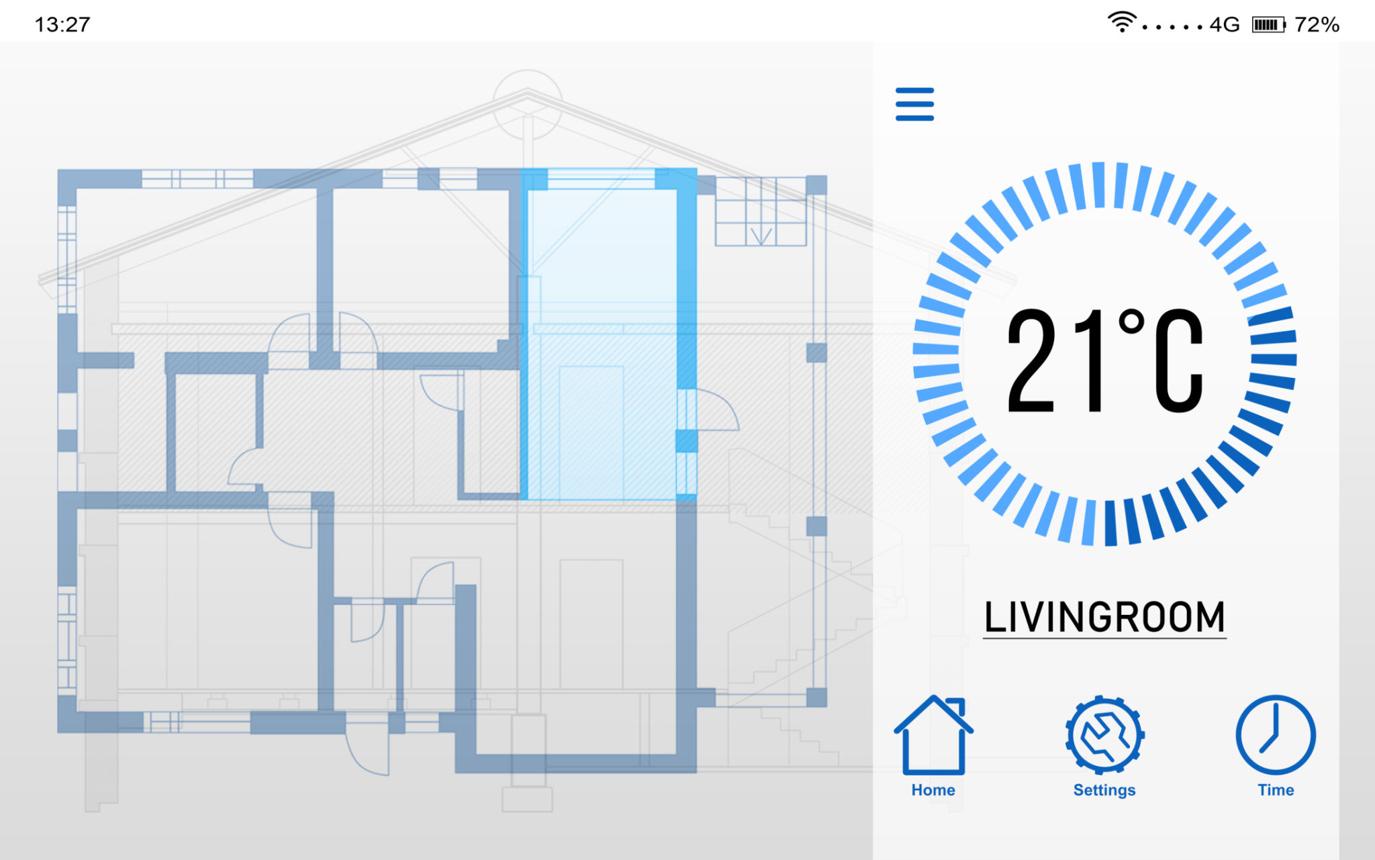
- Smartphone app control
- Programmable schedules
- Smart radiator valves (TRVs)
- Usage monitoring
- Geolocation features
- Weather adjustment features
The main advantage is precision.
Traditional systems often heat:
- The entire house
- Empty rooms
- Homes while nobody is there
- Rooms for longer than necessary
Smart controls reduce that waste.
For example:
Instead of heating the whole house from 6am until 10pm every day, a smart system can lower temperatures automatically when people leave and warm rooms shortly before they return.
People spent decades heating unused spare bedrooms like honoured royal guests. Technology eventually stepped in and quietly suggested this might be financially unwise.
Heating Empty Homes Less
One of the biggest savings comes from not heating empty properties unnecessarily.
Smart systems can:
- Detect when occupants leave
- Reduce heating automatically
- Restart heating before arrival home
This is especially useful for:
- Commuters
- Families with changing schedules
- Hybrid workers
- People who regularly forget timers
Many UK households waste large amounts of energy simply because heating schedules no longer match real life.
Zoned Heating Can Reduce Waste
Smart radiator valves allow individual room control.
Instead of heating every room equally, households can:
- Keep spare bedrooms cooler
- Reduce heating in unused offices
- Lower hallway temperatures
- Heat occupied rooms only
This can make a significant difference in:
- Detached homes
- Larger family houses
- Multi-storey properties
Zoned heating is often where the biggest practical savings happen.
Lowering Temperatures Slightly Saves More Than Most People Realise
Many homes are unintentionally overheated.
Reducing temperatures by just 1°C can noticeably lower heating costs.
A smart thermostat makes this easier because temperatures can automatically change throughout the day rather than relying on manual adjustments.
For example:
- Cooler overnight temperatures
- Warmer evenings
- Lower daytime heating when nobody is home
These small adjustments add up across an entire winter.
When Smart Heating Does Not Save Much Money
Smart heating is not a miracle solution.
Savings may be small if:
- The household already uses heating carefully
- The home is well managed already
- Heating timers are already optimised
- Occupants constantly override schedules
Some households actually use more energy because remote controls encourage extra heating.
This happens surprisingly often.
Humans are capable of turning an energy-saving device into a convenience machine within roughly four business days.
Poor Insulation Still Matters More
Smart heating cannot solve major insulation problems.
If a property has:
- Poor loft insulation
- Single glazing
- Severe draughts
- Uninsulated walls
…heat still escapes quickly regardless of the thermostat.
In many UK homes, insulation improvements save more money than smart controls alone.
The best results usually come from combining:
- Good insulation
- Efficient boilers
- Smart controls
- Sensible heating habits
Smart Heating and Heat Pumps
Smart controls can be particularly useful with heat pumps.
Heat pumps operate most efficiently when temperatures remain steady and controlled carefully.
Modern smart systems can:
- Optimise heating cycles
- Reduce unnecessary demand
- Improve efficiency over time
This matters because poorly managed heat pumps can become expensive if run incorrectly.
Recommended Smart Plug for Reducing Electricity Waste
Smart plugs help identify appliances wasting electricity on standby power and allow remote shutdown using your phone.
Are Smart Thermostats Worth Buying?
Typical UK smart thermostat costs:
- £100 to £250 for hardware
- Additional installation costs if required
Popular systems include:
- Google Nest
- Hive
- Tado
- Drayton Wiser
For many households, payback periods are around:
- 1 to 3 years for heavy heating users
- Longer for already-efficient homes
The convenience factor is often just as important as the savings.
People like:
- Remote control
- Easier scheduling
- Better comfort
- More stable temperatures
Final Verdict
Smart heating can absolutely save money in the UK, particularly for households that:
- Waste heating unintentionally
- Have inconsistent schedules
- Heat unused rooms
- Forget to adjust heating manually
The savings are usually moderate rather than life-changing, but over several years they can become worthwhile.
The biggest gains normally come from:
- Reducing wasted heating
- Zoned room control
- Better scheduling
- Slightly lower temperatures
Smart heating works best when combined with proper insulation and sensible usage.
Because even the smartest thermostat in Britain cannot fully compensate for heating a draughty Victorian house while someone leaves the back door open to "let a bit of fresh air in".
If you are looking to lower your energy bills find practical, affordable kit at Amazon — from smart thermostats and energy monitors to smart plugs and heating controls. Every pick includes the typical benefit for a UK household. See more...
Does smart heating really save money in the UK?
Yes, for most households — typically £75–£150 per year according to the Energy Saving Trust. Savings are largest for homes that previously wasted heat (heating empty rooms, sticking to fixed timers, or running thermostats above 21°C). Already-efficient households see much smaller gains.
How much does a smart thermostat cost to install?
Most popular UK smart thermostats — Google Nest, Hive, Tado and Drayton Wiser — cost £100–£250 for the hardware. Self-install is possible for combi boilers; professional installation typically adds £80–£150 if wiring changes are needed.
Recommended Smart Heating Product
Control heating remotely and reduce wasted energy with one of the UK’s most popular smart thermostats.
View on Amazon UKWhat is the payback period for smart heating?
For heavy heating users in larger or poorly scheduled homes, payback is usually 1–3 years. Households that already heat carefully may take 4+ years to break even on hardware alone, so the convenience factor matters as much as the cash saving.
Do smart heating controls work with a heat pump?
Yes, and they are arguably more important with a heat pump. Heat pumps run most efficiently at steady, low flow temperatures with weather compensation. A smart controller that maintains gentle, continuous heating beats traditional on/off timers for both efficiency and comfort.
Will smart heating save money if my home is poorly insulated?
It helps, but insulation upgrades usually save more. Heat escapes the building regardless of how clever the thermostat is. The best results come from combining loft and cavity-wall insulation, draught-proofing, an efficient boiler or heat pump, and smart controls.
Is it cheaper to leave the heating on low all day?
For most gas-boiler homes, no — heating only when needed is cheaper. The exception is heat pumps, which often work best with longer, gentler runs at lower flow temperatures rather than short blasts of high heat.
Continue with related guides and tools
- What Temperature Should You Set Your Thermostat? UK 2026
- How to Cut Winter Energy Bills in the UK Without Freezing
- Understand boiler running costs
- Estimate boiler running costs
- Explore the Knowledge Centre
Relevant products to compare
Check boiler compatibility, required hubs and installation requirements for heating controls. Heated throws are personal warming options; follow their instructions.
Affiliate links: As an Amazon Associate I earn from qualifying purchases. Check the current Amazon listing and suitability before buying.
Smart Heating Savings Calculator
Estimate annual savings for gas boilers or heat pumps based on your home and habits.
Condensing boiler at ~90% efficiency.
≈ 13,333 kWh/yr of gas at COP 0.9
Typical UK household
Each 1°C drop saves roughly 6% on heating energy.
4 of 8 radiators on smart TRVs across 7 heated rooms → zoning adds about 7.0% extra heating saving.
Estimated annual saving
185
≈ £15/mo · 21% off heating
New annual gas bill
£799
Was £983 · Gas boiler
Payback period
1.0 yrs
On £180 hardware spend
Where your savings come from
Annual £ breakdownEstimates only. Based on Ofgem TDCV gas usage and Energy Saving Trust guidance (~6% per 1°C, ~5% from zoned controls). Real-world savings depend on insulation, boiler efficiency and behaviour.