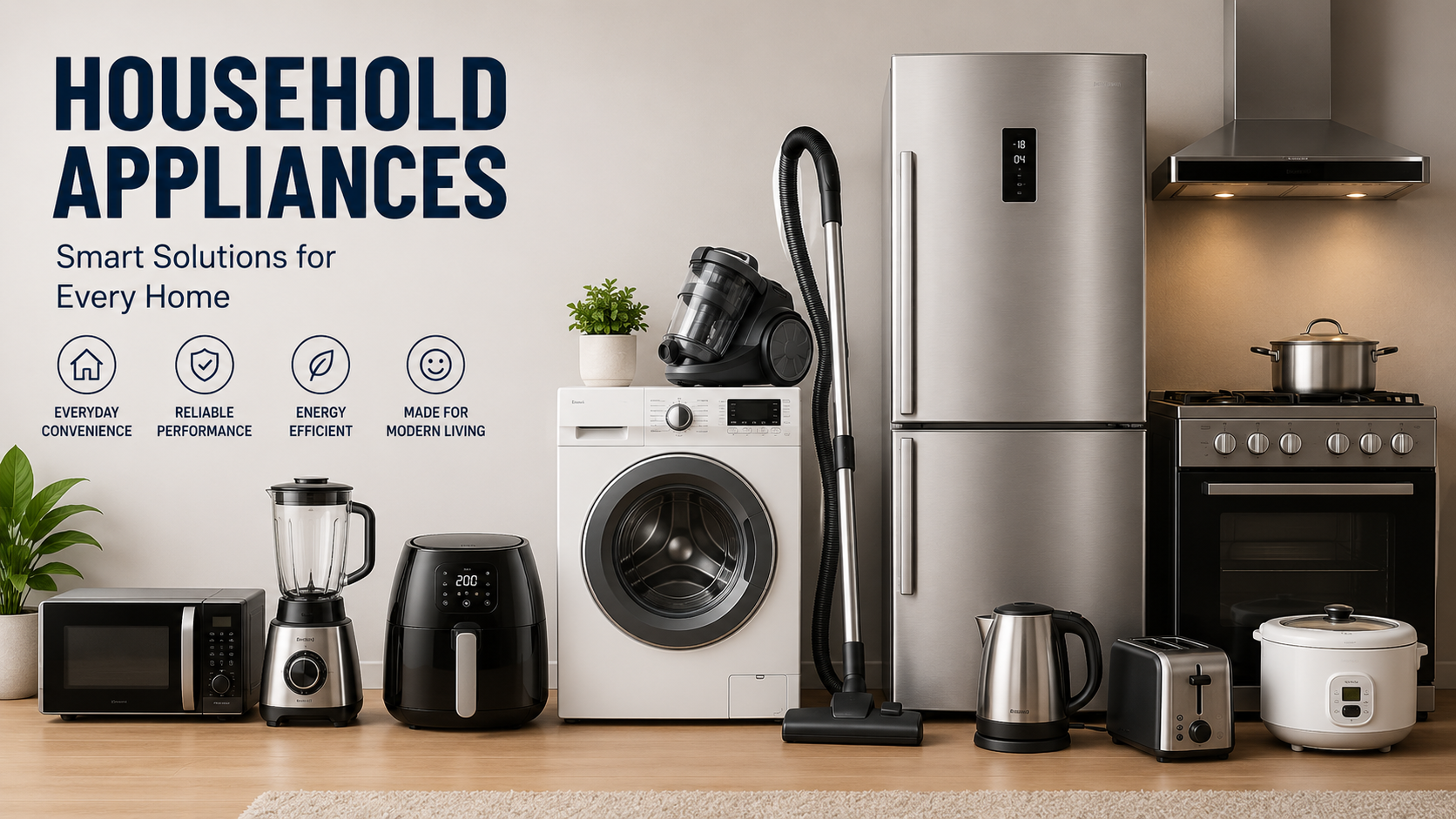
When energy bills go up, most households think first about their supplier and tariff. Those choices matter, but they are only part of the picture. The appliances you use every day, and how you use them, often have a far bigger influence on your electricity costs than the name on your bill.
Understanding which appliances use the most electricity is one of the simplest and most reliable ways to reduce your spending. You do not need to switch supplier or sign a new contract to benefit. A few small changes to how you use high-energy appliances can make a noticeable difference over a year.
This guide explains how appliance running costs work, which household appliances tend to cost the most to run in the UK, and the practical steps you can take to keep those costs under control.
How Appliance Running Costs Work
Working out what an appliance costs to run is simpler than it looks once you understand a few basic terms.
- Watts (W) measure how much power an appliance draws while it is switched on. A higher wattage means the appliance pulls more electricity at any given moment.
- Kilowatts (kW) are simply 1,000 watts. A 2,000W heater is the same as a 2kW heater.
- Kilowatt-hours (kWh) measure how much electricity is used over time. Running a 1kW appliance for one hour uses 1kWh. This is the unit your electricity is billed in.
- Electricity unit rate is the price you pay for each kWh, shown on your bill in pence per kWh. This varies by tariff and region.
- Usage time is how long, and how often, an appliance runs. A high-wattage appliance used briefly can cost less than a lower-wattage appliance left on for hours.
Put simply, your cost depends on three things working together: how much power an appliance uses, how long you run it, and the unit rate you pay. An appliance only costs money while it is actually doing work, so usage time often matters just as much as the wattage on the label.
The Most Expensive Household Appliances To Run
The appliances that tend to cost the most are almost always the ones that turn electricity into heat. Heating water, air or rooms takes a great deal of energy, which is why these appliances sit near the top of most running-cost rankings.
| Appliance | Typical power | Why costs can add up |
|---|---|---|
| Electric heaters | 1,000-3,000W | High power and often run for long periods in winter |
| Tumble dryers | 2,000-3,000W | Long cycles and frequent use, especially in colder months |
| Electric showers | 7,000-10,500W | Very high power, though usually used for short bursts |
| Immersion heaters | around 3,000W | Heating a full tank of water can take a long time |
| Electric ovens | 2,000-3,000W | Long cooking and pre-heating times add up |
| Hot tubs | 1,500-6,000W | Heating and maintaining water temperature runs around the clock |
| Air conditioning units | 1,000-3,000W | Extended use during warm spells |
← Swipe to see more →
Two patterns stand out. First, the most expensive appliances are heat-based. Second, how you use them changes everything. An electric shower has a very high wattage, but a short shower may cost less than a long tumble dryer cycle because of the difference in running time. Your own habits decide how much these appliances really cost.
Tumble Dryer Running Costs
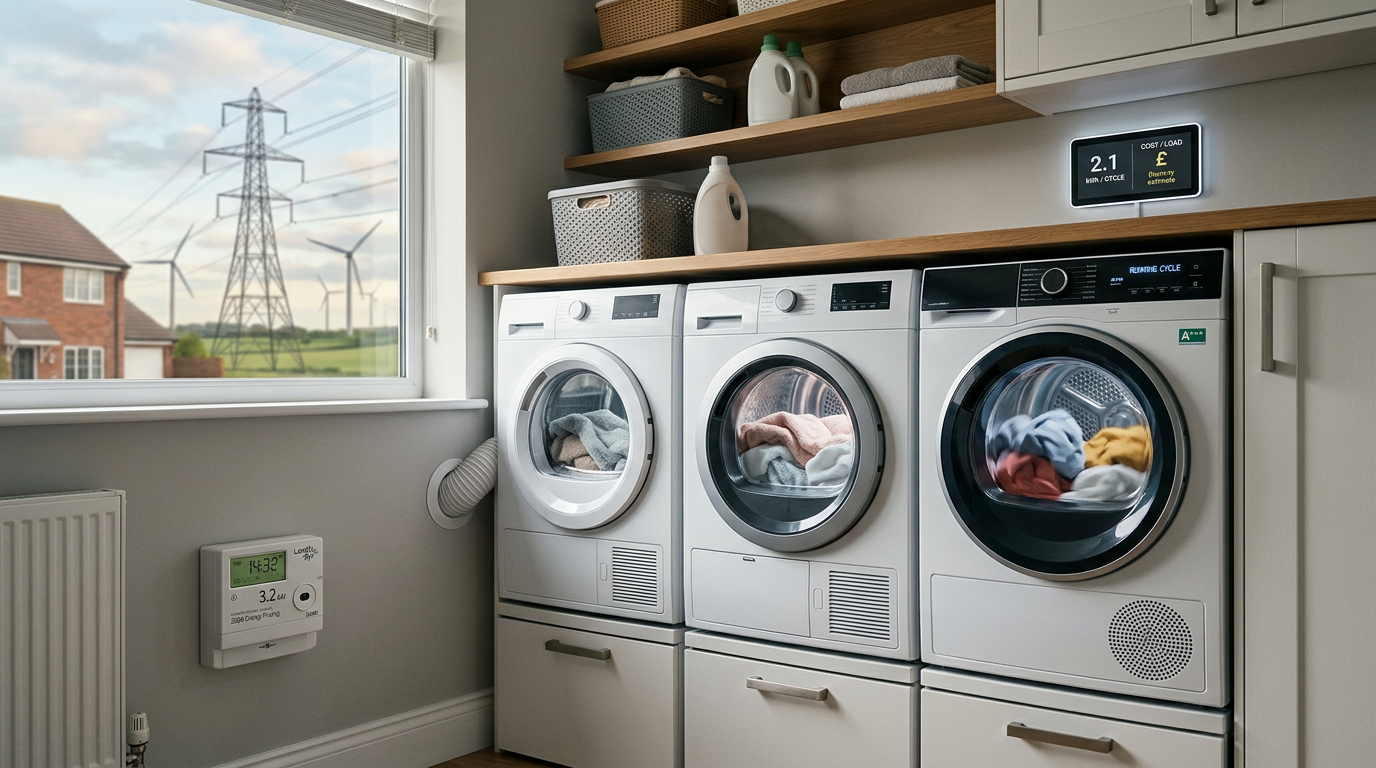
Tumble dryers frequently appear near the top of household energy-use rankings, and it is easy to see why. They combine a high wattage with long running times, and they are often used several times a week.
There is a strong seasonal pattern. In summer, many households dry laundry outdoors or on an airer, so the dryer sits unused. In autumn and winter, when outdoor drying is impractical, usage climbs sharply, and so does the contribution to your bill.
Usage patterns make a big difference. Drying small or part loads, running the dryer when clothes are still very wet, or choosing longer cycles than needed all push costs up. Heat-pump and sensor-equipped models tend to use less energy than older vented dryers, but how often you run a dryer remains the biggest factor.
Electric Heater Running Costs
Electric heaters are among the most expensive appliances to run because they convert electricity directly into heat, and they often run for hours at a time.
Common heater wattages range from around 1,000W for a small panel or fan heater up to 3,000W for a larger convector or oil-filled radiator. The higher the wattage and the longer it runs, the more electricity it uses.
The impact is greatest in winter, when heaters may run for much of the day and evening. Using a high-wattage heater to warm a whole home for long periods is one of the most expensive ways to stay warm. Electric heating can still make sense for short bursts in a single room, but relying on it heavily over a cold season is where costs tend to climb.
Air Fryer Running Costs
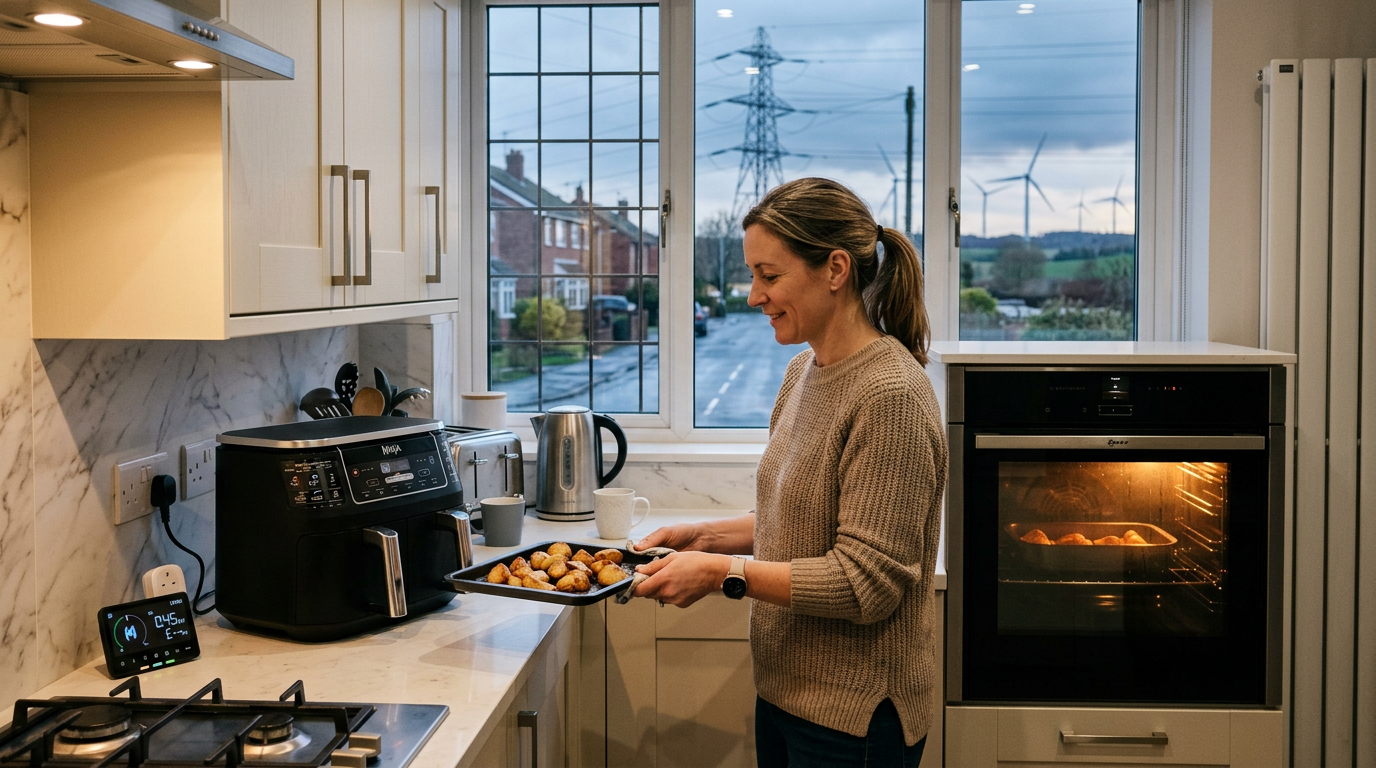
Air fryers have become popular partly because they can be cheaper to run than a large electric oven for everyday cooking. They are smaller, heat up quickly and concentrate that heat around the food.
The key factor is cooking duration. An air fryer typically uses less power than a full-size oven and reaches temperature faster, so for small portions and short cooking times it often uses less electricity overall. Pre-heating a large oven to cook a single item is usually less efficient by comparison.
That said, an air fryer is not automatically cheaper in every situation. For a large meal that fills an oven in one go, a conventional oven can be the more sensible choice. The advantage of an air fryer is clearest for quick, smaller meals where you would otherwise heat a much larger space.
Appliances That Use More Energy Than Most People Realise
Some appliances quietly use more electricity than their size suggests, often because they run for long, uninterrupted periods.
- Dehumidifiers can run for many hours a day, particularly in damp months, so their steady draw adds up over time.
- Heated airers seem modest, but they are frequently left on for long sessions to dry laundry indoors.
- Gaming PCs with powerful components can draw significant power during long gaming or rendering sessions.
- Aquarium heaters run continuously to hold a stable water temperature, day and night.
- Older fridge freezers are far less efficient than modern models, and because they never switch off, that inefficiency repeats every single day.
- Large televisions, especially older or very large screens, use more than smaller, newer sets, particularly when left on in the background.
Current Supplier Watch
Appliances That Are Surprisingly Cheap To Run
It is just as useful to know what costs very little. Worrying about low-energy devices can distract from the appliances that actually matter.
- Laptops use only a small amount of power compared with desktop machines, even over a full working day.
- Mobile phone chargers draw very little electricity, and the cost of charging a phone over a year is tiny.
- Routers use a low, steady amount of power and are generally inexpensive to leave on.
- LED lighting uses a fraction of the electricity of older bulbs, which is why switching to LED is such an easy win.
- Modern televisions are far more efficient than older models, so a newer set used sensibly is rarely a major cost.
Why Usage Habits Matter More Than Appliance Labels
It is tempting to judge an appliance purely by its energy label or wattage, but how you use it usually matters more.
- Frequency of use is decisive. An efficient appliance used constantly can cost more than an inefficient one used rarely.
- Length of use matters just as much. Running any heat-based appliance for hours is where bills grow.
- Household behaviour shapes everything, from how many loads of washing you dry to how long heaters stay on.
- Energy awareness helps you make better day-to-day choices, which often saves more than any single appliance upgrade.
In other words, the label tells you the potential cost, but your habits decide the real one.
Recommended energy saving products
Independently chosen kit that helps UK households cut energy use.
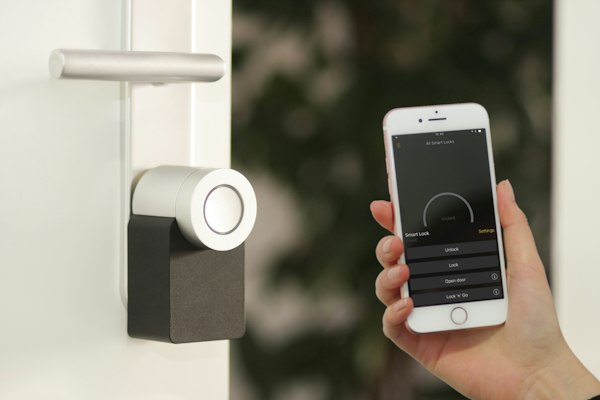
Tapo P110 Smart Plug (Energy Monitoring)
See exactly which appliances are quietly inflating your bill — track real-time watts, kWh and runtime from your phone.
- Real-time energy monitoring
- Cuts standby/vampire power
- Schedule appliances off-peak
Estimated benefit: ~£40/yr standby savings
Shop on Amazon
Home Energy Monitor (Whole-House)
Track your whole-home electricity use live and find where the kWh are going before the bill lands.
- Whole-house live usage
- Spot expensive habits fast
- App history & alerts
Estimated benefit: Awareness cuts ~5-10% use
Shop on Amazon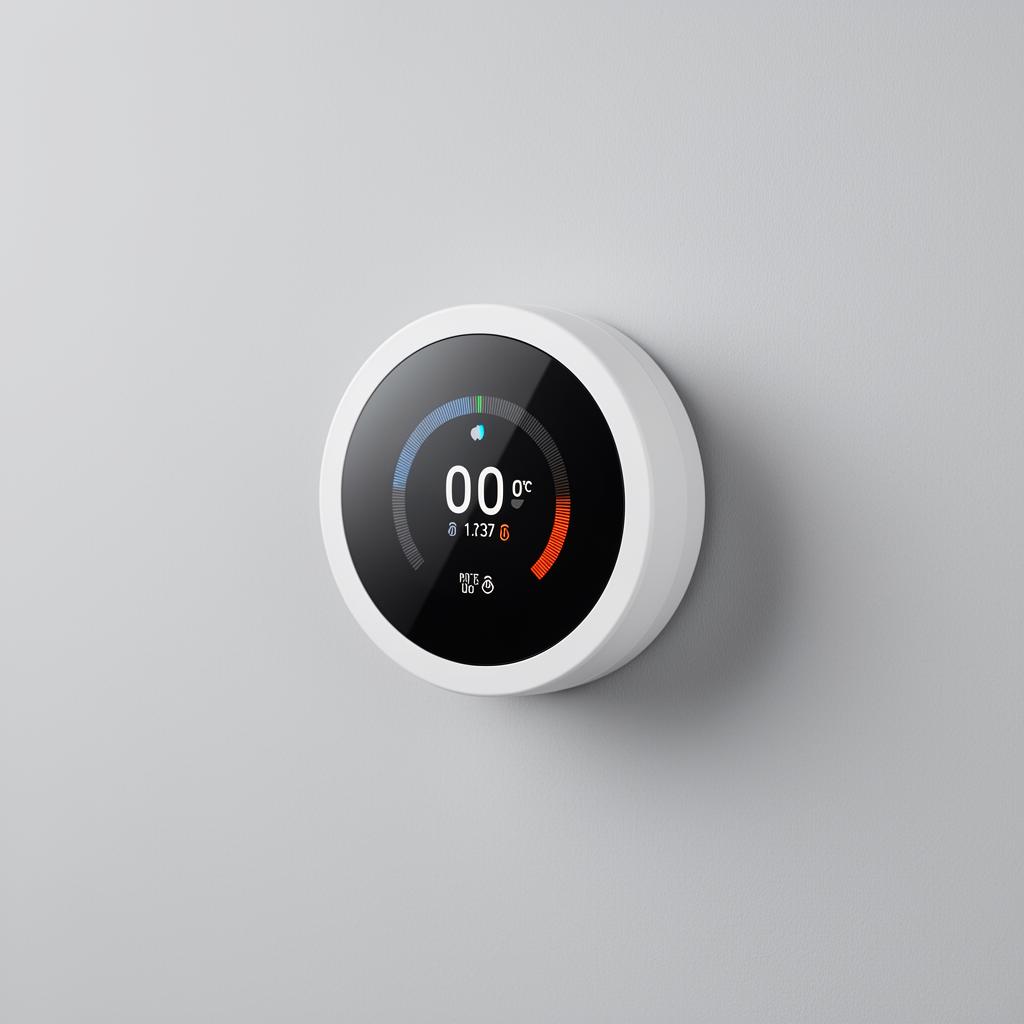
tado Smart Thermostat Starter Kit
Schedule, zone and remote-control your heating — independently shown to cut heating bills meaningfully.
- Heat only when needed
- Geofencing & schedules
- Room-by-room control
Estimated benefit: Up to ~£140/yr
Shop on AmazonAffiliate links — we may earn a small commission at no extra cost to you. This keeps PowerGuardian free and independent.
How To Reduce Appliance Running Costs
You do not need to replace everything to cut your costs. A few practical changes go a long way.
- Run full loads in washing machines, dishwashers and tumble dryers so you make the most of each cycle.
- Keep appliances well maintained, such as cleaning dryer filters and fridge coils, so they work efficiently.
- Use timed or off-peak usage where you have a suitable tariff, running heavier appliances when electricity is cheaper.
- Use a smart meter to see your usage clearly and spot where electricity is going.
- Replace inefficient appliances when they reach the end of their life, prioritising the ones that run most often.
- Monitor your electricity consumption over time so you can see the effect of the changes you make.
Final Thoughts
The most effective way to manage your electricity costs is to focus on high-energy appliances first, especially anything that produces heat. These are where the biggest savings usually sit.
Just as important is understanding your actual usage rather than relying on labels alone. The same appliance can be cheap or expensive depending on how often and how long you use it.
Small improvements add up over time. Drying fewer loads, switching to LED lighting, maintaining your appliances and being mindful of long heating sessions all combine into meaningful savings across a year.
Above all, energy awareness is often more valuable than chasing tiny differences between tariffs. Knowing where your electricity goes puts you in control of your bills.
Related Reading
- How Much Should My Electricity Bill Be?
- Why Are Standing Charges So High?
- Is Economy 7 Still Worth It?
- Should You Switch Energy Supplier Right Now?
Take Control Of Your Energy Costs
Understanding where your electricity is being used is one of the most effective ways to reduce unnecessary spending. PowerGuardian tools and guides can help you make more informed energy decisions. View Energy Guides
Frequently Asked Questions
Which appliance uses the most electricity?
Heat-based appliances generally use the most electricity. Electric showers, immersion heaters, electric heaters, tumble dryers and electric ovens are typically among the highest because heating water, air or rooms takes a large amount of energy. The exact ranking depends on how often and how long each one is used in your home.
Are tumble dryers expensive to run?
Tumble dryers are often one of the more expensive appliances because they combine a high wattage with long cycles and frequent use, especially in autumn and winter. Drying full loads, keeping the filter clean and using outdoor or airer drying when possible all help reduce the cost.
Are air fryers cheaper than ovens?
For small portions and short cooking times, an air fryer is often cheaper to run than a full-size electric oven because it uses less power and heats up quickly. For large meals that fill an oven in one go, a conventional oven can be the more sensible choice, so it depends on what and how much you are cooking.
How much does an electric heater cost to run?
The cost depends on the heater wattage, how long it runs and your electricity unit rate. Common heaters range from around 1,000W to 3,000W, and running a higher-wattage heater for long periods is one of the more expensive ways to heat a home. Using it in short bursts in a single room keeps costs lower than heating a whole house this way.
Which household appliances are cheapest to run?
Low-power devices are the cheapest to run. Laptops, mobile phone chargers, routers, LED lighting and modern energy-efficient televisions all use relatively little electricity, so they rarely make a meaningful difference to your bill compared with heat-based appliances.
Recommended kit
tado X Smart Thermostat
Wireless smart thermostat with app scheduling, multi-room zoning and remote control to help manage your heating efficiently.
Shop on Amazon