Preparing for the Inevitable: A Deep Dive into UK Power Cut Preparedness for 2026
While the UK’s electricity grid is among the most reliable in the world, power cuts are an unavoidable reality. From severe winter storms to industrial maintenance and even localised equipment faults, experiencing a loss of power is not a question of 'if' but 'when'. As senior energy journalists at Power Guardian UK, we've seen first-hand the disruption and, at worst, danger these events can pose. With climate change leading to more extreme weather and an aging grid undergoing significant transformation, proactive preparation is more crucial than ever. This comprehensive guide goes beyond the basics, offering detailed, UK-specific advice to secure your home and family for any power disruption in 2026 and beyond.
Current Supplier Watch
Understanding the UK Grid and Power Cut Realities
The UK’s electricity network is managed by the National Grid ESO (Electricity System Operator) at a high level, but the distribution of electricity to your home is handled by one of 14 regional Distribution Network Operators (DNOs). These DNOs are responsible for maintaining the local overhead lines, underground cables, and substations. When a power cut occurs, it's typically an issue within your DNO's network.
Key UK-Specific Information to Note:
- 105: The National Power Cut Number: This free, easy-to-remember number connects you directly to your DNO, regardless of your electricity supplier. It's your first port of call during an outage.
- Regional DNOs: While you might not know your DNO’s specific name, calling 105 automatically routes you to the correct one based on your landline or mobile location. Examples include UK Power Networks (South East, East of England, London), Scottish Power Energy Networks (Central & Southern Scotland, Merseyside, Cheshire, North Wales), or Northern Powergrid (North East, Yorkshire, Northern Lincolnshire).
- Ofgem's Role: The energy regulator, Ofgem, sets guaranteed standards of performance for DNOs, including compensation for prolonged power cuts. If your power is off for more than 18 hours (or 12 hours in certain severe events), you may be entitled to compensation (e.g., £90 for the first 24 hours, £45 for each additional 12-hour period, up to a maximum of £300, subject to change and specific circumstances). It's vital to keep records of the outage duration.
- Vulnerability Registries: Every DNO maintains a Priority Services Register (PSR). If you or someone in your household is vulnerable – perhaps elderly, disabled, has a long-term medical condition, or relies on medical equipment – register with your DNO. This can entitle you to priority assistance, such as dedicated phone lines, welfare visits, or even alternative heating/cooking facilities during extended outages.
The Comprehensive Emergency Kit: Beyond the Basics
Expanding on our initial recommendations, a truly resilient household needs a more robust emergency kit.
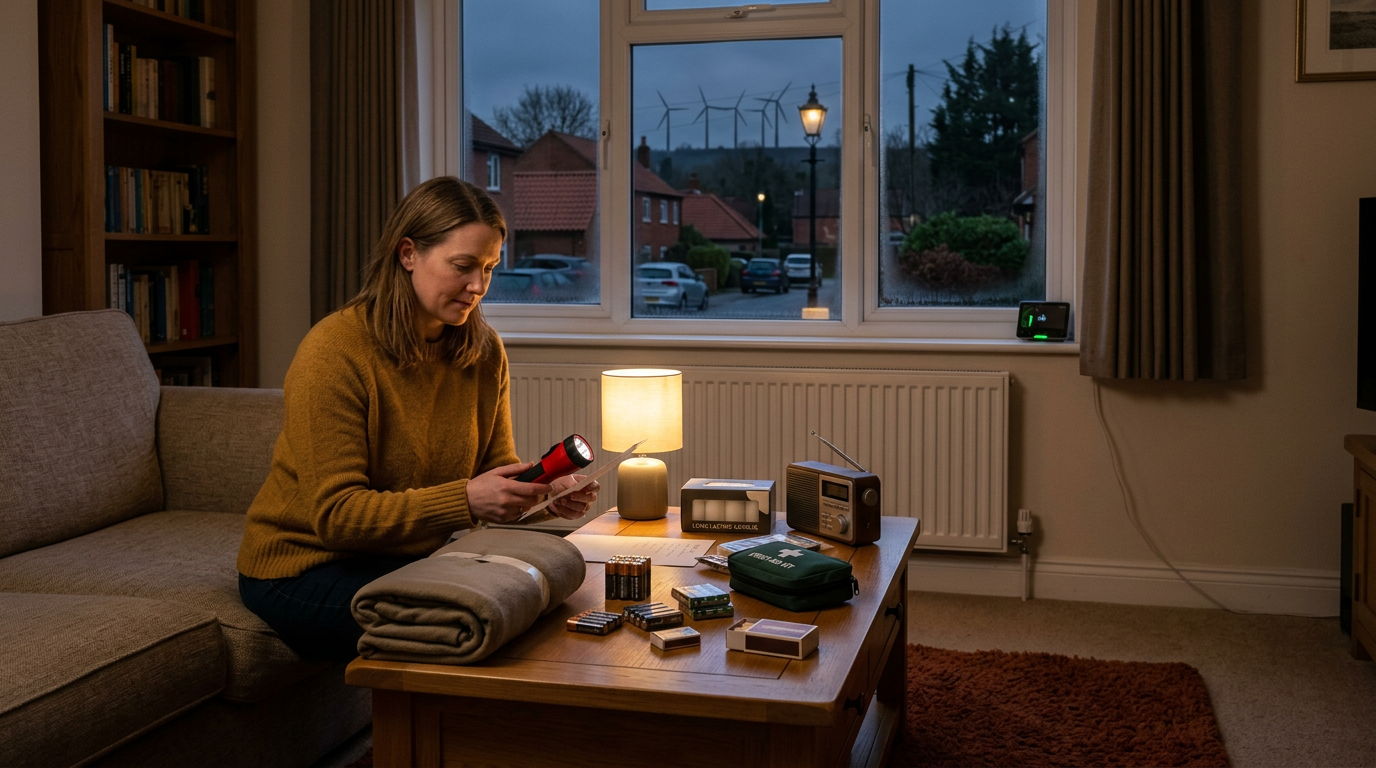
The Power Guardian UK Essential Kit Checklist (2026 Edition)
- Lighting:
- 2 LED Torches + Multiple Spare Batteries (AA/AAA): Crucial. Avoid candles due to significant fire risk, especially in the dark. Rechargeable options are great but require prior charging.
- Head Torch: Frees up your hands for essential tasks.
- Battery-Powered Lantern: Provides ambient light for a room, safer than candles.
- Glow Sticks: Child-friendly, no heat, long-lasting.
- Communication & Information:
- Battery or Wind-Up Radio (DAB/FM): Essential for news, weather updates, and DNO announcements when internet and mobile networks may be down or overwhelmed. Ensure it has a good aerial.
- Power Bank for Mobile Phones (Minimum 20,000 mAh, multiple preferred): A 10,000 mAh power bank might only give one full charge to a modern smartphone. Larger capacity and multiple power banks are vital for family communication over several days. Keep them fully charged.
- Old Push-Button Mobile Phone: With a long-lasting battery, these can be invaluable for emergency calls if smartphones die. Ensure it’s charged.
- Landline Phone (Corded): If you still have a traditional copper landline, a corded phone works without mains power. Digital VoIP phones run through your broadband router and will fail in a power cut.
- Hydration & Nutrition:
- Bottled Water (Minimum 3 litres per person per day for 3 days): Essential for drinking, basic hygiene, and cooking. Tap water systems rely on pumps that cease functioning without power.
- Non-Perishable Food (3-day supply): Canned goods (soups, beans, vegetables, fruit), dried pasta/rice, long-life milk, crackers, energy bars, instant coffee/tea bags. Choose items that don't require cooking if you don't have a backup.
- Manual Can Opener: Crucial for canned goods.
- Camping Stove & Fuel (Propane/Butane): Only for outdoor use or in a very well-ventilated area like a garage with the main door open. Never indoors due to carbon monoxide risk. Allows for simple hot meals and boiling water.
- Warmth & Comfort:
- Warm Layers (Thermals, fleeces, wool socks): Insulation is key. Hypothermia is a serious risk in cold British winters.
- Thermal Blankets/Sleeping Bags: Essential for retaining body heat, especially if central heating is off.
- Hot Water Bottles: Provide comforting warmth.
- Hats, Gloves, Scarves: Vital for retaining body heat, particularly when sleeping.
- First Aid & Hygiene:
- Comprehensive First Aid Kit: Band-aids, antiseptic wipes, pain relievers, any prescription medications you or your family rely on (ensure a week's supply is readily available).
- Hand Sanitiser & Wet Wipes: For personal hygiene when water may be limited.
- Basic Toiletries: Toothbrushes, toothpaste, soap.
- Other Essentials:
- Cash (small denominations): ATMs won't work, and card machines might fail.
- Whistle: To signal for help if needed.
- Copies of Important Documents: Insurance, contacts, identification (stored waterproof).
- Pen and Paper: For notes, messages, or entertainment.
- Entertainment: Books, board games, playing cards – to combat boredom and stress, especially for children.
Comparison of Emergency Lighting Options:
| Feature | LED Torch | Battery Lantern | Head Torch | Glow Sticks | Candles (NOT Recommended) |
|---|---|---|---|---|---|
| Light Output | Focused beam, good range | Diffused, ambient room | Focused, hands-free | Soft glow, limited area | Ambient, flickering |
| Power Source | Batteries | Batteries | Batteries | Chemical reaction | Open flame |
| Safety Risk | Very low | Very low | Very low | Very low | HIGH (Fire/CO) |
| Runtime | Varies by battery/LED | Varies by battery/LED | Varies by battery/LED | 6-12 hours | Short, varies by size |
| Best Use | Navigating, direct light | General room illumination | Hands-on tasks | Nightlights, children | *AVOID* |
← Swipe to see more →
Practical Guidance During an Outage in the UK
When the lights go out, a calm and methodical approach is crucial.
- Immediate Safety Check and Contact:
Recommended Backup Power Station
Portable backup power for home working, emergency charging and energy resilience during outages.
View on Amazon UK- Maintaining Comfort and Safety:
- Post-Outage Actions:
What NOT to Do: Critical Safety Warnings
Our "Don't" list is non-negotiable. These actions carry significant risks to life and limb.
- DON'T Run a Petrol Generator Indoors: This is a leading cause of carbon monoxide poisoning fatalities. Generators produce carbon monoxide (CO), a colourless, odourless, tasteless gas that displaces oxygen in your blood. Even in a garage, this is extremely dangerous. Generators must be used outdoors in well-ventilated areas, away from windows and doors, and never in the rain.
- DON'T Use a Gas Hob to Heat the Room: Gas hobs are designed for cooking, not space heating. Using them for prolonged periods can quickly deplete oxygen and produce dangerous levels of carbon monoxide.
- DON'T Open Windows Unless Ventilating Combustion Appliances: Opening windows lets heat out and cold air in, making your home colder. Only open them if you're ventilating a safe, approved combustion appliance (like a fireplace) or airing out after a CO alarm.
- DON'T Tamper with Main Fuse Boxes or Electrical Equipment: Unless you are a qualified electrician, leave electrical repairs to the DNO. There's a severe risk of electrocution.
- DON'T Ignore Carbon Monoxide Alarms: These devices are lifesavers. Ensure you have at least one in every room with a combustion appliance (fireplace, gas boiler) and on each level of your home. Test them regularly.
Energy Costs & Power Cuts: A Financial Consideration
While power cuts mean less electricity consumed, the financial impact can be indirect. UK householders are acutely aware of electricity prices, especially with the Ofgem price cap. For Q3 2024 (July-September), the typical unit rate is around 22.36p/kWh for electricity and 5.48p/kWh for gas (standing charges apply). A prolonged outage, especially in winter, can necessitate alternative heating or cooking methods that might incur unexpected costs (e.g., buying a camping stove, extra blankets, or more bottled water) or lead to food spoilage. Being prepared reduces these ancillary financial burdens.
Conclusion: Resilience Through Preparation
The UK’s commitment to energy security is unwavering, but power cuts remain a possibility. As we navigate 2026, with an evolving energy landscape and unpredictable weather patterns, a well-stocked emergency kit and a clear understanding of safety protocols are your best defence. By taking these comprehensive steps, informed by Power Guardian UK's expertise, you can transform a potentially stressful and dangerous situation into a manageable inconvenience, protecting your home and, more importantly, your loved ones. Don't wait for the lights to go out; prepare today.
FAQ
Q1: How likely is a widespread power cut across the UK? A1: While local power cuts are relatively common due to weather or faults, widespread national blackouts are extremely rare, thanks to sophisticated grid management by National Grid ESO. The UK has robust systems to balance supply and demand. However, localised severe weather events (e.g., Storm Arwen in 2021) can affect hundreds of thousands of homes across a broad region for extended periods.
Q2: What should I do if a family member relies on life support equipment? A2: If someone in your household relies on critical medical equipment, immediately register them on your Distribution Network Operator's (DNO) Priority Services Register (PSR). Your DNO will provide priority support, including welfare checks and information. You should also have an emergency plan with your medical provider and backup power solutions (e.g., UPS, charged medical devices).
Q3: Can I get compensation if my power is off for a long time? A3: Yes, under Ofgem's guaranteed standards. If your electricity supply is interrupted for 18 continuous hours (or 12 hours in severe weather events), you're typically entitled to compensation. The exact amounts and rules can vary, so check your DNO's website or contact them via 105 for the latest details. You usually don't need to claim; your DNO should contact you.
Q4: My internet is down with the power cut. How do I get updates? A4: Your internet router relies on mains power, so it will stop working. This is why a battery or wind-up radio is an essential item. Tune into local news channels for updates from your DNO, who will communicate through local media. Your mobile phone might still work if the mobile masts have backup power, but don't rely on it for prolonged periods.
Q5: Is it safe to use a gas oven in a power cut? A5: Most modern gas ovens require an electric ignition to light and a gas cut-off safety valve that is electrically operated. This means they generally won't work in a power cut. Even older models with pilot lights, while they might technically produce heat, are not designed for room heating and pose significant carbon monoxide risks if ventilation is poor. Avoid using any gas appliances for heating your home during a power cut.
Q6: How can I check my DNO's power cut status online if my phone has battery? A6: Most DNOs have an online power cut map or live status checker on their website. If your mobile phone has battery and network signal, you can often check for updates there. For example, UK Power Networks, Scottish Power Energy Networks, and Northern Powergrid all maintain such systems. These can also show estimated restoration times.
What's the best number to call if I have a power cut in the UK?
You should call 105. This free, easy-to-remember number connects you directly to your Distribution Network Operator (DNO), regardless of your energy supplier. It's your first point of contact during an outage.
Am I entitled to compensation if my power is off for a long time?
Yes, Ofgem sets guaranteed standards for DNOs, including compensation for prolonged outages. If your power is off for more than 18 hours (or 12 hours in severe events), you may be entitled to £90 for the first 24 hours. Keep records of the outage duration.
How can I get priority assistance during a power cut if I'm vulnerable?
You should register with your Distribution Network Operator (DNO) on their Priority Services Register (PSR). This can entitle you to priority assistance like dedicated phone lines, welfare visits, or alternative heating facilities during extended outages.
What are some safer alternatives to candles for lighting during a power cut?
Safer alternatives include LED torches with spare batteries, head torches, and battery-powered lanterns. Glow sticks are also a child-friendly option that provides light without heat.
Will my landline phone still work during a power cut?
If you have a traditional corded landline phone running on a copper line, it should still work without mains power. However, digital VoIP phones that rely on your broadband router will not function during a power cut.
Recommended kit
Door Bottom Draught Excluder
Block cold draughts under exterior doors — one of the cheapest wins for cutting winter heating loss.
Shop on Amazon