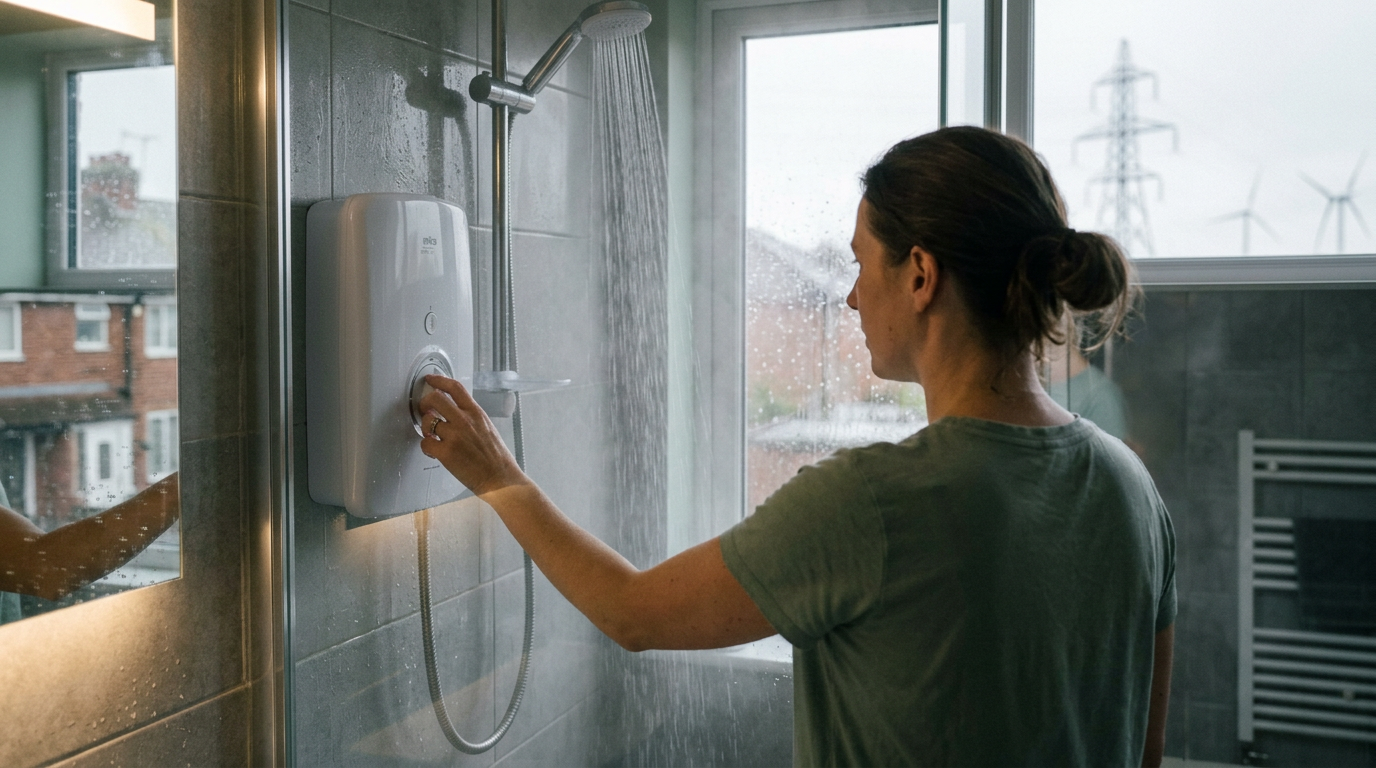
How Much Does an Electric Shower Really Cost to Run in the UK? A Deep Dive for 2026
The humble electric shower, a staple in many UK homes, offers instant hot water on demand. Convenient, yes, but also a stealthy energy guzzler often overlooked in household budget planning. Here at Power Guardian UK, we're dedicated to shedding light on these hidden costs. Our initial analysis hinted at its significant power consumption, often eclipsing even your oven. Now, let’s peel back the layers and provide a comprehensive, UK-specific breakdown for 2026, offering actionable advice to trim those steamy bills.
The reality is stark: a daily electric shower can add hundreds of pounds to your annual energy expenditure. Understanding the "how and why" is the first step towards smarter energy use.
The Power Behind the Pressure: Understanding kW
An electric shower doesn't just heat water; it rapidly heats water. This requires a substantial amount of electrical power, measured in kilowatts (kW). Unlike a gas combi boiler which heats water in a tank or on demand using gas, an electric shower has internal heating elements that directly warm the cold mains water as it passes through. This process is energy-intensive.
Most common electric showers sold in the UK range from 7.5kW to 10.5kW, with some high-power models reaching 12kW or more. A higher kW rating generally means a faster flow rate of hot water, but it also means proportionally higher energy consumption.
The Calculation: kWh and the Ofgem Price Cap for 2026
To calculate the cost, we need to understand kilovatt-hours (kWh) and the unit rate for electricity.
- Kilowatt-hour (kWh): This is the standard unit of energy consumption. If a 1kW appliance runs for one hour, it uses 1 kWh.
- Unit Rate: This is the price your energy supplier charges for each kWh of electricity you consume. This rate is heavily influenced by the Ofgem (Office of Gas and Electricity Markets) price cap.
While predicting the exact Ofgem price cap for late 2026 is challenging, our analysis for this blog post assumes an average electricity unit rate of 24p/kWh. This figure is a projection based on current market trends and future energy forecasts, and it's prudent for consumers to budget with this in mind, given the volatility of global energy markets. For context, the Ofgem price cap in January-March 2024 was set at 28.62p/kWh, with predictions for it to fluctuate. Our 24p/kWh is an optimistic but plausible scenario for the target year.
Let's break down the calculation for a single shower:
Energy (kWh) = Power (kW) × Duration (hours) Cost = Energy (kWh) × Unit Rate (£/kWh)
So, for a 9.5kW shower running for 10 minutes (0.1667 hours): Energy = 9.5 kW × 0.1667 hours = 1.58 kWh Cost = 1.58 kWh × £0.24/kWh = £0.3792 (approx. 38p)
Your Shower's Real Cost: A Detailed Breakdown for 2026
Based on our projected 24p/kWh unit rate, here's a more granular look at the costs associated with different shower powers and durations, along with the cumulative annual impact for a single daily shower.
| Shower Power (kW) | 5-Minute Shower Cost | 10-Minute Shower Cost | 15-Minute Shower Cost | Annual Cost (1x 10-min shower/day) | Annual Cost (2x 10-min showers/day) |
|---|---|---|---|---|---|
| 7.5 kW | 15p | 30p | 45p | £109.50 | £219.00 |
| 8.5 kW | 17p | 34p | 51p | £124.10 | £248.20 |
| 9.5 kW | 19p | 38p | 57p | £138.70 | £277.40 |
| 10.5 kW | 21p | 42p | 63p | £153.30 | £306.60 |
| 12.0 kW | 24p | 48p | 72p | £175.20 | £350.40 |
← Swipe to see more →
Assumptions: Electricity unit rate of 24p/kWh. Annual costs are based on 365 days of showering.
As you can see, even a slightly more powerful shower or an extra five minutes under the spray can add significantly to your annual bill. For a family of four, each taking a 10-minute shower daily, the annual cost using a 9.5kW shower could be £554.80 – a substantial household expense.
Practical Steps to Significantly Cut Your Electric Shower Costs
Understanding the cost is just the beginning. The good news is there are several straightforward, practical steps you can take to dramatically reduce your electric shower expenditure.
- Invest in an Eco Shower Head (The Game Changer)
This is arguably the most impactful change you can make. How it works:* Eco shower heads, also known as low-flow or aerating shower heads, restrict the water flow rate without compromising the feeling of pressure. They often achieve this by mixing air with the water, creating larger, softer droplets. UK Example:* Many major retailers (B&Q, Amazon UK, Screwfix) offer a wide range of eco shower heads from brands like Mira, Grohe, and Triton. Look for models with flow rates of 6-8 litres per minute (LPM), compared to standard heads that can push out 12-15 LPM. Step-by-step guidance:* 1. Check your current flow: Place a bucket under your current shower and time how long it takes to fill 1 litre (or 10 litres for more accuracy). Divide the volume by the time to get LPM. 2. Research: Look for eco heads compatible with electric showers. Some electric showers have specific head requirements, so check your shower unit's manual. 3. Installation: Most eco shower heads simply screw on to your existing shower hose. No plumber usually required! Savings: As mentioned, these can cut flow by 40%. For a single person taking a 10-minute, 9.5kW shower daily, this could save approximately £55 per year* (40% of £138.70). For a family, this scales up significantly.
- Embrace Shorter Showers (Every Minute Counts)
This is the most direct way to save: less time, less energy. How it works:* Simply reducing your time under the spray. Step-by-step guidance:* 1. Set a timer: Use a waterproof timer, your phone, or even a specific song to limit shower duration. Aim for a 5-minute shower challenge. 2. Efficiency: Wash your hair and body actively, rather than prolonged standing under the spray. 3. Family Challenge: Make it a family game to see who can take the shortest effective shower. Savings: Every minute saved from a 10-minute, 9.5kW shower saves around £13.87 per year per person (approx. £0.19 saving for 5 mins / 365 days). If you cut your daily shower from 10 minutes to 5 minutes, that's almost £70 annually* per person.
- Adjust Power Setting Seasonally
Electric showers often have multiple power settings (e.g., "High," "Medium," "Eco" or "Winter," "Summer"). How it works:* In summer, the incoming mains water is naturally warmer than in winter. This means your electric shower doesn't need to work as hard (i.e., use as much power) to reach your desired temperature. By selecting a lower power setting, you're instructing the heating elements to draw less electricity. Regional Notes:* This is particularly relevant in southern England, where mains water temperatures can be significantly higher in summer compared to, say, the Scottish Highlands. Step-by-step guidance:* 1. Locate controls: Identify the power setting dial or button on your electric shower unit. 2. Experiment: Start by turning the power setting down one notch (e.g., from 'High' to 'Medium' or 'Summer' mode) and see if the water temperature is still comfortable. You may also need to adjust the flow rate to maintain temperature. 3. Re-adjust: Remember to turn it back up when the seasons change and incoming water gets colder. Savings: Difficult to quantify precisely, but using a 'Medium' setting instead of 'High' might reduce power consumption by 1-2 kW, leading to notable savings of £20-£40+ per year* for daily use.
- The Cold Rinse Finish
This tip offers both energy savings and potential health benefits. How it works:* As you finish your shower, gradually turn the temperature down to a cold rinse. This reduces the amount of hot water your shower needs to produce in the final minute or two. Bonus Benefit:* Cold water exposure is associated with improved circulation, alertnes, and even skin and hair health. Step-by-step guidance:* 1. Towards the end: In the last 30-60 seconds of your shower, slowly turn the temperature dial towards the colder end. 2. Brave it: Take a deep breath and embrace the invigorating chill! Savings: While less dramatic than other methods, a minute less of active heating can save £1-£2 per month, contributing to annual savings of £12-£24*.
- Leverage Off-Peak Tariffs
For those with smart meters and compatible energy tariffs (like Economy 7 or Octopus Agile), showering during off-peak hours can slash costs. How it works:* Economy 7 tariffs offer cheaper electricity rates (the "off-peak" rate) for a continuous seven-hour period overnight, typically between 10 pm and 8 am, depending on your supplier and region. Agile tariffs react to wholesale prices, often offering very cheap or even negative rates at times of high renewable generation and low demand. UK-Specific Data: While our base calculation uses 24p/kWh, off-peak rates on Economy 7 can drop significantly. Some suppliers offer rates as low as 7-10p/kWh during the off-peak window. With a 7p/kWh off-peak rate, the cost of a 10-minute, 9.5kW shower drops from 38p to a mere 11p*. Step-by-step guidance:* 1. Check your meter: Do you have a smart meter or an old-style Economy 7 meter? 2. Review your tariff: Contact your energy supplier to see if you're on an Economy 7, Economy 10, or a smart tariff like Octopus Agile. If not, compare tariffs. Be aware that peak rates on these tariffs are often higher than standard single-rate tariffs. 3. Adjust habits: If you're on an off-peak tariff, shift your shower routine to those cheaper hours. This might mean late-night showers or early morning washes for night shift workers or early risers. Savings: This is a substantial saving. If you manage to shower exclusively during an off-peak window charging 7p/kWh (instead of 24p/kWh) for a 10-minute, 9.5kW shower, your annual cost plummets from £138.70 to approximately £40.15. That's a saving of almost £98.55 per year* for the same usage!
Recommended energy saving products
Independently chosen kit that helps UK households cut energy use.
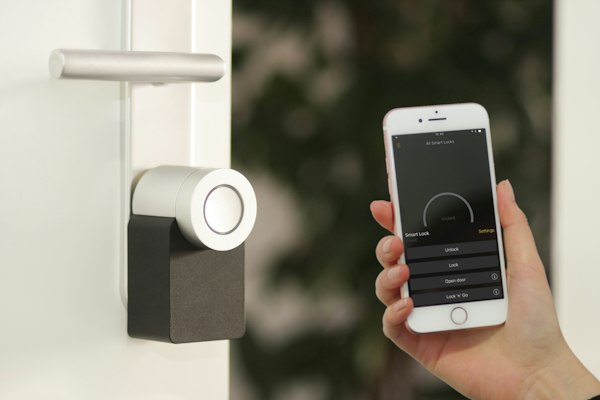
Tapo P110 Smart Plug (Energy Monitoring)
See exactly which appliances are quietly inflating your bill — track real-time watts, kWh and runtime from your phone.
- Real-time energy monitoring
- Cuts standby/vampire power
- Schedule appliances off-peak
Estimated benefit: ~£40/yr standby savings
Shop on AmazonAd – affiliate link. PowerGuardian may earn a commission from Amazon or another approved affiliate partner at no extra cost to you.

Home Energy Monitor (Whole-House)
Track your whole-home electricity use live and find where the kWh are going before the bill lands.
- Whole-house live usage
- Spot expensive habits fast
- App history & alerts
Estimated benefit: Awareness cuts ~5-10% use
Shop on AmazonAd – affiliate link. PowerGuardian may earn a commission from Amazon or another approved affiliate partner at no extra cost to you.
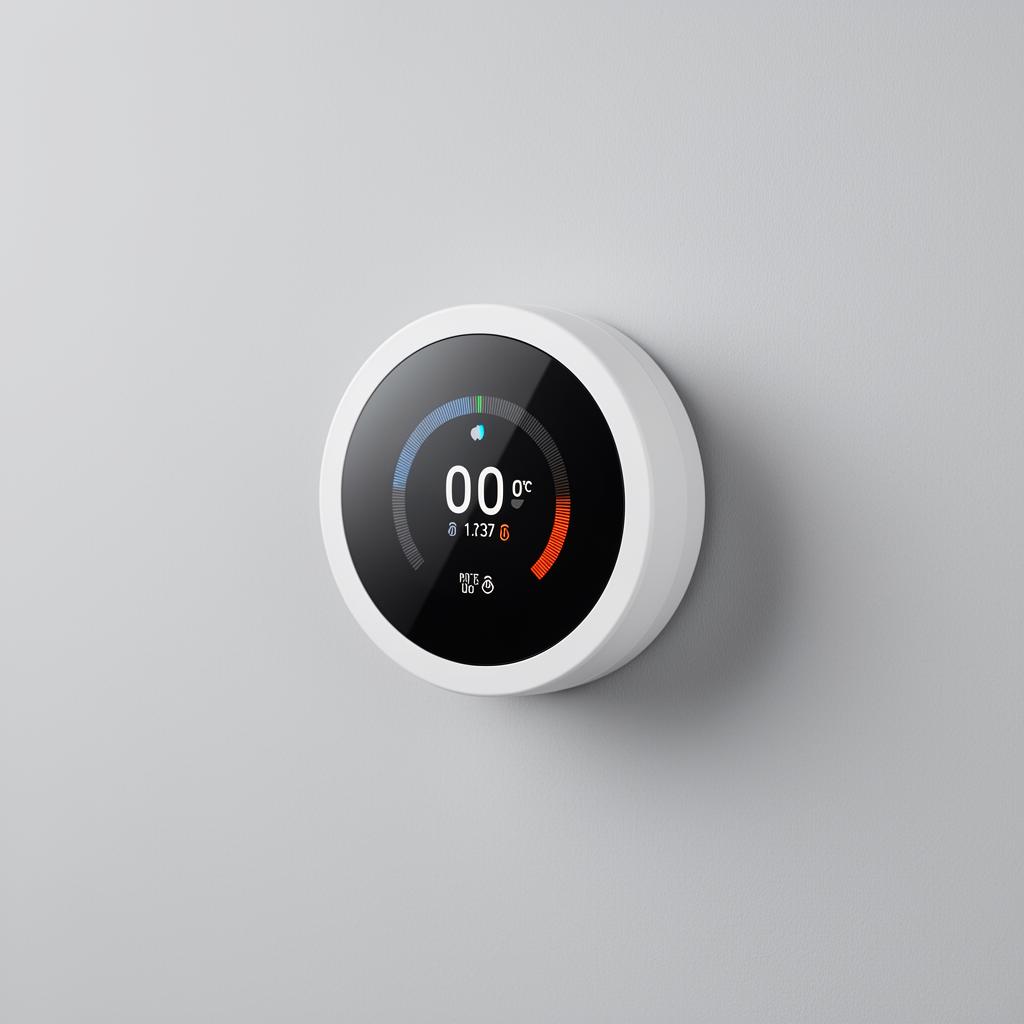
tado Smart Thermostat Starter Kit
Schedule, zone and remote-control your heating — independently shown to cut heating bills meaningfully.
- Heat only when needed
- Geofencing & schedules
- Room-by-room control
Estimated benefit: Up to ~£140/yr
Shop on AmazonAd – affiliate link. PowerGuardian may earn a commission from Amazon or another approved affiliate partner at no extra cost to you.
Affiliate links — we may earn a small commission at no extra cost to you. This keeps PowerGuardian free and independent.
Beyond the Electric Shower: Holistic Energy Saving
While focusing on the electric shower is vital, remember it's part of a larger energy ecosystem in your home. Insulation:* Good loft and cavity wall insulation reduce overall heating demand, indirectly impacting boiler usage (if you have one) and preventing heat loss. Appliance Efficiency:* Check the energy ratings of all your appliances. A-rated appliances consume significantly less power. Smart Thermostats:* Control your heating more precisely, avoiding wasted energy. Draft-proofing:* Simple and cheap ways to prevent heat escaping through gaps in windows and doors.
FAQs About Electric Shower Costs
Q1: Is an electric shower more expensive to run than a gas combi boiler shower? A1: Generally, yes, an electric shower is more expensive per shower. Gas is typically a cheaper fuel than electricity per kWh. A very efficient modern gas combi boiler can heat water for significantly less than an average electric shower, though installation and maintenance costs for gas systems are higher.
Q2: How accurate are these 2026 cost predictions? A2: Our 24p/kWh unit rate for 2026 is an informed projection based on current market trends and analysis. However, the energy market is volatile. Global events, government policies, and wholesale gas prices can all influence the actual Ofgem price cap. It's prudent to check the latest Ofgem announcements for the most up-to-date figures.
Q3: Does the water pressure affect the cost? A3: Directly, no. The cost is determined by the shower's power (kW) and how long it runs. However, perceived low pressure might tempt users to stay in longer or buy a higher kW shower for better flow, which would increase costs. An eco shower head can improve perceived pressure with lower flow.
Q4: My shower has a "low" or "eco" setting. What does it do? A4: These settings typically reduce the electrical power supplied to the heating elements. This means the shower uses less electricity but will also produce less hot water flow or a cooler temperature. They are most effective in warmer months when incoming mains water is naturally warmer.
Q5: Should I replace my old electric shower with a new one to save money? A5: Not necessarily for energy efficiency alone. While newer models might have marginal efficiency improvements, the core technology remains the same. The biggest savings come from how you use it (shorter showers, eco head) or upgrading to a different heating system (like a modern gas boiler if feasible). If your shower is very old and struggling, replacement might be for reliability or safety, not primarily cost savings.
Q6: Are there grants available in the UK to help with energy-efficient improvements? A6: Yes, the UK government and some local authorities occasionally run schemes like the Great British Insulation Scheme or offer grants for boiler upgrades (e.g., Boiler Upgrade Scheme for heat pumps). While specific grants for electric showers are rare, schemes promoting overall home energy efficiency (like insulation) can indirectly reduce your total energy burden. Always check gov.uk or your local council website for current offerings.
Conclusion: Smart Showers for Smarter Savings
The electric shower, with its promise of instant warmth, has become an indispensable part of UK daily life. However, its energy appetite is substantial and often underestimated. By understanding the power consumption, leveraging UK-specific tariff structures, and implementing simple behavioural changes and minor upgrades, you can transform your daily shower from an energy drain into an efficient routine.
At Power Guardian UK, our mission is to empower you with knowledge. Don't let your electric shower be a hidden expense. Take control, implement these practical strategies, and watch your energy bills shrink. A few minutes saved here, an eco head installed there, and a strategic off-peak shower can add up to significant annual savings, leaving more money in your pocket for the things that truly matter. It’s not about ditching your electric shower, but about showering smarter.
Is an electric shower more expensive to run than a gas boiler?
Yes, generally an electric shower is more expensive. It heats water instantly using electricity, a more costly fuel than gas per unit of energy, especially compared to a gas combi boiler that heats water efficiently.
How is the cost of running my electric shower calculated?
The cost is calculated by multiplying its power (kW) by the duration of use (hours) to get kilowatt-hours (kWh), then multiplying that by your electricity unit rate (£/kWh). For example, a 9.5kW shower for 10 minutes at 24p/kWh costs approximately 38p per shower.
Why is the electricity unit rate in the table 24p/kWh for 2026?
The 24p/kWh unit rate is a projection for late 2026, based on current market trends and future forecasts, adjusted from the 2024 Ofgem price cap. It is an optimistic but plausible scenario used for budgeting purposes in the article.
How much could an electric shower add to my annual energy bill?
Depending on its power and how long you shower, a single 10-minute electric shower daily can add between £109.50 (for a 7.5kW shower) and £175.20 (for a 12kW shower) to your annual bill, based on a 24p/kWh rate. For a family, this cost accumulates significantly.
What is the most effective way to reduce my electric shower running costs?
Investing in an eco shower head is highlighted as the most impactful change. These heads restrict water flow while maintaining pressure, using less hot water and therefore less electricity to heat it.
Current Supplier Watch
Recommended kit
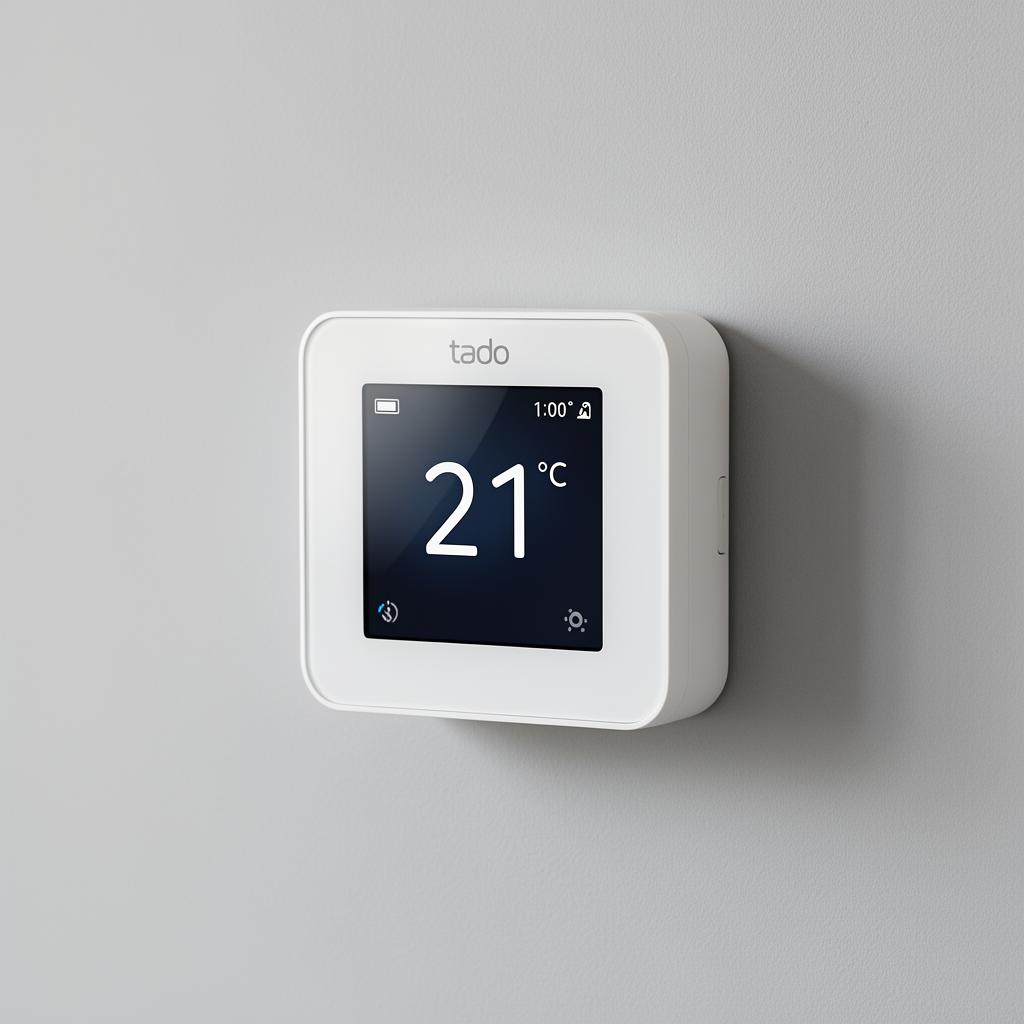
tado Smart Thermostat X
Schedule, zone and remote-control your heating — independently shown to cut heating bills by up to 28%.
Shop on Amazon