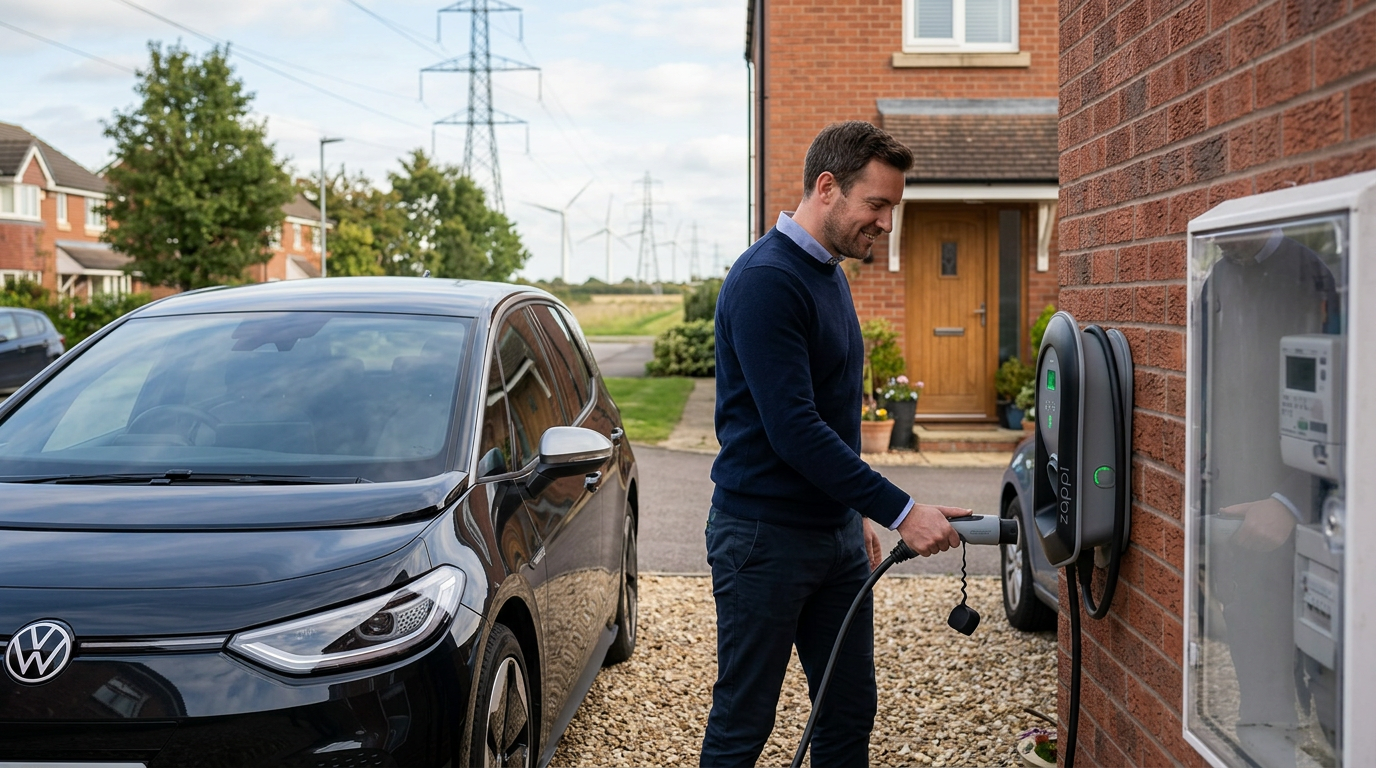
Why EV tariffs matter in 2026
The landscape of energy pricing in the UK continues its dynamic evolution in 2026. While the volatility of wholesale gas prices has somewhat stabilised compared to the extraordinary peaks of 2022-2023, the Ofgem price cap remains a significant benchmark, reflecting a 'typical' household's energy costs. For April-June 2026, the indicative Ofgem price cap for a dual-fuel customer on a standard variable tariff (SVT) is estimated to be around 27p per kWh for electricity and 7p per kWh for gas, with a daily standing charge of approximately 60p for electricity and 30p for gas.
Charging an electric vehicle (EV) on this standard tariff at a typical consumption rate of 27p/kWh translates to an approximate cost of ~7p per mile (assuming an efficiency of 3.5 miles per kWh, which is a reasonable average for mixed driving in many popular EVs). However, dedicated overnight EV tariffs, specifically designed to incentivise off-peak electricity consumption, offer dramatically lower rates. At an average off-peak rate of 7p/kWh, the cost plummets to under 2p per mile.
This differential is not merely academic; it translates into substantial annual savings for UK drivers. For a typical EV owner covering 8,000 miles per year, the switch from a standard tariff to a dedicated EV tariff could easily yield savings of around £400 per year. For high-mileage drivers, or those with larger, less efficient EVs, these savings can be even more pronounced, potentially exceeding £600 annually. This is vital in making EV ownership more accessible and affordable, contributing to the UK's net-zero ambitions.
Current Supplier Watch
Top EV Tariffs (May 2026) – A Deeper Dive
Here's an in-depth look at some of the leading EV tariffs available in the UK as of May 2026, including their current unit rates, specific requirements, and regional considerations.
1. Intelligent Octopus Go (Octopus Energy)
- Off-peak rate: 7p/kWh
- Peak rate: Typically 28-32p/kWh (varies based on region and cap)
- Off-peak window: 6 hours, dynamically adjusted by Octopus's smart charging algorithm (usually 23:30 – 05:30, but can be personalised).
- Standing Charge: Standard Octopus daily standing charge (around 60p/day electricity, 30p/day gas).
- Key Requirement: Requires a compatible smart charger (e.g., Ohme, Wallbox, Myenergi Zappi, Pod Point, Hypervolt, etc.) that can communicate with Octopus's systems. This allows Octopus to manage your charging during the cheapest times.
- Regional Notes: Available nationwide. Octopus's smart charging optimises based on grid demand, which can indirectly benefit all regions by balancing loads.
- Pros: Very competitive off-peak rate, excellent app integration, flexible charging window that can adjust to cheaper grid periods, and rewards for smart charging.
- Cons: Requires a smart charger; if you don't have one, installation costs can range from £800-£1,200 (though government grants like the OZEV EV Chargepoint Grant may still be available for certain groups, e.g., renters or those in flats). Peak rates are high, punishing non-EV electricity usage during the day.
2. OVO Charge Anytime (OVO Energy)
- Off-peak rate: 7p/kWh (effective credit)
- Peak rate: You pay your standard OVO tariff rate (e.g., 27p/kWh SVT) for all electricity. OVO then credits your account for the difference between the standard rate and 7p/kWh for all electricity used to charge your car.
- Off-peak window: No specific off-peak window for the tariff itself. Charging is controlled via the OVO Charge Anytime app, allowing charging anytime, but OVO optimises it to charge during cheaper grid periods.
- Standing Charge: Standard OVO daily standing charge.
- Key Requirement: Requires a compatible smart charger (currently Ohme, Andersen, Wallbox, Myenergi Zappi, Hypervolt and some others) and a smart meter. Your EV must be linked via the OVO app.
- Regional Notes: Available nationwide.
- Pros: Charges at 7p/kWh effectively, but you avoid the high peak rates of other EV tariffs for your home's non-EV consumption. This makes it ideal if you can't easily shift other household electricity usage.
- Cons: Requires a smart charger and specific app integration. The "credit" system can feel less straightforward than a direct tariff.
3. EDF GoElectric 35 (EDF Energy)
- Off-peak rate: 9p/kWh
- Peak rate: Typically 30-35p/kWh
- Off-peak window: 5 hours (e.g., 00:00 – 05:00, or 01:00 – 06:00, confirmed at sign-up).
- Standing Charge: Standard EDF daily standing charge.
- Key Requirement: Smart meter (SMETS2) sending half-hourly readings.
- Regional Notes: Available nationwide.
- Pros: Decent off-peak rate, less restrictive on charger type (doesn't require a smart charger to link, although recommended for remote monitoring).
- Cons: Shorter off-peak window than some competitors. Higher peak rate than a standard variable tariff, making it less attractive if you can't shift significant other usage.
4. British Gas EV Drive (British Gas)
- Off-peak rate: 9.5p/kWh
- Peak rate: Typically 31-36p/kWh
- Off-peak window: 4-6 hours (e.g., 00:00 – 04:00 or 00:00 – 06:00, confirmed upon sign-up).
- Standing Charge: Standard British Gas daily standing charge.
- Key Requirement: Requires a Hive EV charger installed by British Gas. This is a significant restriction compared to others.
- Regional Notes: Available nationwide.
- Pros: Backed by British Gas, a major supplier.
- Cons: The restrictive requirement for a Hive charger means significant upfront cost if you don't already have one (£800-£1,200), negating initial savings. Higher off-peak rate than leading competitors. Very high peak rates.
5. E.ON Next Drive (E.ON Next)
- Off-peak rate: 6.7p/kWh
- Peak rate: Typically 29-33p/kWh
- Off-peak window: 7 hours (e.g., 00:00 – 07:00).
- Standing Charge: Standard E.ON Next daily standing charge.
- Key Requirement: Smart meter (SMETS2) sending half-hourly readings.
- Regional Notes: Available nationwide.
- Pros: One of the absolute lowest off-peak rates available. Generous 7-hour off-peak window.
- Cons: High peak rates for non-EV consumption during the day.
Tariff Comparison Table (Illustrative, May 2026)
| Provider | Tariff Name | Off-Peak Rate (p/kWh) | Peak Rate (p/kWh) (Illustrative) | Off-Peak Window (Hours) | Key Requirement |
|---|---|---|---|---|---|
| Octopus Energy | Intelligent Octopus Go | 7p | 30p | 6 (dynamic) | Compatible Smart Charger |
| OVO Energy | Charge Anytime | 7p (effective credit) | 27p (standard SVT) | Flexible (app controlled) | Compatible Smart Charger + OVO app |
| EDF Energy | GoElectric 35 | 9p | 32p | 5 | SMETS2 Smart Meter |
| British Gas | EV Drive | 9.5p | 33p | 4-6 | Hive EV Charger |
| E.ON Next | E.ON Next Drive | 6.7p | 31p | 7 | SMETS2 Smart Meter |
← Swipe to see more →
Note: Peak rates are illustrative and subject to regional pricing variations and the prevailing Ofgem price cap during non-off-peak hours for these specific tariffs.
What You'll Need to Access UK EV Tariffs
Accessing these beneficial tariffs isn't always as simple as a click; there are several prerequisites:
- A Working Smart Meter (SMETS2): This is paramount. SMETS2 meters are the second generation of smart meters and are designed to send half-hourly electricity readings directly to your energy supplier. This granular data allows suppliers to accurately bill you for consumption during different tariff periods. SMETS1 meters often lose their "smart" functionality when you switch suppliers, making them incompatible with most EV tariffs. If you have an older meter, your chosen supplier will arrange an upgrade, often for free.
- A Compatible Smart Charger: While not universally required (e.g., EDF GoElectric 35), many of the best tariffs, particularly those offering dynamic or app-controlled charging like Intelligent Octopus Go and OVO Charge Anytime, mandate a specific smart EV charger. These chargers can communicate with the utility's system, allowing for managed charging during the cheapest or greenest times. Ensure your existing charger (or prospective purchase) is on the supplier's approved list.
- An EV or PHEV Registered to Your Address: Suppliers want to ensure these tariffs are genuinely benefiting EV owners. You'll typically need to provide your vehicle's registration number (VRN) and often proof of ownership or lease agreement.
Watch Out For These Pitfalls
While EV tariffs offer significant savings, they come with caveats that could erode those benefits if you're not careful:
- Higher Peak Rates: This is the most critical "gotcha." As shown in the table, many EV tariffs feature peak rates significantly higher than the standard variable tariff (SVT) equivalent – often 28–32p/kWh or even more. If your household uses substantial electricity during the day (e.g., charging laptops, running heating, electric showers, or cooking meals) and you cannot shift this usage to the off-peak window, these higher peak rates can quickly offset your EV charging discounts.
- Practical Check: Before switching, analyse your current electricity usage patterns. Many smart meter apps (or third-party apps like Loop or Hue) can show your half-hourly consumption. If you see significant daytime spikes, be cautious. OVO Charge Anytime is an exception here, as it doesn't penalise peak usage but rather credits back for EV charging.
- Stealthy Standing Charges: The daily standing charge covers the fixed costs of providing electricity, such as maintaining the grid. While Ofgem caps these (currently around 60p/day for electricity), some older EV tariffs or less competitive new ones might sneak in higher-than-average standing charges. Always check the total breakdown of the tariff. A few pence extra per day can add up to an additional £20-£30 annually.
- Exit Fees: Most modern energy tariffs, especially variable ones, are thankfully fee-free. However, some fixed-term EV tariffs might still incorporate exit fees, typically around £75 per fuel (so £150 for dual fuel). These fees only apply if you leave the contract before its term ends. Always confirm this before signing up, as flexibility is key in a volatile energy market.
Practical Step-by-Step Guide to Switching to an EV Tariff
- Assess Your Current Setup:
- Identify Potential Tariffs:
- Confirm Eligibility and Requirements:
- Prepare for the Switch (and Optimise Your Habits):
- Initiate the Switch:
- Monitor and Adjust:
Quick Savings Tip: Optimise Your Entire Home Energy Usage
Beyond just your EV, the secret to maximising savings with these tariffs lies in comprehensive energy shifting. Moving high-draw appliances to the off-peak window can result in significant additional savings, often another £150–£250 a year.
- Dishwasher: A typical run uses 1-2 kWh. Running it nightly during peak times can cost 54p (2kWh 27p/kWh). Off-peak, this drops to 14p (2kWh 7p/kWh). Over a year, that's £146 saving.
- Washing Machine: Similar consumption, often 0.5-1 kWh per cycle. A daily wash can save £73-£146 annually.
- Tumble Dryer: This is arguably the biggest culprit, using 2.5-4 kWh per cycle. Running it 3-4 times a week during off-peak hours instead of peak could save £150-£250 per year alone.
By combining optimised EV charging with intelligent usage of other household appliances, you can truly leverage the potential of these dual-rate tariffs, making your home significantly more energy-efficient and cost-effective.
FAQs
Q1: Do I really need a smart charger for an EV tariff?
A: For some of the best tariffs like Intelligent Octopus Go and OVO Charge Anytime, yes, a compatible smart charger is a firm requirement. These tariffs rely on the charger's ability to communicate with the energy supplier's system to manage charging during optimal times. Other tariffs (like EDF GoElectric 35 or E.ON Next Drive) might only require a smart meter, but a smart charger will still give you better control and insights into your charging.
Q2: What if I don't have a SMETS2 smart meter?
A: You won't be able to switch to an EV-specific tariff until you do. Your current energy supplier is obligated to install one if you request it (and if technically feasible). The installation of a SMETS2 meter is usually free of charge. Make sure you confirm it's a SMETS2, not an older SMETS1, to ensure future compatibility.
#### Q3: Will my energy bill become more complicated with an EV tariff? A: Initially, it might seem more complex as you'll have different rates for different times of the day. However, your smart meter automatically sends the half-hourly readings, and your supplier's billing system will apply the correct rates. Most suppliers provide clear breakdowns on your bill and via their app, showing your usage during peak and off-peak windows.
#### Q4: Can I use just one of these tariffs for gas and electricity if I don't have an EV? A: No, these tariffs are specifically designed for electric vehicle owners and require you to register your EV. The beneficial off-peak rates are balanced by higher peak electricity rates, and without an EV to leverage those off-peak rates, such a tariff would likely make your overall electricity bill more expensive. For dual-fuel customers, these EV tariffs typically apply only to your electricity supply, while your gas remains on a standard variable or fixed rate.
Q5: What happens if I move house or sell my EV while on an EV tariff?
A: If you move, you would typically need to inform your supplier and either switch to a new tariff at your new address (if eligible) or revert to a standard variable tariff. If you sell your EV, you will cease to be eligible for the EV tariff. You would need to inform your supplier, and they would switch you to a suitable standard tariff. Check for any exit fees if you are on a fixed-term contract.
Q6: Are rural areas at a disadvantage for smart meter/charger compatibility?
A: While 4G/5G signal strength can sometimes be a factor for smart meters in very remote areas, most of the UK is covered. Smart meters use their own dedicated network. For smart chargers, a stable home Wi-Fi connection is usually the main requirement for their smart features to function. Installers will verify signal strength for your smart meter during installation.
Recommended energy saving products
Independently chosen kit that helps UK households cut energy use.
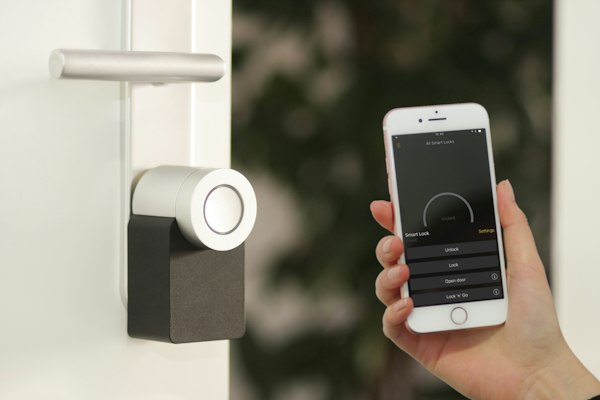
Tapo P110 Smart Plug (Energy Monitoring)
See exactly which appliances are quietly inflating your bill — track real-time watts, kWh and runtime from your phone.
- Real-time energy monitoring
- Cuts standby/vampire power
- Schedule appliances off-peak
Estimated benefit: ~£40/yr standby savings
Shop on AmazonAd – affiliate link. PowerGuardian may earn a commission from Amazon or another approved affiliate partner at no extra cost to you.

Home Energy Monitor (Whole-House)
Track your whole-home electricity use live and find where the kWh are going before the bill lands.
- Whole-house live usage
- Spot expensive habits fast
- App history & alerts
Estimated benefit: Awareness cuts ~5-10% use
Shop on AmazonAd – affiliate link. PowerGuardian may earn a commission from Amazon or another approved affiliate partner at no extra cost to you.
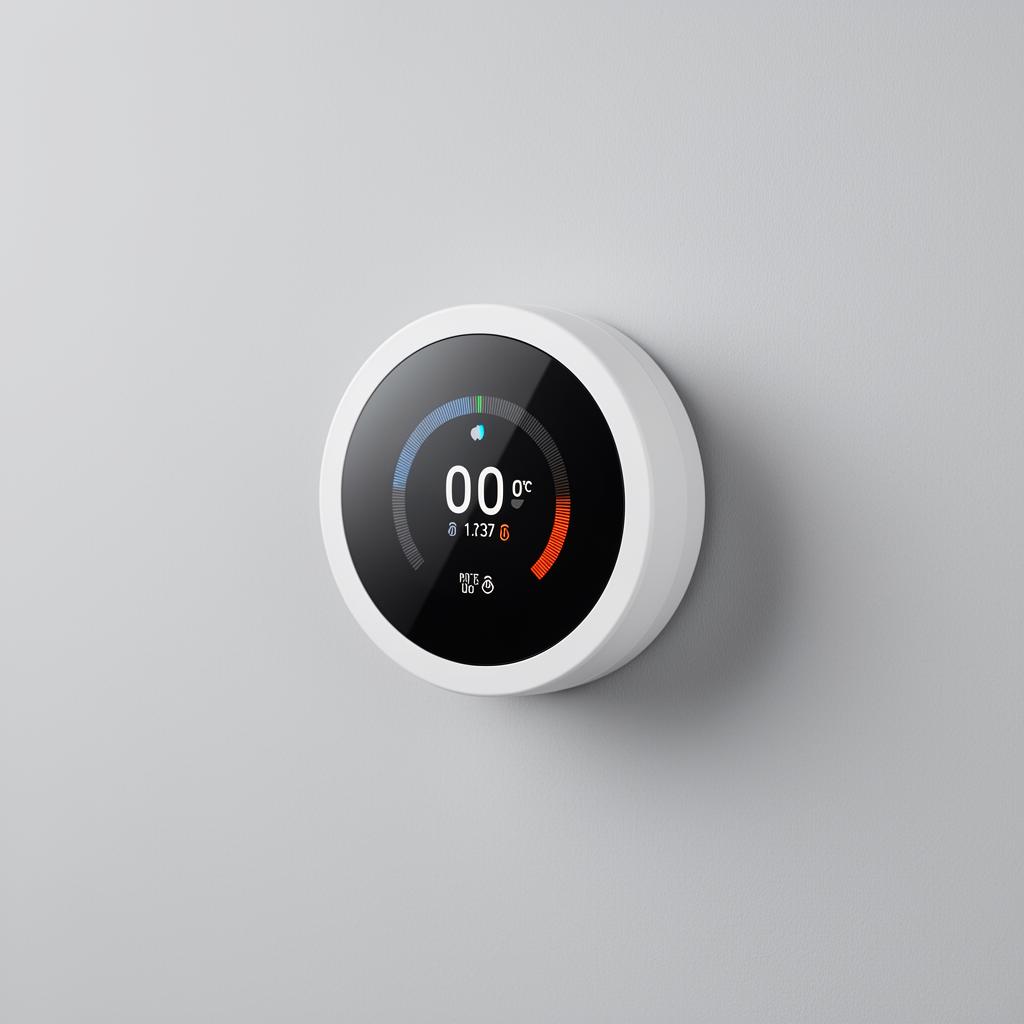
tado Smart Thermostat Starter Kit
Schedule, zone and remote-control your heating — independently shown to cut heating bills meaningfully.
- Heat only when needed
- Geofencing & schedules
- Room-by-room control
Estimated benefit: Up to ~£140/yr
Shop on AmazonAd – affiliate link. PowerGuardian may earn a commission from Amazon or another approved affiliate partner at no extra cost to you.
Affiliate links — we may earn a small commission at no extra cost to you. This keeps PowerGuardian free and independent.
Conclusion
The pursuit of lower running costs for electric vehicles is more pressing than ever in the UK's evolving energy landscape. EV-specific tariffs are not just a periphery product; they are a fundamental component of affordable EV ownership, offering potential savings of hundreds of pounds annually. By understanding the intricacies of off-peak and peak rates, securing the right smart meter and charger, and diligently shifting household electricity consumption, UK drivers can drastically reduce their environmental footprint and their wallets' strain. The choice of tariff demands careful consideration of individual driving habits, charging infrastructure, and overall household energy usage patterns. As the UK accelerates towards widespread EV adoption, these intelligent tariffs will continue to be a crucial tool for both consumers and the grid, ensuring charging is not only cheap but also efficient and sustainable.
Independent. No commission. Power Guardian UK.
What electricity price can I expect for home EV charging on a standard tariff in 2026?
If you're on a standard variable tariff, the indicative Ofgem price cap for electricity from April-June 2026 is around 27p per kWh. This translates to an approximate cost of 7p per mile to charge your EV at home.
How much can I save by switching to a dedicated EV tariff?
A dedicated EV tariff could save a typical EV owner covering 8,000 miles per year about £400 annually. For high-mileage drivers or those with less efficient EVs, savings could exceed £600 per year.
Do I need a specific smart charger to get an EV tariff?
Many of the leading EV tariffs, like Intelligent Octopus Go and OVO Charge Anytime, require a compatible smart charger that can communicate with the energy supplier's systems. Some, like EDF GoElectric 35, have fewer charger restrictions but still benefit from smart meter integration.
Which tariff offers the lowest off-peak rate?
As of May 2026, E.ON Next Drive offers the lowest off-peak rate discussed at 6.7p/kWh. Intelligent Octopus Go and OVO Charge Anytime are also very competitive at an effective 7p/kWh.
What are the main downsides of some EV tariffs?
A common downside is the requirement for a specific smart charger, which can incur significant installation costs if you don't already have one. Many EV tariffs also feature high peak rates, which can be expensive if you can't shift other household electricity usage to off-peak times.
Recommended kit
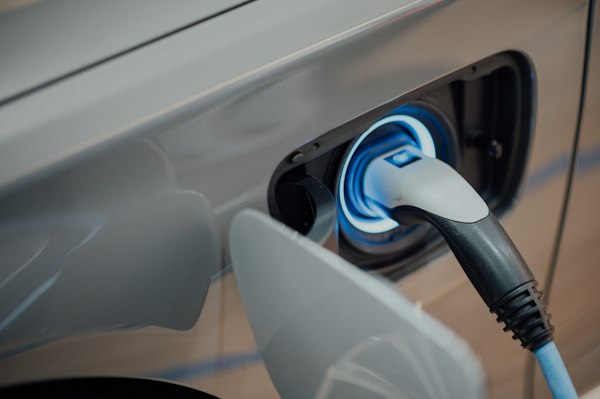
Type 2 EV Charging Cable 7m 32A
Reliable 7m Mode 3 Type 2 to Type 2 cable for public chargepoints — supports up to 7.4kW single-phase charging.
Shop on Amazon