Summary
A fixed tariff locks your unit rates for electricity and gas, along with your standing charge, for a predetermined period, typically 12 to 24 months. This offers predictability in your energy expenditure. In contrast, a Standard Variable Tariff (SVT) fluctuates with the Ofgem price cap, which is reviewed and updated every three months. At present, certain fixed tariffs are priced slightly below the current Ofgem price cap, though this margin is often narrow and varies significantly between suppliers. This blog will delve into the intricacies of both options, offering a detailed guide for UK households navigating the energy market in 2026.
Current Supplier Watch
What this means in plain English
Let's break down the core differences between these tariff types, alongside a brief mention of a more niche option:
- Fixed Tariff: With a fixed tariff, the price you pay per kilowatt-hour (kWh) for electricity and gas, as well as your daily standing charge, is set and guaranteed for the entire duration of your contract. This means if wholesale energy prices, and consequently the Ofgem price cap, rise during your contract term, your unit rates will remain unchanged. Conversely, if wholesale prices fall, you won't immediately benefit from those reductions. Most fixed tariffs come with an exit fee, typically ranging from £25 to £75 per fuel (i.e., £50 to £150 for a dual-fuel household) if you decide to switch providers or tariffs before your contract concludes. Some competitive offers may waive these fees, but this is less common.
- Standard Variable Tariff (SVT): An SVT is the default tariff that suppliers place customers on once a fixed contract ends, or if they haven't actively chosen a specific tariff. The prices on an SVT are directly governed by the Ofgem energy price cap. This cap sets the maximum unit rates and standing charges that suppliers can charge for a typical household's energy consumption. Since the cap is reviewed quarterly (January, April, July, October), your SVT prices will adjust accordingly on these dates. The primary advantage of an SVT is flexibility: there are no exit fees, allowing you to switch to a different tariff or supplier at any time. The downside is exposure to market volatility; if the price cap rises, your bills will increase.
- Tracker Tariffs: A smaller number of more innovative suppliers, such as Octopus Energy, offer tracker tariffs. These are designed to closely follow wholesale energy market prices, often adjusting daily or weekly. While these can offer significant savings when wholesale prices are low, they come with a higher degree of risk. If wholesale prices rapidly spike, your bills could increase dramatically and quickly. These tariffs are generally best suited for consumers who are comfortable with market volatility, are willing to monitor wholesale prices, and potentially have smart meters that can maximise these tariffs' benefits.
The optimal choice for your household in 2026 hinges on your personal risk appetite, your financial stability, and your outlook on future energy price movements.
How this affects your household bill: A Deeper Dive
To illustrate the financial impact, let's consider a hypothetical dual-fuel household with "typical" consumption, as defined by Ofgem for the price cap calculations. For illustrative purposes, let's assume the Ofgem price cap for Q1 2026 (January-March) is similar to recent caps, say around £1,928 annually for a typical household using 2,900 kWh electricity and 12,000 kWh gas.
Current Ofgem Price Cap (as of Q4 2025/Q1 2026 for illustration):
| Fuel | Unit Rate (p/kWh) | Standing Charge (p/day) | Annual Cost (Typical) |
|---|---|---|---|
| Electricity | ~28.62p | ~53.35p | ~£1,042.06 |
| Gas | ~7.42p | ~30.00p | ~£885.94 |
| Dual Fuel | ~£1,928.00 |
← Swipe to see more →
- Scenario 1: Taking a Fixed Tariff Below the Cap
- If the cap stays flat: You save £80 over the year compared to being on the SVT.
- If the cap drops 5% in April: An SVT customer would see their bill fall to £1,831.60 (£1928 * 0.95), benefiting from the reduction. Your fixed bill remains at £1,848. You are now paying slightly more than the SVT customer.
- If the cap rises 5% in April: An SVT customer's bill would jump to £2,024.40 (£1928 * 1.05) from April onwards. Your fixed bill remains at £1,848, protecting you from this increase and leading to significant savings compared to the SVT customer for the remainder of your contract.
- Scenario 2: Staying on a Standard Variable Tariff (SVT)
- If the cap consistently falls throughout 2026 (e.g., due to lower wholesale gas prices): You would promptly benefit from these reductions, potentially enjoying lower bills than someone on a fixed tariff that was set higher than the new, lower cap. Your average annual cost could end up being significantly less than the initial cap value.
- If the cap rises throughout 2026 (e.g., due to geopolitical events or increased demand): Your energy costs would increase with each cap adjustment, potentially leading to a much higher overall annual bill than if you had secured a favorable fixed rate.
In summary:
- Fix for certainty: If budget predictability is paramount for your household, and you want to insulate yourself from potential price hikes, a fixed tariff is your strongest option. It offers peace of mind, allowing you to budget more effectively.
- Stay variable for flexibility and potential savings: If you believe wholesale energy prices are set to fall throughout 2026, and you're comfortable absorbing potential short-term increases, an SVT allows you to benefit immediately from those reductions. There's also the benefit of no exit fees, giving you the freedom to switch if a significantly better fixed deal emerges later.
A useful rule of thumb for 2026: If a fixed tariff is offered at least £50–£100 cheaper than the current Ofgem price cap for a typical household, and crucially, has either no exit fees or manageable exit fees (e.g., less than £40 per fuel), it generally presents a compelling option, especially given the ongoing volatility in the global energy markets. This delta provides a buffer against small, unexpected dips in the price cap, and guarantees a saving if prices rise.
Practical Step-by-Step Guidance for Choosing Your Tariff
Navigating the energy market can feel daunting, but a structured approach simplifies the process.
Step 1: Understand Your Current Situation
- Locate Your Latest Bill: This is your starting point. It contains vital information:
- Check Your Supply Type: Are you single-rate or multi-rate (e.g., Economy 7)? This affects unit rates. Do you have a smart meter? Some tariffs offer specific benefits for smart meter users.
- Note Your Region: Energy prices, particularly standing charges, vary slightly by region across the UK. Ofgem's price cap accounts for these regional differences.
Step 2: Research the Current Market
- Check the Latest Ofgem Price Cap: Before looking at fixed deals, know the current benchmark. Power Guardian UK (and other reputable energy sites) will always publish the latest cap figures as soon as Ofgem announces them. Pay attention to the electricity and gas unit rates, and standing charges, for your specific region, if possible.
- Review Wholesale Price Forecasts: Keep an eye on reputable energy market analysis. Organisations like Cornwall Insight often provide forecasts for the next few price cap periods. While not guaranteed, these can give an indication of whether prices are expected to rise or fall.
- Utilise Comparison Sites: Ofgem Accredited Comparison Sites (e.g., Energyhelpline, Uswitch, Compare the Market, Confused.com) are invaluable tools.
Step 3: Compare and Calculate
- Direct Comparison:
- Consider the "Buffer":
- Evaluate Your Risk Tolerance:
Step 4: Make Your Decision and Switch
- Read the Terms and Conditions: Before committing, always read the full terms, specifically checking for:
- Initiate the Switch: Once you've chosen, the switching process is straightforward. Your new supplier handles everything, including contacting your old supplier. It typically takes 21 days. You will not experience any interruption to your energy supply.
- Take Meter Readings: Provide accurate opening readings to your new supplier and closing readings to your old one to ensure accurate final bills.
- Review Regularly: Even on a fixed tariff, it's wise to keep an eye on the market. As your fixed term approaches its end, repeat this process roughly 6-8 weeks before your contract expires to avoid rolling onto an expensive SVT.
Recommended energy saving products
Independently chosen kit that helps UK households cut energy use.

Tapo P110 Smart Plug (Energy Monitoring)
See exactly which appliances are quietly inflating your bill — track real-time watts, kWh and runtime from your phone.
- Real-time energy monitoring
- Cuts standby/vampire power
- Schedule appliances off-peak
Estimated benefit: ~£40/yr standby savings
Shop on AmazonAd – affiliate link. PowerGuardian may earn a commission from Amazon or another approved affiliate partner at no extra cost to you.

Home Energy Monitor (Whole-House)
Track your whole-home electricity use live and find where the kWh are going before the bill lands.
- Whole-house live usage
- Spot expensive habits fast
- App history & alerts
Estimated benefit: Awareness cuts ~5-10% use
Shop on AmazonAd – affiliate link. PowerGuardian may earn a commission from Amazon or another approved affiliate partner at no extra cost to you.
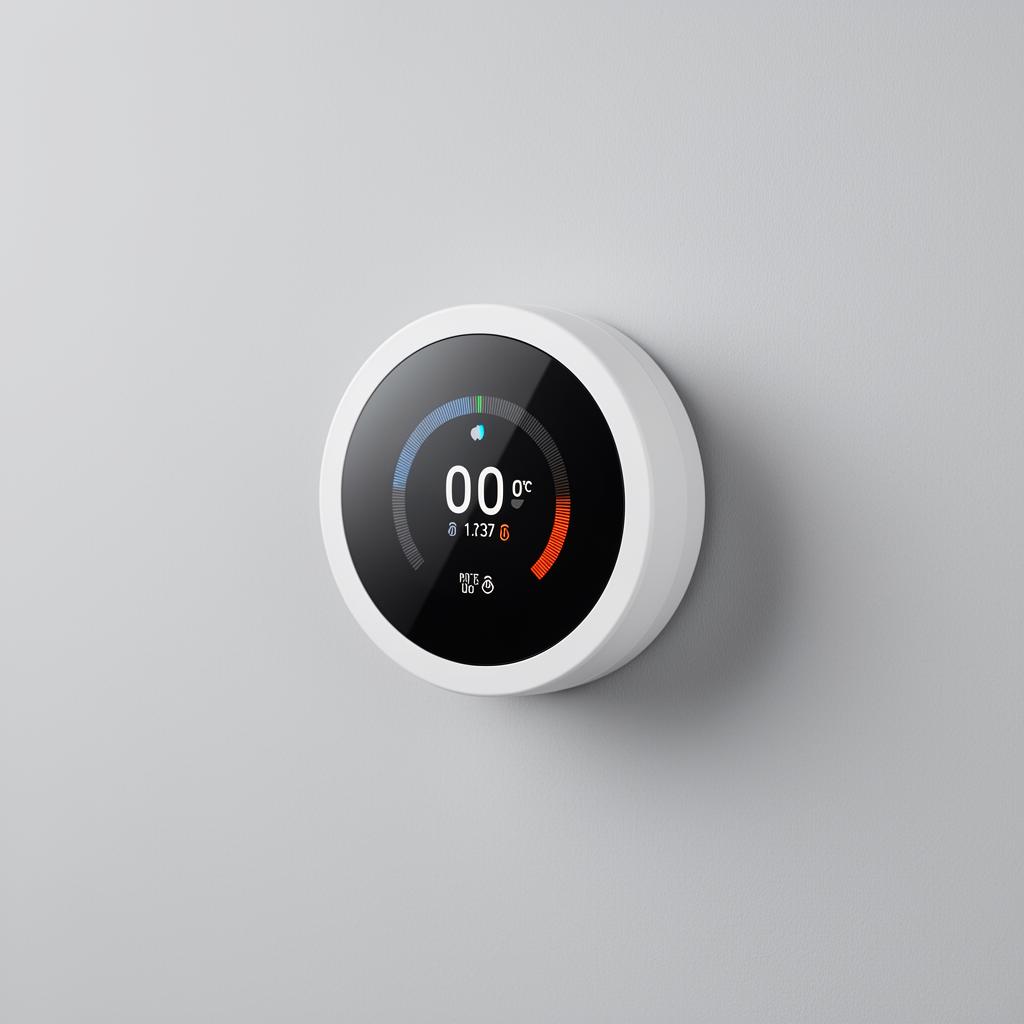
tado Smart Thermostat Starter Kit
Schedule, zone and remote-control your heating — independently shown to cut heating bills meaningfully.
- Heat only when needed
- Geofencing & schedules
- Room-by-room control
Estimated benefit: Up to ~£140/yr
Shop on AmazonAd – affiliate link. PowerGuardian may earn a commission from Amazon or another approved affiliate partner at no extra cost to you.
Affiliate links — we may earn a small commission at no extra cost to you. This keeps PowerGuardian free and independent.
FAQs
Q1: What happens at the end of my fixed tariff contract?
A1: Your supplier will usually contact you 42-49 days before your contract ends, offering you new tariff options. If you don't choose a new fixed deal or switch supplier, you will automatically be rolled onto your supplier's default Standard Variable Tariff (SVT). This is almost always more expensive than a new fixed deal, so it's crucial to act before this happens.
Q2: Can I leave my fixed tariff early if prices drop significantly?
A2: Yes, you can. However, most fixed tariffs come with exit fees (typically £25-£75 per fuel) if you switch before your contract ends. You'll need to weigh up whether the savings from moving to a cheaper tariff outweigh the cost of these exit fees. Note that suppliers cannot charge exit fees if you switch in the final 49 days of your contract.
Q3: Are there regional variations in energy prices?
A3: Yes, there are. The Ofgem price cap has different rates for various regions across Great Britain (England, Scotland, and Wales), reflecting the differing costs of delivering energy to those areas. These differences are usually small but can add up over a year. Always use your specific postcode when comparing tariffs to get the most accurate quotes. Northern Ireland has a separate regulatory framework.
Q4: My supplier offers a "green" tariff. Is this different?
A4: "Green" tariffs often mean the supplier pledges to source a percentage (or 100%) of the electricity your household uses from renewable sources, or invests in renewable projects. Some are genuine Green Energy tariffs, backed by Renewable Energy Guarantees of Origin (REGOs). They can be fixed or variable, so the choice between fixed and SVT still applies. Check the details of what "green" actually means for that specific supplier.
Q5: How reliable are energy price forecasts for 2026?
A5: Energy price forecasts are based on current market data, geopolitical situations, and economic trends, but are subject to change. While reputable analysts like Cornwall Insight have a strong track record, the energy market is inherently volatile. Forecasts should be used as a guide, not a guarantee. Uncertainty remains a key factor in the 2026 outlook.
Q6: What if I'm struggling to pay my energy bills?
A6: If you're finding it difficult to pay, contact your energy supplier immediately. They have obligations to help, which can include setting up a payment plan, offering hardship funds, or providing advice on grants. You can also seek independent advice from organisations like Citizens Advice (www.citizensadvice.org.uk) or National Energy Action (www.nea.org.uk).
Conclusion: Empowering Your Energy Choice for 2026
The decision between a fixed and standard variable tariff in 2026 remains a strategic one, heavily influenced by your personal appetite for risk and your financial priorities. While the allure of a potentially falling price cap might tempt some to remain on an SVT, the security and budgeting certainty offered by a well-chosen fixed tariff, especially one priced notably below the existing cap with reasonable exit fees, is a powerful advantage.
As a senior energy journalist for Power Guardian UK, my advice is clear: do not remain passive. The days of suppliers automatically offering compelling fixed deals are largely in the past. Proactivity is key. Utilise the tools available, specifically our free Bill Checker, and robust comparison sites, to objectively assess your options based on your actual consumption and regional realities.
The energy market in the UK, particularly post-Brexit and in the wake of the global energy crisis, is a complex beast. However, by understanding your options, researching thoroughly, and making an informed decision, you can empower your household to secure the best possible energy deal for 2026, providing either much-needed stability or the flexibility to capitalise on market movements. Don't leave your energy bills to chance – take control today.
Check My Bill
You do not have to guess — we compare today's best fixed and variable deals against your current bill. Use our free Bill Checker to see in 30 seconds — most users find savings of £200–£500 per year.
Recommended kit

Philips Hue White LED Smart Bulbs
Energy-efficient LEDs you can schedule and dim — a quick win for cutting lighting electricity use.
Shop on Amazon