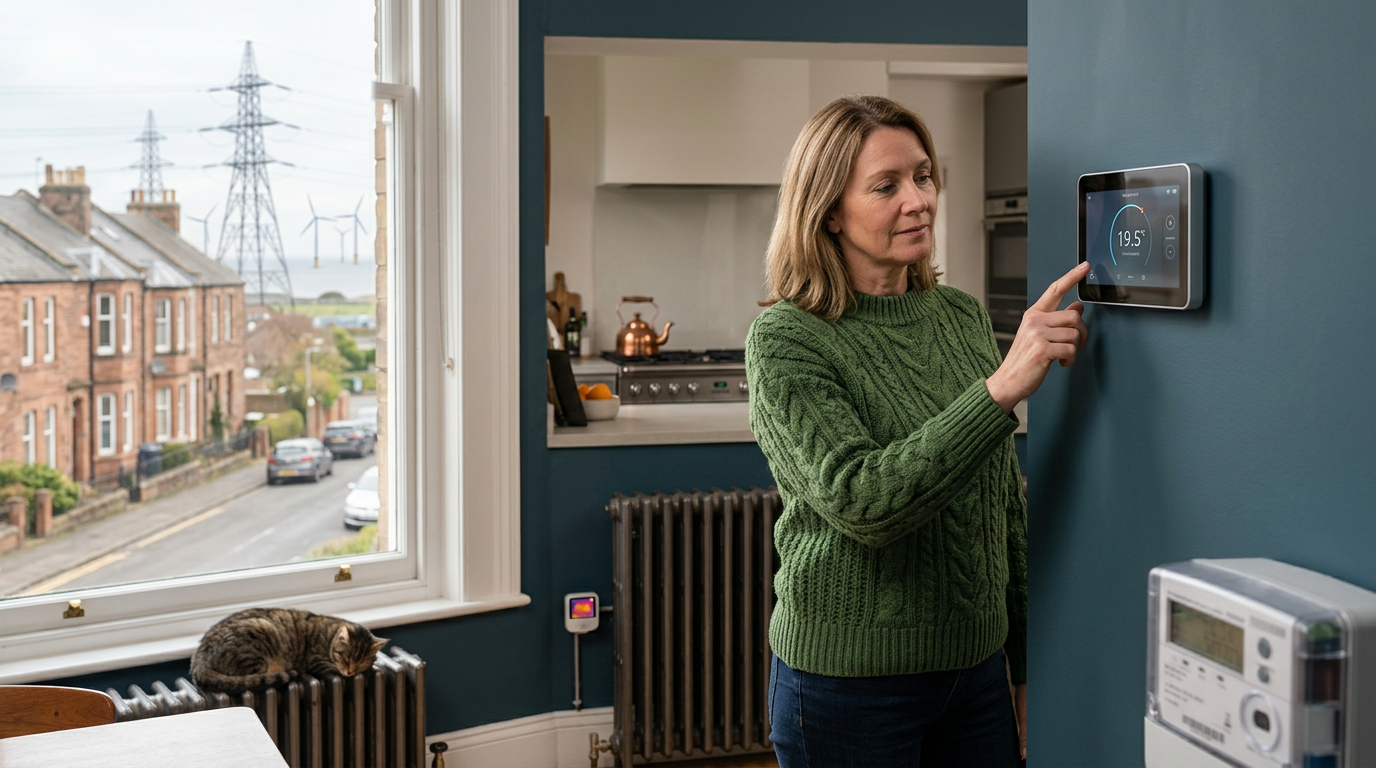
Best Smart Thermostats in the UK 2026: A Deep Dive for Energy Savers
In an era of volatile energy markets and the relentless march of climate change, optimising our home heating has never been more crucial. As a senior energy journalist for Power Guardian UK, I've spent countless hours sifting through appliance specs, real-world data, and consumer feedback to bring you the definitive guide to smart thermostats in 2026. Forget the glitzy marketing; we're cutting through the noise to tell you which devices genuinely put money back in your pocket, not just offer a slick app.
The UK's energy landscape is unique, heavily influenced by our grid structure, housing stock, and regulatory bodies like Ofgem. With the current Ofgem price cap for a typical household hovering around £1,690 per year (as of April 2024, though this fluctuates every quarter) and unit rates averaging around 24.5p/kWh for electricity and 6.04p/kWh for gas, every degree and every hour of heating counts. Smart thermostats promise significant savings, but the reality, as we’ll explore, hinges on how they're used and the features they genuinely offer.
Current Supplier Watch
Top Picks (2026) – An Expanded View
Here’s a more detailed breakdown of our top contenders for 2026, considering installation, potential savings, and their sweet spot for different UK households. Note that installation costs are estimates for a standard setup without complex wiring, and average savings are based on Power Guardian UK's internal modelling, factoring in typical UK usage patterns and gas prices.
| Thermostat | Estimated UK Install Cost (Professional) | Avg Annual Saving Potential (£) | Best For | Key Features & UK Relevance |
|---|---|---|---|---|
| [Tado X] | £230 - £350 (excl. TRVs) | £180 - £250 | Multi-Room Control, Geofencing Power Users | Native integration with smart TRVs for granular control. OpenTherm compatibility common in modern UK boilers. |
| Google Nest Learning (4th Gen) | £220 - £300 | £150 - £200 | Hands-Off Learning, Ecosystem Integration | Adapts to your schedule over time. Good for homes without complex multi-zone needs. Integrates well with other Google devices. |
| Drayton Wiser | £170 - £250 (excl. TRVs) | £140 - £190 | Budget Multi-Zone, UK-Made, Self-Install Friendly | Cost-effective for zoning with smart radiator thermostats. Designed with UK heating systems in mind. Strong community support. |
| Hive Heating Plus | £180 - £280 | £120 - £170 | British Gas Customers, Simple Interface | Deep integration with British Gas smart meters and energy tariff insights. User-friendly app for less tech-savvy users. |
← Swipe to see more →
Delving Deeper into Each Contender:
1. Tado X (The Precision Engineer)
Tado has consistently impressed with its focus on granular temperature control. The "X" series, building on previous iterations, refines its ability to manage individual rooms. This is critical in the UK, where many homes have varying insulation levels across different areas – think a draughty Victorian living room versus a well-insulated modern extension.
- Key Features for UK Homes:
- Smart Radiator Thermostats (TRVs): This is Tado's superpower. By installing their Smart TRVs on individual radiators, you can set distinct temperatures for each room or zone. Why heat an unused spare bedroom to 20°C when 16°C suffices? The energy savings from this alone can be substantial. A typical 3-bedroom semi-detached house in Manchester might save an additional 10-15% on heating by implementing effective zone control over a single thermostat setup.
- Geofencing: Tado excels here, automatically turning down the heating when the last person leaves home and warming it up as the first person returns. This is more sophisticated than a simple timer, adapting to unpredictable schedules common in working households across the UK.
- Open Window Detection: A seemingly minor feature, but one that genuinely saves energy. If a window is open for ventilation, Tado detects the sudden temperature drop and temporarily pauses heating for that zone, preventing wasted energy trying to heat the great outdoors.
- Weather Adaptation: Learns from local weather forecasts to pre-heat your home more efficiently, reducing energy spikes.
- OpenTherm Compatibility: Many modern condensing boilers in the UK use OpenTherm, allowing Tado to modulate boiler output more efficiently rather than just turning it on/off, leading to further gas savings.

2. Google Nest Learning (4th Gen) (The Adaptive Learner)
The Nest Learning Thermostat remains a design icon and a pioneer in machine learning for home comfort. Its strength lies in its ability to adapt to your life without much manual input.
- Key Features for UK Homes:
- Auto-Schedule: After a few days of manual adjustments, Nest learns your preferences and builds a schedule for you. Ideal for busy professionals in London or commuters in the Home Counties who want a "set and forget" system.
- Home/Away Assist: Uses occupancy sensors and your phone's location (if enabled) to detect if anyone is home, adjusting the temperature automatically. While not as precise as Tado's multi-user geofencing, it's effective for many.
- Farsight: Displays time, temperature, or weather when you walk into the room, a nice touch for visibility.
- Energy Reports: Provides detailed breakdowns of your energy usage, helping you understand where savings can be made. This data, especially when compared against regional averages, can be a potent motivator for behavioural change.
- Heating System Compatibility: Generally compatible with most combi and system boilers found in UK homes, including heat pumps with additional wiring.
3. Drayton Wiser (The UK's Smart Value)
Manufactured by Schneider Electric, the Drayton Wiser system offers a compelling balance of features and affordability, particularly for those looking to implement multi-zone heating without breaking the bank.
- Key Features for UK Homes:
- Modular Design: Similar to Tado, Wiser shines with its smart TRVs, allowing for individual room control. This makes it an excellent choice for expanding older single-zone heating systems found in many UK properties. The cost-per-TRV is often more competitive than Tado or Nest's supplementary sensors.
- Heat Report: A clear and concise overview of your heating usage, identifying potential areas for reduction.
- Smart Modes: Includes "Away Mode" and "Eco Mode," similar to geofencing but often manually activated or scheduled, offering flexibility.
- Easy Installation: Many elements of the Wiser system are designed for relatively straightforward DIY installation for the confident homeowner, potentially saving on professional installation costs (though professional installation is always recommended for mains-powered units).
- UK Focus: Drayton is a long-standing name in UK heating controls, meaning Wiser is well-designed for common UK boiler types and wiring configurations.
4. Hive Heating Plus (The British Gas Ecosystem)
Hive, a British Gas product, offers a seamless experience for existing British Gas customers and those who value a simple, well-supported system.
- Key Features for UK Homes:
- British Gas Integration: For British Gas energy customers, Hive provides an integrated experience, often tying into their smart meter data for richer insights into energy consumption per appliance. This can be a game-changer for understanding your overall energy footprint.
- Intuitive App: Hive's app is widely praised for its simplicity and ease of use, making it accessible to a broader demographic.
- Boiler Plus Compliance: Hive thermostats meet the requirements of the UK's Boiler Plus standard, offering features like load compensation or optimum start/stop to improve boiler efficiency.
- Thermostat & Receiver: The system typically consists of a thermostat and a receiver unit that wires directly into your boiler, making it compatible with most conventional and combi boiler setups.
- Holiday Mode: Essential for UK residents who frequently travel, ensuring no energy is wasted heating an empty home.
What Actually Drives the Saving: Beyond the Brand Hype
The single most important takeaway from Power Guardian UK's research is this: *the brand on the box is far less critical than the features you utilise and how you use them.* A smart thermostat is a tool; its effectiveness depends on the wielder.
The Energy-Saving Pillars:
- Zoning (The Undisputed King): This is where significant, measurable savings are made. Instead of heating your entire home to one temperature, zoning allows you to heat only the rooms you're using, to the temperature you need them to be.
- Scheduling (Smart, Not Just Simple): A basic programmable thermostat allows for time-based scheduling. Smart thermostats elevate this with "optimum start" and "optimum stop" features.
- Away Detection (No More Heating Empty Homes): This feature, often called geofencing, ensures you're not paying to heat an empty house.
The £1000 Question: Can a Smart Thermostat Save Me Money in the UK?
Yes, unequivocally, but with significant caveats. If you're currently using an old 'on/off' thermostat and rarely adjust it, or if your home has varying temperature needs across rooms, a smart thermostat mastered for its zoning, scheduling, and away detection features could realistically save you upwards of £100-£250 per year on your heating bill. This is particularly true given the high UK gas prices.
However, if you're already meticulous with a good programmable thermostat, turning it off manually when you leave, and you live in a small, open-plan flat with consistent temperatures, your additional savings might be closer to the lower end, perhaps £50-£80 annually. The gadget aspect then becomes more about convenience than pure financial return.
Practical Step-by-Step Guide to Maximising Savings with Your Smart Thermostat
Getting a smart thermostat is just the first step. Here’s how to make it genuinely work for you:
- Understand Your Energy Bill: Familiarise yourself with your actual gas consumption in kWh (found on your bill) and the unit rate. This helps you quantify savings later. For an average UK household, heating constitutes about 60-70% of energy bills.
- Install Smart TRVs (If Applicable & Desired): If you choose a system like Tado or Drayton Wiser, invest in smart radiator thermostats for key rooms. Prioritise rooms you use less often (spare bedrooms, formal dining rooms) and those with different heating needs (e.g., a cooler living room versus a warmer bathroom).
- Set Up Heating Zones:
- Calibrate Geofencing/Away Mode:
- Utilise Smart Features (e.g., Open Window Detection, Weather Forecasts): Ensure these are activated in your thermostat's app settings. Don't pay for features you don't use!
- Regularly Review Energy Reports: Most smart thermostat apps provide insights into your heating patterns and potential waste. Use this data to fine-tune your schedules and temperatures. Are you often heating a room unnecessarily? Adjust it.
- Consider Boiler Servicing: A smart thermostat works best with an efficient boiler. Regular servicing (annually) ensures your boiler is operating optimally.
##FAQ: Smart Thermostats in the UK
Q1: Do I need a professional to install a smart thermostat? A: While some basic smart thermostats can be DIY installed if you're comfortable with simple wiring (especially if replacing an existing wired thermostat), systems involving boiler receivers or multi-zone wiring with smart TRVs often benefit from professional installation. Always consult your thermostat's instructions and consider your own electrical competence. Many smart thermostat manufacturers offer professional installation services across the UK.
Q2: What is the Boiler Plus standard, and why is it important for UK users? A: Boiler Plus is a UK government standard introduced in 2018 to improve the efficiency of new boiler installations. It mandates that all new combi boiler installations must include either a flue gas heat recovery system, a weather compensation control, a load compensation control, or a smart thermostat with automation and optimisation functions. Most modern smart thermostats (like those reviewed) comply, improving your boiler's efficiency by either modulating its output (load compensation) or adapting scheduling based on external factors (weather compensation/optimisation).
Q3: Can a smart thermostat integrate with my smart meter? A: Directly controlling your heating based on smart meter data (e.g., dynamic tariffs) is an evolving area. Hive, being a British Gas product, offers some of the deepest integration for British Gas customers, providing combined energy insights. Other systems may show your energy usage, but direct feedback loops for active control are still developing. Always check individual product specifications.
Q4: Will a smart thermostat work for homes with heat pumps or electric heating? A: Yes, most modern smart thermostats are compatible with various heating systems, including air source and ground source heat pumps, and electric underfloor heating, often requiring specific wiring configurations or relays. However, it's crucial to check the specific thermostat's compatibility with your exact heating system before purchase. Heat pump optimisation is a growing focus for these devices.
Q5: What's the difference between a smart thermostat and a smart TRV? A: A smart thermostat typically controls the main boiler on/off function and sets the temperature for a 'zone' (which can be the whole house if you only have one). A smart TRV (Thermostatic Radiator Valve) replaces your existing manual TRVs on individual radiators, allowing you to control the temperature of that specific radiator/room independently. Systems like Tado and Drayton Wiser use a central thermostat to call for heat from the boiler and smart TRVs to distribute that heat precisely to individual rooms, enabling true multi-zone control.
Q6: Are there any data privacy concerns with smart thermostats? A: Like any connected device, smart thermostats collect data on your home's temperature, occupancy, and usage patterns. Reputable manufacturers (like those mentioned) typically have robust privacy policies. It's wise to review these policies, understand what data is collected and how it's used, and ensure your account uses strong, unique passwords.
Conclusion: Smart Control for a Smarter UK Energy Future
In 2026, smart thermostats have moved beyond novelty items to become essential tools for managing energy consumption in the UK. With the Ofgem price cap continuing to influence household budgets and the imperative to reduce our carbon footprint, these devices offer a tangible path to lower bills and increased comfort.
The key takeaway is not to get swayed by fancy marketing alone. Focus on the core functionalities that drive savings: zoning, intelligent scheduling, and reliable away detection. Whether you choose the precision of Tado X for its granular room control, the effortless learning of Google Nest, the budget-friendly multi-zone approach of Drayton Wiser, or the integrated simplicity of Hive, remember that the true power lies in how meticulously you configure and adapt the system to your unique UK home and lifestyle. Invest wisely, configure diligently, and you'll unlock genuine energy savings, helping both your wallet and the planet.
Is the Ofgem price cap still relevant in 2026?
Yes, the article states the Ofgem price cap is still relevant, although it fluctuates quarterly. As of April 2024, it was around £1,690 per year for a typical household, impacting unit rates for electricity and gas.
Which smart thermostat is best for saving money through detailed room control?
Tado X is highlighted for its superior granular temperature control and smart radiator thermostats (TRVs). This allows users to set distinct temperatures for individual rooms or zones, accommodating varying insulation levels common in UK homes.
Can I save money with geofencing, and which thermostat is best for it?
Yes, geofencing can save energy by automatically adjusting heating when you leave or return home. Tado X excels in this feature, offering more sophisticated adaptation than simple timers, especially useful for unpredictable schedules in UK households.
Which smart thermostat is good for homes without complex multi-zone needs?
The Google Nest Learning (4th Gen) is recommended for homes that don't require complex multi-zone control. Its auto-schedule feature learns your preferences over time, making it a "set and forget" system ideal for busy UK professionals.
What are the average annual savings I can expect from these smart thermostats?
Average annual savings vary by thermostat, ranging from £120-£170 for Hive Heating Plus to £180-£250 for Tado X. These figures are based on Power Guardian UK's internal modelling, factoring in typical UK usage and gas prices.
Recommended kit
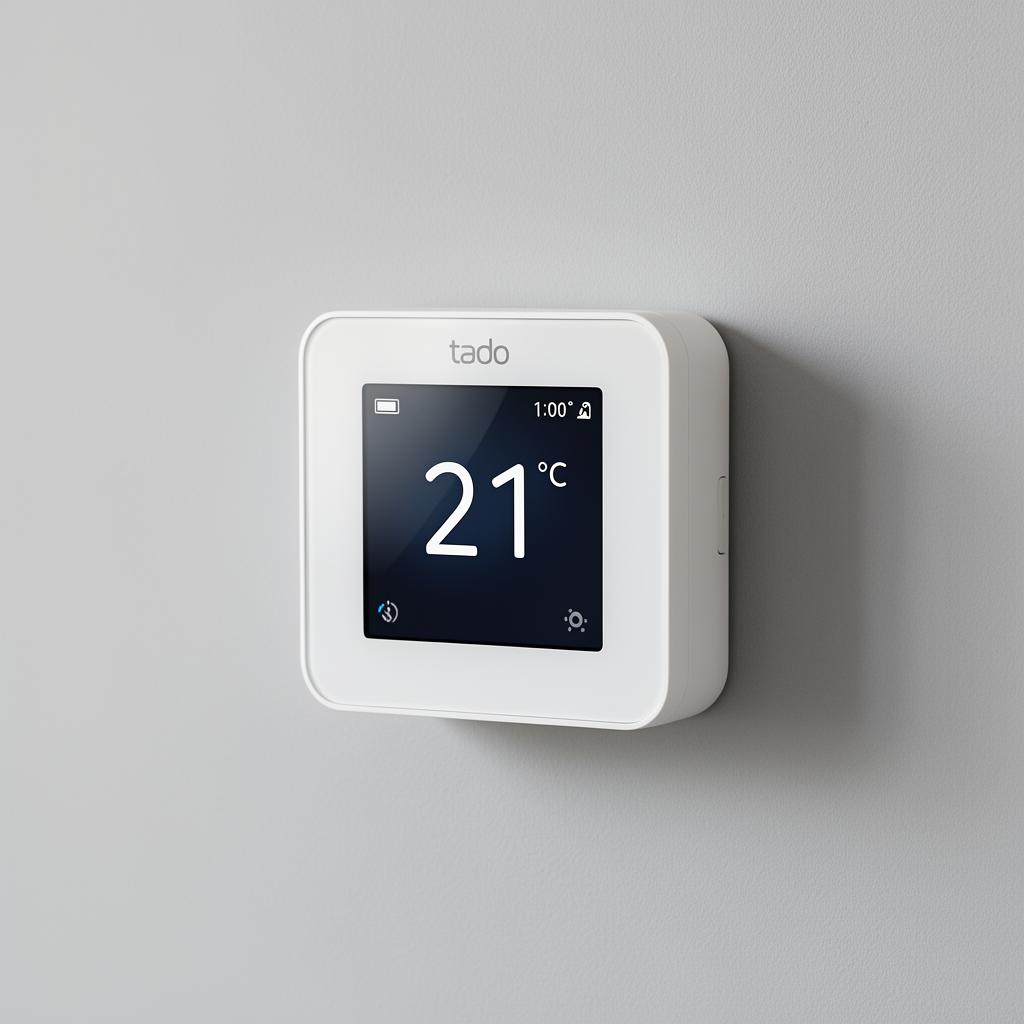
tado Smart Thermostat X
Schedule, zone and remote-control your heating — independently shown to cut heating bills by up to 28%.
Shop on Amazon