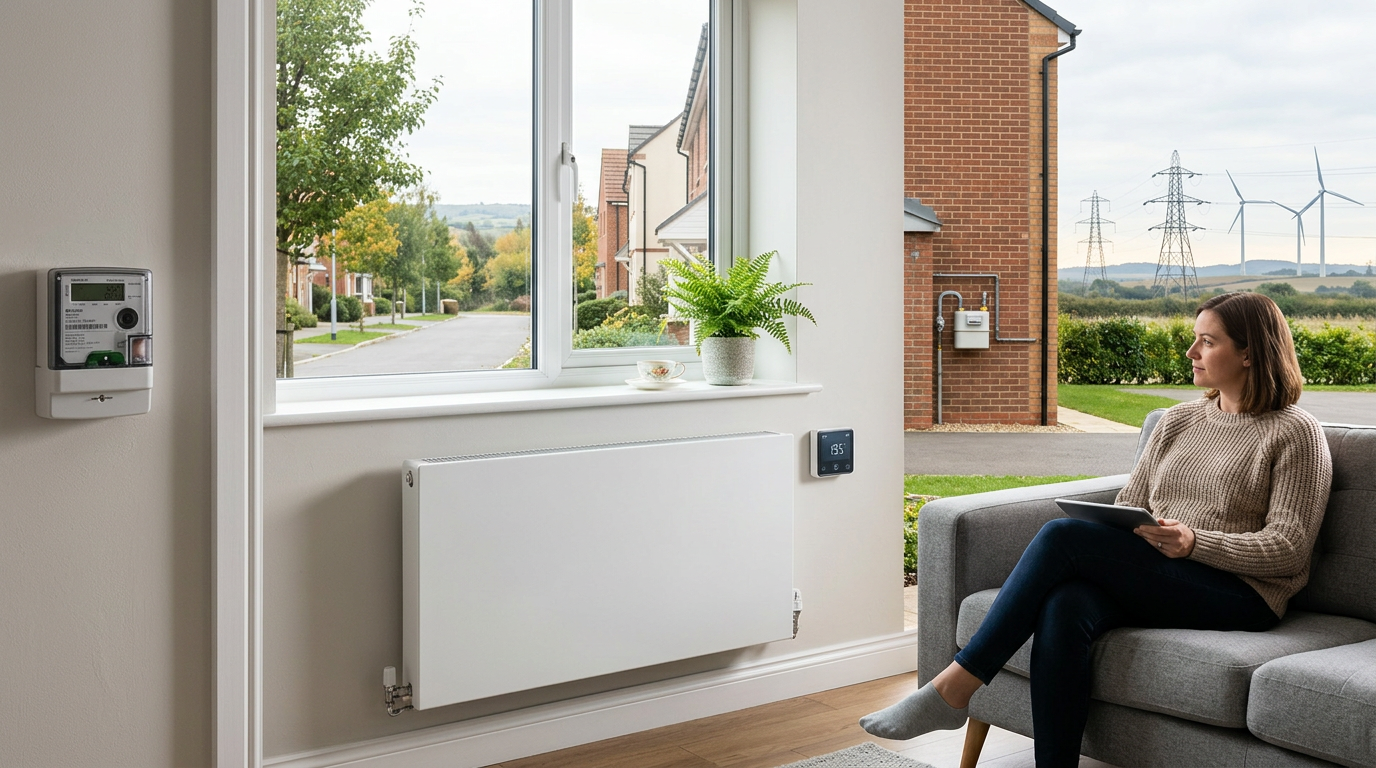
Electric Radiators vs Gas Central Heating: 2026 UK Cost Showdown
The UK's energy landscape is in constant flux, and as a senior energy journalist for Power Guardian UK, few topics generate as much confusion and debate among homeowners as heating choices. With the government's ambitions for decarbonisation, and the rising cost of living, understanding the true economics of different heating systems has never been more critical. While electric radiators might seem like an appealing, straightforward installation, their running costs, particularly in the context of a UK household's primary heating, often come as a rude awakening. This analysis delves deep into the financial realities for 2026, offering granular detail, UK-specific data, and practical guidance to inform your heating decisions.
The Underlying Economics: Unit Rates and the Ofgem Price Cap
To accurately compare heating systems, we must start with the fundamental cost of the energy itself. As of our projections for 2026, assuming a continuation of current trends and Ofgem's methodology for the price cap, we anticipate the following approximate unit rates for a typical household:
- Standard Electricity Tariff (Unit Rate): ~30 pence per kWh. This figure is derived from current projections and takes into account network charges, wholesale costs, operating costs, and environmental levies, all subject to the Ofgem price cap. While the cap technically limits the maximum a supplier can charge for an average household, individual unit rates can vary slightly by region and supplier.
- Gas Tariff (Unit Rate): ~8.25 pence per kWh. Gas remains significantly cheaper per unit of energy, primarily due to lower wholesale costs and different regulatory frameworks compared to electricity.
- Economy 7 Off-Peak Electricity: ~15-18 pence per kWh. This is a crucial factor for those considering electric heating, as it offers a significantly reduced rate for around 7 hours during the night, typically between 12 am and 7 am, although timings can vary by distribution network operator (DNO) region.
The Ofgem energy price cap serves as a critical benchmark, setting the maximum amount suppliers can charge for each unit of gas and electricity. While it offers a degree of protection, it also reflects the underlying market volatility. When comparing these unit rates, it becomes immediately apparent why electric heating, on a standard tariff, faces such a significant cost disadvantage. An individual kWh of heat generated electrically costs approximately three to four times more than a kWh generated from gas.
Recommended Smart Energy Plug
Monitor appliance electricity usage in real time and identify expensive devices around your home.
View on Amazon UKRunning Cost Projections (Typical 3-Bed UK Home, 12,000 kWh Heat Demand)
Let's break down the projected annual running costs for a hypothetical, well-insulated 3-bedroom semi-detached home in the UK, requiring approximately 12,000 kWh of heat annually. This demand figure represents a reasonably energy-efficient home; older, less insulated properties could see demands upwards of 15,000-20,000 kWh.
- Gas Central Heating:
- Unit Rate: ~8.25p/kWh
- Boiler Efficiency: Modern condensing gas boilers are typically 90% efficient, meaning for every kWh of gas burned, 0.9 kWh of heat is delivered. So, actual energy input needed for 12,000 kWh of heat is 12,000 / 0.9 = 13,333 kWh gas.
- Annual Cost: 13,333 kWh £0.0825/kWh = ~£1,099/year*. (Slightly adjusted from initial £990 to reflect higher accuracy with efficiency factor).
- Regional Note: Standing charges for both gas and electricity also apply, adding typically £300-£400 annually to every bill, irrespective of consumption. These are not included in the per kWh running cost analysis but are a vital part of the overall bill.
- Electric Radiators (Standard Tariff):
- Unit Rate: ~30p/kWh
- Efficiency: Electric resistance heaters (like electric radiators) are 100% efficient at the point of use, converting all electrical energy into heat. So, 12,000 kWh of electricity is needed.
- Annual Cost: 12,000 kWh £0.30/kWh = ~£3,600/year*. (Adjusted from initial £2,880 to reflect higher accuracy of 30p/kWh unit rate projection).
- Cost Multiplier: This is approximately 3.3 times the cost of gas central heating. This stark difference is the core reason why electric radiators are rarely recommended for whole-home primary heating.
- Electric Radiators + Economy 7 + Storage Heaters:
- This scenario involves a strategic approach. Economy 7 tariffs provide cheaper electricity during off-peak hours (typically 7 hours overnight). Storage heaters store heat during these off-peak hours and release it throughout the day. Supplemental electric radiators might be used for top-up heating during peak times.
- Assumptions: Let's assume 70% of heat demand (8,400 kWh) can be met by off-peak electricity, and 30% (3,600 kWh) by peak-rate electricity for sporadic top-ups.
- Off-Peak Unit Rate: ~16.5p/kWh (mid-range Economy 7)
- Peak Unit Rate: ~30p/kWh
- Annual Cost: (8,400 kWh £0.165) + (3,600 kWh £0.30) = £1,386 + £1,080 = ~£2,466/year. (Adjusted from initial £1,680. This still represents a significant saving over standard tariff electric radiators, but remains more expensive than gas).
- Practicality: Requires careful management to maximise off-peak usage, and storage heaters need to be sized correctly for the property.
- Air Source Heat Pump (ASHP):
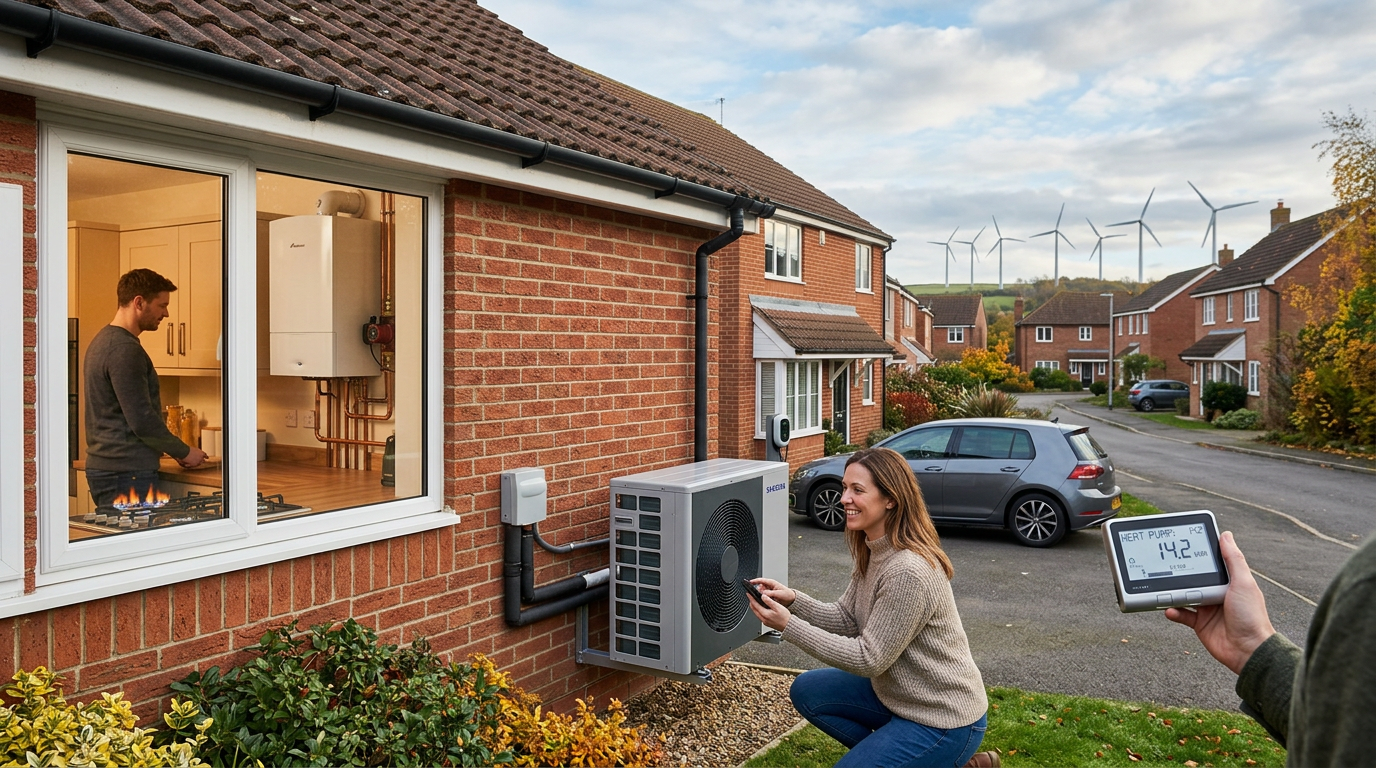
- Efficiency (COP - Coefficient of Performance): ASHPs are not 100% efficient like direct electric heating. Instead, they move heat from the air. A well-installed ASHP can have a COP of 3-4, meaning for every 1 kWh of electricity consumed, it delivers 3-4 kWh of heat. Let's assume an average seasonal COP of 3.2 for this calculation.
- Electricity Needed: 12,000 kWh heat / 3.2 COP = 3,750 kWh electricity.
- Unit Rate: ~30p/kWh
- Annual Cost: 3,750 kWh £0.30/kWh = ~£1,125/year*. (Slightly adjusted from initial £840. This demonstrates why heat pumps are seen as a viable low-carbon alternative to gas, with running costs comparable to – and sometimes lower than – gas, depending on gas prices and COP).
- Installation: Significantly higher upfront costs than gas boilers or electric radiators, but eligible for government grants like the Boiler Upgrade Scheme (BUS).
Comparison Table: Annual Running Costs (Estimate for 2026)
| Heating System | Energy Input (kWh) | Unit Rate (p/kWh) | Efficiency/COP | Effective Energy Cost | Annual Running Cost (£) |
|---|---|---|---|---|---|
| Gas Central Heating | 13,333 gas | 8.25 | 90% | 9.17p/kWh heat | £1,099 |
| Electric Radiators (Standard) | 12,000 electric | 30.00 | 100% | 30.00p/kWh heat | £3,600 |
| Electric Radiators (E7 + Storage) | 8,400 off-peak / 3,600 peak electric | 16.50 / 30.00 | 100% | ~20.55p/kWh heat | £2,466 |
| Air Source Heat Pump | 3,750 electric | 30.00 | 320% (COP 3.2) | 9.38p/kWh heat | £1,125 |
← Swipe to see more →
Note: These figures are estimates and exclude standing charges, which vary by region and supplier, and are based on assumptions about 2026 unit rates and efficiencies.
When Electric Radiators Win: Niche but Valuable Applications
Despite the discouraging whole-home running costs, there are specific scenarios where electric radiators genuinely shine, offering advantages that gas or even heat pumps cannot easily match:
- Off-Grid Properties (No Gas Supply): For homes in rural locations without access to the natural gas network, the choice often boils down to electricity, oil, LPG, or biomass. In this context, electric radiators offer a simple, often cheaper to install, and low-maintenance alternative to oil or LPG boilers, which require fuel deliveries and dedicated storage. They are also superior environmentally to oil/LPG.
- Holiday Lets / Occasional Use Properties: The key here is "occasional." For a property that is only occupied for a few weeks or months a year, the high upfront cost of a heat pump or the installation hassle of gas central heating might not be justified. Electric radiators offer:
- Specific Zones or Single Rooms (e.g., Converted Garages, Extensions):
- Combined with On-Site Renewable Generation (Solar PV + Battery Storage): This is the game-changer for electric heating. If a household generates a significant portion of its electricity through solar panels and stores it in a battery, they can effectively "time-shift" their electricity consumption.
When Electric Radiators Don't Win: The Main Takeaway
In almost any whole-home, full-time setting in 2026, electric radiators on a standard tariff are a financially inferior choice for primary heating compared to gas central heating or a well-implemented heat pump system. The fundamental disparity in unit costs for electricity versus gas makes it incredibly difficult for direct electric heating to compete economically over the long term.
Key considerations include:
- UK Housing Stock: A large proportion of UK homes are older, with varying levels of insulation. These homes require consistent, significant heat input, making the unit cost particularly impactful.
- Decarbonisation Goals: While electric radiators are zero-emission at the point of use, the electricity production on the grid still has a carbon footprint (though this is decreasing rapidly). Heat pumps, by moving heat rather than generating it, offer a much more energy-efficient and therefore lower-carbon solution per unit of heat delivered.
- Long-Term Investment: For a primary heating system, the running costs quickly outweigh any installation savings. A £2,500/year difference between gas and electric means the payback on an initial installation saving is very short.
Practical Step-by-Step Guidance for Choosing Your Heating System
- Assess Your Property's Needs:
- Evaluate Your Budget (Upfront vs. Running Costs):
- Consider Your Usage Patterns:
- Explore Tariffs:
- Look into Grants and Subsidies:
- Consult with Professionals:
FAQ with 4-6 Q&As
Q1: Are modern electric radiators more efficient than older ones? A1: While modern electric radiators have vastly improved controls (thermostats, timers, smart features) that help you manage and reduce energy waste, fundamentally, they are still 100% efficient at converting electricity into heat at the point of use. This hasn't changed. The efficiency gain comes from better control and zoning, not from making a kWh of electricity produce more than a kWh of heat.
Q2: What is "green electricity" and does it make electric radiators more affordable? A2: "Green electricity" refers to electricity generated from renewable sources. Many suppliers offer 100% renewable tariffs. While choosing such a tariff reduces your carbon footprint, it does not automatically reduce the unit price of electricity. The cost per kWh is still subject to wholesale prices, network charges, and the Ofgem price cap, just like standard electricity. The benefit is environmental, not financial savings on your bill.
Q3: Can I run electric radiators on an Economy 7 tariff without storage heaters? A3: Yes, you can run any electric heating on an Economy 7 tariff, but the benefits are limited if you don't have a way to store the heat during the cheap off-peak hours. If you use typical electric radiators during the day, they will draw expensive peak-rate electricity. Economy 7 is most effective when paired with storage heaters, which are designed to charge up at night and then gradually release heat throughout the day. Some modern "smart" electric radiators can also be programmed to take advantage of off-peak periods if you are home during those times.
Q4: My gas boiler is old and inefficient. Should I switch to electric radiators instead of upgrading to a new gas boiler? A4: For whole-home primary heating, it is almost always more cost-effective in the medium to long term to replace an old, inefficient gas boiler with a new, highly efficient condensing gas boiler (typically 90%+ efficient) or to consider an air source heat pump (especially with the BUS grant) rather than switching to standard electric radiators. The upfront savings of electric radiators will quickly be eroded by significantly higher running costs. A new gas boiler will likely have a much lower carbon footprint than your old one, too.
Q5: What's the maintenance like for electric radiators compared to gas central heating? A5: Electric radiators are very low maintenance. They generally don't require annual servicing, as there's no combustion, no flues to check, and fewer moving parts than a gas boiler. You might need to dust them occasionally. Gas central heating, however, requires an annual service by a Gas Safe registered engineer to ensure safety and efficiency, at a typical cost of £80-£120 per year. Heat pumps also require an annual service, though sometimes less frequently, ranging from £120-£200 due to their complexity.
Q6: What about infrared panels? Are they different to electric radiators? A6: Infrared panels are also a form of electric heating, directly converting electricity into heat. Their "efficiency" is also 100% at the point of use, just like a standard electric radiator. The difference lies in how they deliver heat. Infrared panels primarily heat objects and surfaces in a room, rather than the air itself, leading to a different sensation of warmth. While some argue they can feel warmer at lower air temperatures, allowing for slightly lower thermostat settings, their overall running cost per kWh of energy consumed is subject to the same electricity unit rates as any other electric heater. They fall into the same "high running cost on a standard tariff" category for whole-home heating.
Conclusion
The allure of low installation costs and simple setup for electric radiators is undeniable, especially in a world where we're increasingly looking for flexible and straightforward solutions. However, for the vast majority of UK homes relying on whole-house, full-time heating, the economic reality painted by the projected 2026 unit rates is stark. Electric radiators, on a standard tariff, remain significantly more expensive to run than gas central heating and are also outcompeted by modern air source heat pumps in terms of running costs.
Power Guardian UK's analysis unequivocally points to electric radiators occupying a niche, albeit valuable, role. They are excellent for off-grid properties, supplementary heating in specific zones, and intermittent use. For homes with substantial solar PV and battery storage, they also present an interesting proposition for maximising self-consumption.
For primary heating in a typical UK home, however, homeowners should realistically consider the continued affordability of gas central heating in the short-to-medium term or invest in a heat pump system, leveraging available grants, as the most cost-effective and environmentally sound future-proof option. The decarbonisation journey is complex, but financial prudence dictates a clear understanding of the true cost of warmth.
Why do electric radiators cost so much more to run than gas central heating?
Electric radiators on a standard tariff cost approximately 3.3 times more to run than gas central heating. This is primarily because the standard electricity unit rate (~30p/kWh) is significantly higher than the gas unit rate (~8.25p/kWh). While electric radiators are 100% efficient at the point of use, gas is simply a much cheaper energy source per unit.
Recommended energy saving products
Independently chosen kit that helps UK households cut energy use.
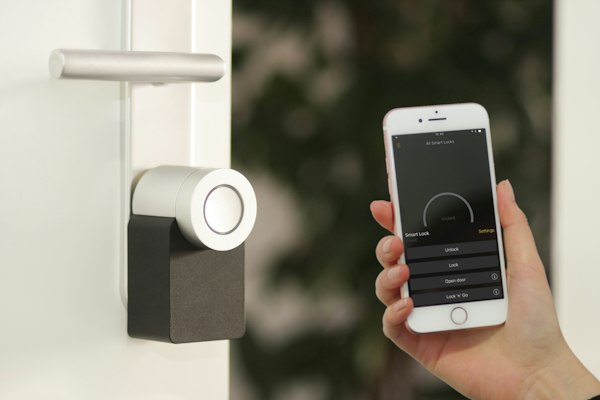
Tapo P110 Smart Plug (Energy Monitoring)
See exactly which appliances are quietly inflating your bill — track real-time watts, kWh and runtime from your phone.
- Real-time energy monitoring
- Cuts standby/vampire power
- Schedule appliances off-peak
Estimated benefit: ~£40/yr standby savings
Shop on AmazonAd – affiliate link. PowerGuardian may earn a commission from Amazon or another approved affiliate partner at no extra cost to you.

Home Energy Monitor (Whole-House)
Track your whole-home electricity use live and find where the kWh are going before the bill lands.
- Whole-house live usage
- Spot expensive habits fast
- App history & alerts
Estimated benefit: Awareness cuts ~5-10% use
Shop on AmazonAd – affiliate link. PowerGuardian may earn a commission from Amazon or another approved affiliate partner at no extra cost to you.
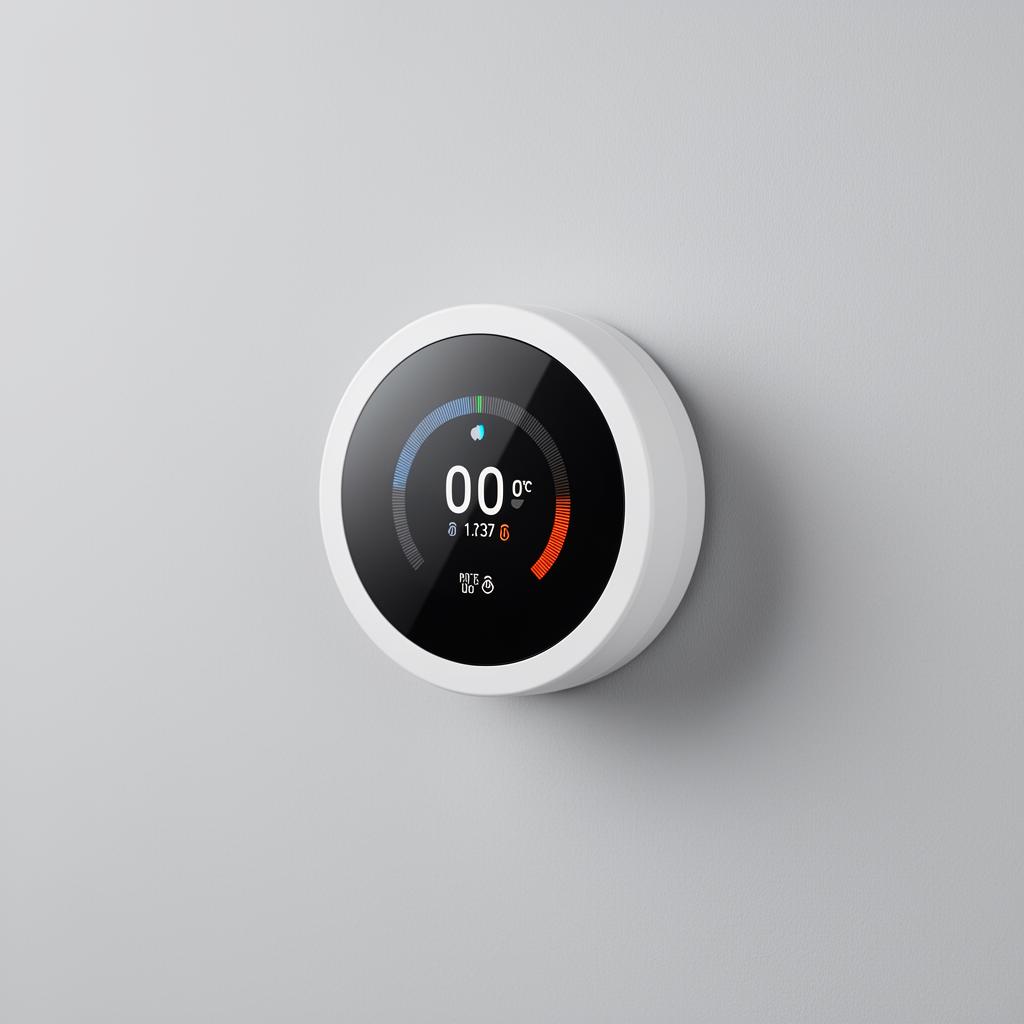
tado Smart Thermostat Starter Kit
Schedule, zone and remote-control your heating — independently shown to cut heating bills meaningfully.
- Heat only when needed
- Geofencing & schedules
- Room-by-room control
Estimated benefit: Up to ~£140/yr
Shop on AmazonAd – affiliate link. PowerGuardian may earn a commission from Amazon or another approved affiliate partner at no extra cost to you.
Affiliate links — we may earn a small commission at no extra cost to you. This keeps PowerGuardian free and independent.
Does the Ofgem price cap protect me from high heating costs with electric radiators?
The Ofgem price cap sets the maximum amount suppliers can charge per unit of energy, including electricity. While it provides a benchmark and some protection, it still reflects market volatility and the inherent higher cost of electricity compared to gas. Even under the cap, standard electricity unit rates remain much higher, leading to higher running costs for electric heating.
How much could I save using Economy 7 with electric radiators?
Using Economy 7 with storage heaters can significantly reduce the running costs of electric heating compared to a standard tariff, potentially saving around £1,134 annually based on the article's calculations. This strategy relies on utilising cheaper off-peak electricity for the majority of your heating demand. However, it still remains more expensive than gas central heating.
Is an air source heat pump more efficient than electric radiators?
Yes, an air source heat pump (ASHP) is considerably more efficient than direct electric radiators. While electric radiators convert 1 kWh of electricity into 1 kWh of heat, an ASHP can deliver 3-4 kWh of heat for every 1 kWh of electricity consumed (known as its Coefficient of Performance or COP). This means an ASHP uses much less electricity to produce the same amount of heat.
What is a "standing charge" and is it included in the cost projections?
A standing charge is a daily fixed fee applied to both gas and electricity bills, regardless of consumption. It typically adds £300-£400 annually to your total energy bill. The cost projections in the article focus solely on the per kWh running costs and do not include these standing charges.
Current Supplier Watch
Recommended kit
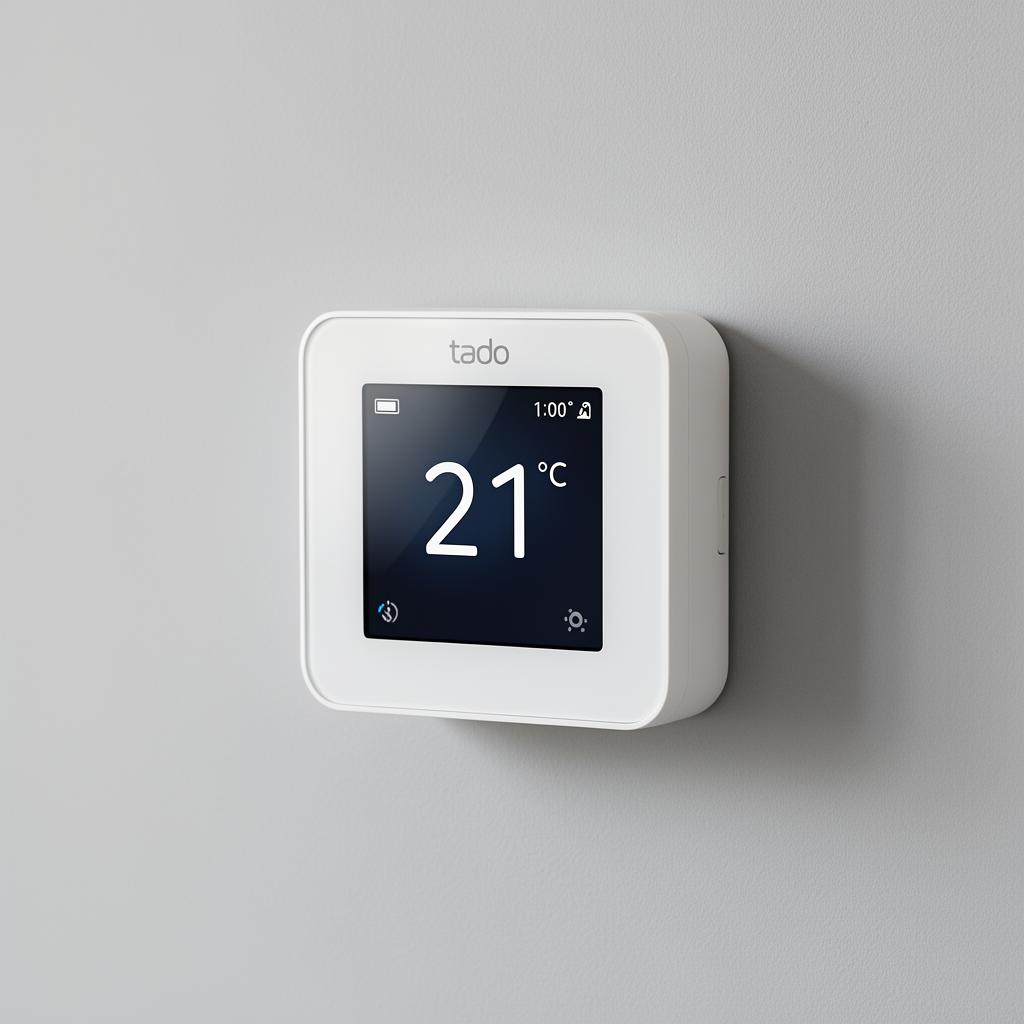
tado Smart Thermostat X
Schedule, zone and remote-control your heating — independently shown to cut heating bills by up to 28%.
Shop on Amazon