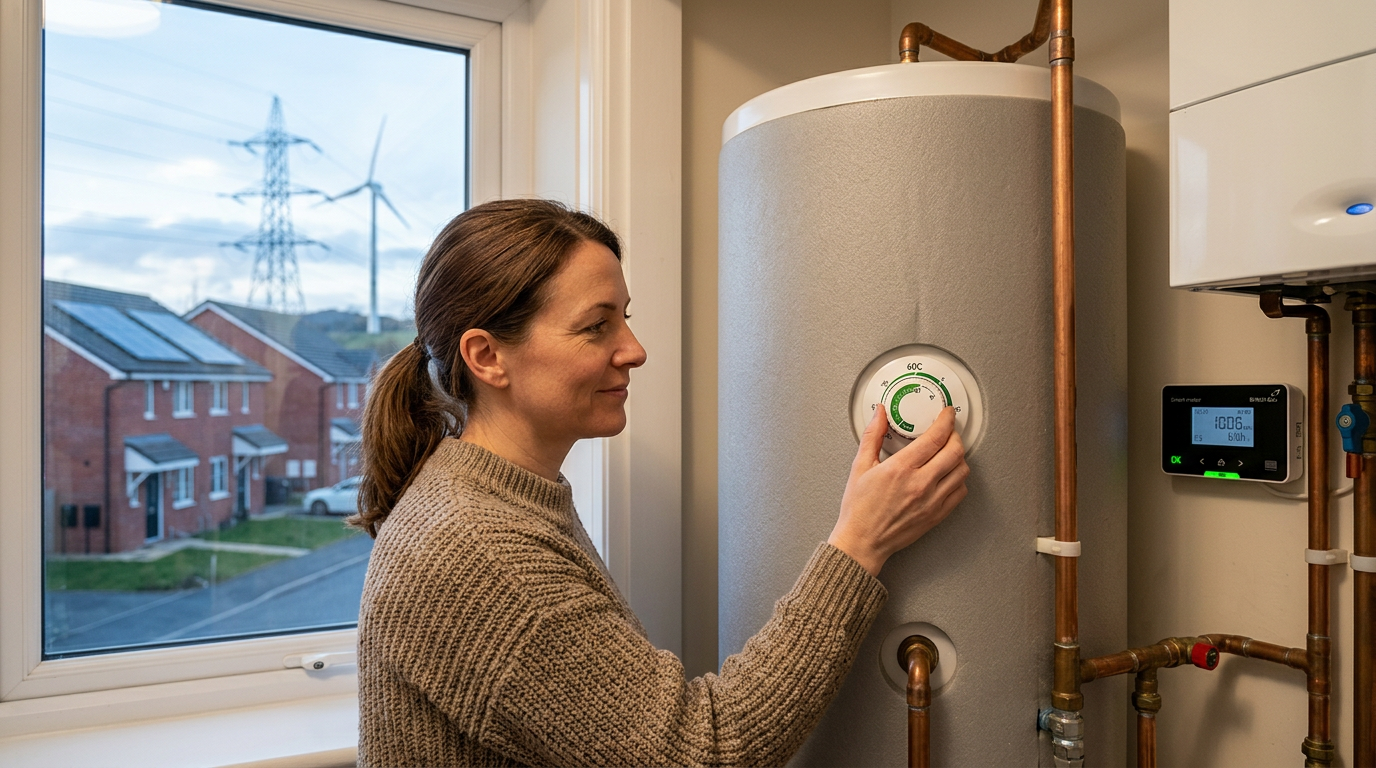
The Optimal Hot Water Temperature: Balancing Safety, Efficiency, and Cost in UK Homes
As we navigate the ever-evolving landscape of UK energy, understanding how to manage our home's hot water system isn't just about comfort – it's about safety, efficiency, and significant cost savings. The seemingly simple question of "what temperature should my hot water tank be set to?" unlocks a complex interplay of public health guidelines, energy price caps, and practical home management. At Power Guardian UK, we're here to cut through the noise and provide clear, actionable advice for UK households in 2026.
Current Supplier Watch
The Definitive Answer: 60°C in the Tank, 50°C at the Tap
This isn't an arbitrary figure; it's a carefully considered balance dictated by UK health and safety regulations, energy efficiency imperatives, and the practicalities of domestic life.
- 60°C (minimum) in the Cylinder: This is the critical baseline for health and safety. The UK's Health and Safety Executive (HSE) guidance explicitly states that hot water storage cylinders should store water at no less than 60°C. Why exactly 60°C? This temperature is lethal to Legionella pneumophila, the bacteria responsible for Legionnaires' disease. While 55°C will kill most Legionella over several hours, 60°C provides a much faster and more robust kill rate, ensuring that any bacteria introduced into the system is rapidly eradicated. Storing water below this temperature significantly increases the risk of bacterial proliferation, particularly in stagnant areas or infrequently used outlets.
- 50°C (maximum) at the Tap (or other outlets like showers): This is where safety for occupants comes into play, particularly for vulnerable individuals. Water at 60°C can cause severe scalding in seconds – a third-degree burn in just 5 seconds for adults, and even faster for children and the elderly.
- Babies and young children have thinner skin, making them incredibly susceptible to rapid and severe burns from hot water.
- Elderly or infirm individuals may have reduced sensation or slower reaction times, increasing their risk of prolonged exposure and serious injury.
- The 50°C maximum at the outlet dramatically reduces this risk, allowing for comfortable and safe use of hot water for washing, bathing, and cleaning.
Recommended Smart Energy Plug
Monitor appliance electricity usage in real time and identify expensive devices around your home.
View on Amazon UKThe Role of Thermostatic Mixing Valves (TMVs)
Achieving both 60°C in the tank and 50°C at the tap requires a crucial piece of plumbing: the Thermostatic Mixing Valve (TMV).
- How they work: A TMV blends hot water directly from the cylinder with cold mains water to deliver a safe, pre-set temperature at the point of use (e.g., a shower mixer, bath tap, or even a whole-house TMV near the cylinder).
- Why they are essential: Without a TMV, the only way to achieve 50°C at the tap would be to lower the cylinder temperature, which, as we've established, is a dangerous practice from a Legionella perspective. TMVs allow you to maintain public health standards (60°C in the cylinder) while preventing scalding risks.
- Installation: A qualified plumber should install TMVs. While individual TMVs can be fitted at specific outlets, a central TMV installed close to the hot water cylinder can serve multiple outlets, often making it a more cost-effective and comprehensive solution. Ensure your TMV is calibrated correctly to deliver water no hotter than 50°C to outlets.
Recommended Smart Energy Plug
Monitor appliance electricity usage in real time and identify expensive devices around your home.
View on Amazon UKThe UK Energy Price Cap and Your Hot Water Costs
Understanding the current energy landscape adds a critical layer to our discussion. As of [Insert Current Quarter/Year if known, otherwise state 'early 2026'], the Ofgem energy price cap dictates the maximum unit rates and standing charges suppliers can charge. For a typical direct debit customer:
- Electricity Unit Rate: Approximately 28.62p per kWh (regional variations apply, e.g., higher in some parts of the North West, lower in East England).
- Gas Unit Rate: Approximately 7.29p per kWh (again, with regional nuances).
Given that most hot water cylinders in the UK are heated by either gas boilers or electric immersion heaters, these unit rates directly impact the cost of keeping your water hot.
The Energy Impact: Cost Savings in Detail
Lowering your cylinder temperature, if it's currently set too high, offers tangible savings. Let's quantify that "around £40/year" from the original post with more precision and context based on current rates:
Scenario: Reducing Cylinder Temperature from 70°C to 60°C
- Energy Waste at 70°C: The hotter the water stored, the greater the heat loss through the cylinder's insulation to the surrounding air. This loss is proportional to the temperature difference between the water and the ambient temperature.
- kWh Savings: A typical uninsulated 150-litre hot water cylinder stored at 70°C loses approximately 2-2.5 kWh per day through standing losses. Reducing this to 60°C can cut these losses by roughly 15-20%.
- Calculation Example (Electric Cylinder):
- Daily kWh saving: ~0.4 kWh (18% of 2.2 kWh/day)
- Annual kWh saving: 0.4 kWh/day * 365 days = 146 kWh
- Annual Cost Saving: 146 kWh £0.2862/kWh (average electricity unit rate) = £41.79*
- Calculation Example (Gas Cylinder):
- Daily kWh saving: ~0.4 kWh
- Annual kWh saving: 146 kWh
- Annual Cost Saving: 146 kWh £0.0729/kWh (average gas unit rate) = £10.64*
Important Note: The original £40/year figure likely assumes an electric immersion heater, where energy costs are significantly higher. If your hot water is heated by gas, the savings are still present but less dramatic. However, gas prices have risen, making even smaller savings more welcome.
Going Below 55°C is NOT Recommended: While the energy savings might be tempting, dropping below 55°C in the cylinder is a severe health risk due to Legionella proliferation. The marginal energy savings would be dwarfed by the potential medical costs and health implications.
Practical Step-by-Step Guidance for Setting Your Hot Water Temperature
Here’s how to safely and efficiently manage your hot water system:
Step 1: Identify Your Hot Water System Type
* Combi Boiler: Water is heated on demand, so there's no storage tank. You adjust the outgoing water temperature directly on the boiler controls. Set this to a temperature that provides comfortable hot water safely, typically between 45-55°C. * Conventional Boiler with Storage Cylinder: This is the most common system for homes with immersion heaters, often found in conjunction with a conventional or system boiler. You will have a hot water cylinder, usually in an airing cupboard. * Electric Immersion Heater: A heating element inside your hot water cylinder, often as a backup to a boiler or as the sole heating source.
Step 2: Locate Your Cylinder Thermostat (Conventional & Immersion Heater Systems)
Most hot water cylinders have a thermostat attached to the side, often under a removable cover. It will have a dial with temperature markings.
Step 3: Check and Adjust the Temperature
* Safety First: If you're physically adjusting a thermostat on the cylinder, ensure the power to the immersion heater (if electric) is off at the fuse box, or the boiler is turned off for heating the hot water. * Current Setting: Note down the current temperature setting. * Adjust to 60°C: Carefully turn the dial on the thermostat to 60°C. If it's already at 60°C, great! If it's higher (e.g., 65°C or 70°C), reduce it. If lower, increase it. * Testing: After adjustment, turn the power back on. Wait several hours for the water to heat up fully. Verify with a thermometer (optional but recommended): Run a hot tap for a minute or two (preferably one furthest from the cylinder). Collect a small amount of hot water in a cup and use a thermometer to check its temperature. Crucially, this tap temperature should NOT be 60°C without a TMV. This test is to ensure the cylinder* is heating to roughly 60°C.
Step 4: Install or Check Thermostatic Mixing Valves (TMVs)
Essential for Safety: This is paramount. If you don't have TMVs installed on your hot water outlets (especially baths and showers), you must* consider having them fitted by a qualified plumber. This is the only way to safely deliver 50°C water at the tap while maintaining 60°C in the cylinder. * Calibration: If you have TMVs, ensure they are correctly calibrated to deliver water at safe temperatures (typically 45-50°C at the outlet). A plumber can perform this check and recalibration.
Beyond Temperature: Maximising Hot Water Efficiency
Setting the correct temperature is foundational, but significant additional savings can be found through insulation.
Insulate Your Hot Water Cylinder
* The £15 Investment, £70/year Saving: An uninsulated hot water cylinder is a heat radiator in your home, constantly losing energy. A thick, well-fitting hot water cylinder jacket (80mm minimum) is an incredibly cost-effective upgrade. * Cost: Approximately £15-£25 for a good quality 80mm jacket. * Annual Saving: Around £70 annually for an average UK household using an electric immersion heater. If you use gas, savings will be lower but still substantial. * Benefit: Reduces standing heat loss dramatically, meaning your system doesn't have to work as hard (or as often) to reheat the water. * Installation: This is a straightforward DIY task, typically taking less than an hour. Ensure it fits snugly and covers as much of the cylinder as possible.
Insulate the First 2 Metres of Pipework
* The £8 Investment, £20/year Saving: Hot water pipes, especially those immediately leaving the cylinder, radiate significant heat. * Cost: Pipe insulation lagging foam costs around £5-£10 for 2-3 metres. * Annual Saving: Estimates suggest around £20 per year for an average hot water system. * Benefit: Reduces heat loss from the pipes, meaning hot water arrives at your tap faster and at a higher temperature, reducing wasted cold water pre-flow. * Installation: Again, a simple DIY job. Measure the pipe diameter, buy the correct size foam lagging, and clip it securely around the pipes. Pay particular attention to the hot water outlet pipe and any recirculation loops.
Power Guardian UK's Hot Water Efficiency Checklist
| Feature/Action | Safety Benefit | Energy Efficiency Benefit | Estimated Annual Saving (Electric H/W) | Estimated Annual Cost |
|---|---|---|---|---|
| Cylinder Temp ⇌ 60°C | Kills Legionella bacteria | Reduces standing heat loss (if >60°C) | £40 (if reducing from 70°C) | £0 (adjustment) |
| TMV at Outlets ⇌ 50°C | Prevents scalding, especially for vulnerable | N/A (safety device) | £0 | £50-£150 (per outlet installed) |
| 80mm Cylinder Jacket | N/A | Dramatically reduces standing heat loss | £70 | £15-£25 |
| First 2m Pipe Insulation | N/A | Reduces heat loss & faster hot water delivery | £20 | £8-£10 |
| Regular System Checks | Ensures continued safe operation (TMV calibration) | Prevents hidden inefficiencies (e.g., dripping taps) | Varies | Varies |
← Swipe to see more →
Savings are indicative and depend on household usage, existing insulation, and specific UK regional energy tariffs.
FAQs: Your Hot Water Questions Answered
Q1: Why can't I just set my boiler to 50°C and avoid TMVs? A: This is dangerous. While 50°C might feel hot enough at the tap, storing your entire cylinder's water at this temperature allows Legionella bacteria to multiply rapidly. The HSE guidance is clear: minimum 60°C in the cylinder to kill bacteria. TMVs are the safe and compliant solution to have both safety and efficiency.
Q2: My hot water never feels hot enough, even at 60°C. What's wrong? A: Several factors could be at play: TMV Calibration:* Your TMV might be set too low. System Size:* Your cylinder might be too small for your household's demand, running out quickly. Heating Element/Boiler Issue:* The immersion heater element might be failing, or your boiler's hot water setting might be too low or faulty. Thermostat Error:* The cylinder thermostat itself might be inaccurate. Consult a qualified plumber or heating engineer to diagnose the issue.
Q3: Does this advice apply to combi boilers? A: Not directly for cylinder temperature. Combi boilers heat water on demand and don't have a storage tank that needs to be kept at 60°C for Legionella safety. You should set your combi boiler's hot water temperature control to a comfortable and safe level, typically between 45-55°C, as the water is delivered directly to your tap.
Recommended energy saving products
Independently chosen kit that helps UK households cut energy use.
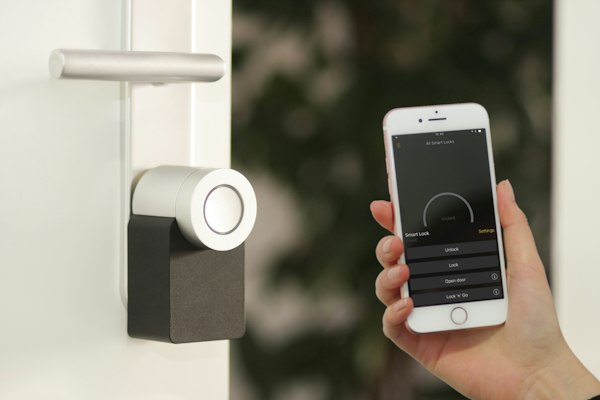
Tapo P110 Smart Plug (Energy Monitoring)
See exactly which appliances are quietly inflating your bill — track real-time watts, kWh and runtime from your phone.
- Real-time energy monitoring
- Cuts standby/vampire power
- Schedule appliances off-peak
Estimated benefit: ~£40/yr standby savings
Shop on AmazonAd – affiliate link. PowerGuardian may earn a commission from Amazon or another approved affiliate partner at no extra cost to you.
Home Energy Monitor (Whole-House)
Track your whole-home electricity use live and find where the kWh are going before the bill lands.
- Whole-house live usage
- Spot expensive habits fast
- App history & alerts
Estimated benefit: Awareness cuts ~5-10% use
Shop on AmazonAd – affiliate link. PowerGuardian may earn a commission from Amazon or another approved affiliate partner at no extra cost to you.
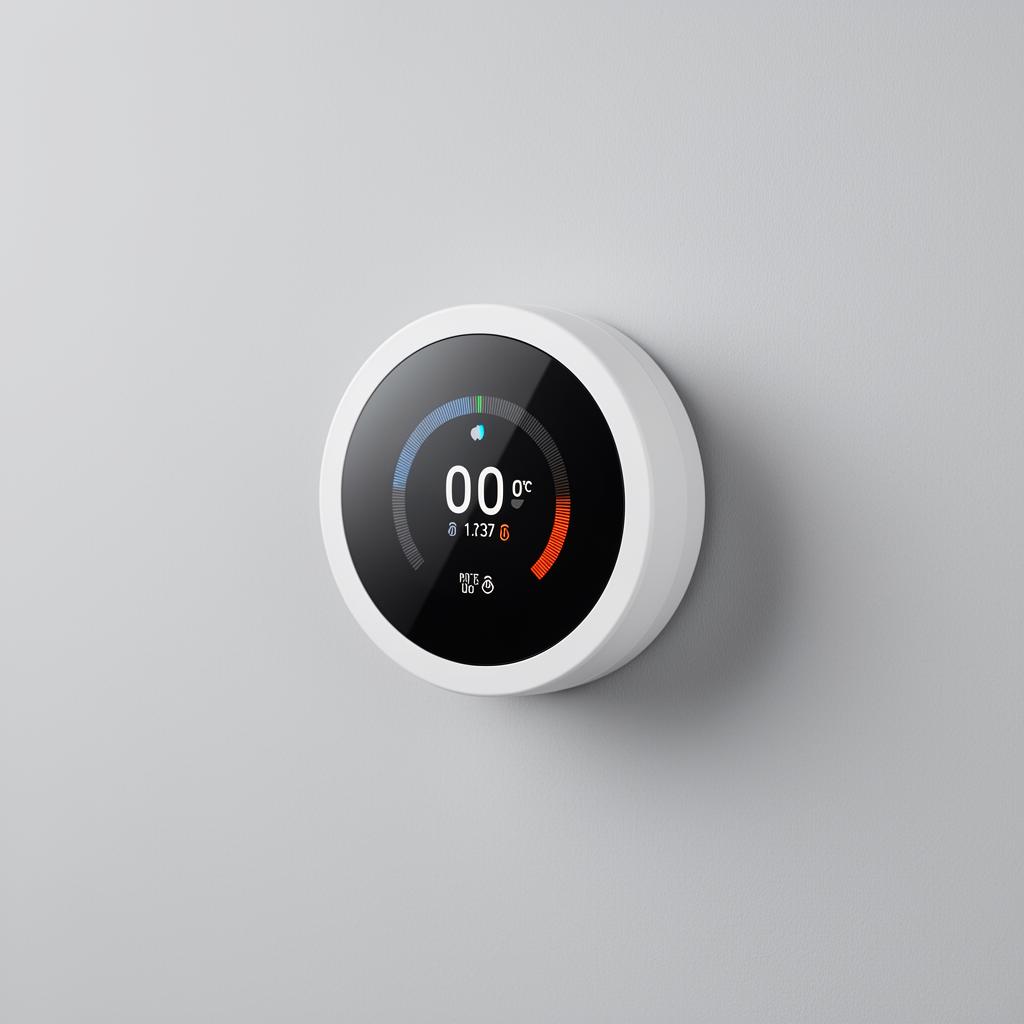
tado Smart Thermostat Starter Kit
Schedule, zone and remote-control your heating — independently shown to cut heating bills meaningfully.
- Heat only when needed
- Geofencing & schedules
- Room-by-room control
Estimated benefit: Up to ~£140/yr
Shop on AmazonAd – affiliate link. PowerGuardian may earn a commission from Amazon or another approved affiliate partner at no extra cost to you.
Affiliate links — we may earn a small commission at no extra cost to you. This keeps PowerGuardian free and independent.
Q4: How often should I check my hot water temperature and TMVs? A: It's good practice to visually check your cylinder thermostat setting annually. TMVs should be checked by a qualified professional every 1-3 years as part of routine plumbing maintenance to ensure they are still calibrated correctly and operating safely.
Q5: I’m in a rented property. Can I change the hot water temperature? A: This depends on your tenancy agreement. Ideally, you should discuss this with your landlord or letting agent. They are responsible for ensuring the property meets health and safety standards, which includes hot water safety. They should be open to ensuring the cylinder is set to 60°C and TMVs are functioning. Unauthorised modifications to plumbing systems are generally not advised.
Q6: What if my cylinder thermostat doesn't have precise temperature markings? A: Some older thermostats might just have 'Min,' 'Med,' 'Max' settings. Start with 'Med' and then test the water temperature with a thermometer after it has fully heated. Adjust incrementally until you achieve around 60°C. This might take a few attempts. Consider upgrading to a thermostat with clearer markings if possible.
Conclusion: Smart Control for a Safer, More Economical Home
In 2026, managing your home's hot water is no longer just about convenience; it's a critical component of household safety and financial prudence. By adhering to the 60°C in-tank, 50°C out-at-tap principle, supported by properly installed and maintained Thermostatic Mixing Valves, UK households can effectively mitigate the risks of Legionnaires' disease and scalding, while simultaneously optimising energy consumption.
The simple, low-cost measures of adequately insulating your hot water cylinder and its immediate pipework offer some of the best returns on investment in the home energy efficiency landscape. As energy prices remain a significant concern for many, these actionable steps, when combined with an informed approach to your hot water system, empower you to create a safer, healthier, and more economical living environment. At Power Guardian UK, we champion these practical changes as vital for every responsible UK homeowner. Stay safe, stay efficient.
What is the ideal temperature for my hot water tank in the UK?
Your hot water tank should be set to a minimum of 60°C. This temperature ensures the rapid killing of Legionella bacteria, protecting against Legionnaires' disease.
Why shouldn't my hot water cylinder be set below 60°C?
Setting your tank below 60°C significantly increases the risk of Legionella bacteria proliferating. While 55°C can kill most Legionella over several hours, 60°C provides a much faster and more robust kill rate, which is crucial for public health and safety.
How can I make sure my tap water isn't too hot if my tank is at 60°C?
You should install Thermostatic Mixing Valves (TMVs). TMVs blend hot water from the cylinder with cold mains water to deliver a safe, pre-set temperature, ideally no hotter than 50°C, at your taps and showers.
How much can I save by reducing my hot water cylinder temperature from 70°C to 60°C?
Reducing your cylinder temperature from 70°C to 60°C can save approximately £41.79 annually if you have an electric immersion heater, based on current electricity unit rates of around 28.62p per kWh. For gas-heated cylinders, the saving is about £10.64 per year.
Is lowering my hot water temperature below 55°C a good way to save energy?
No, lowering your hot water temperature below 55°C is not recommended due to significant health risks. The marginal energy savings would be outweighed by the danger of Legionella proliferation.
Recommended kit
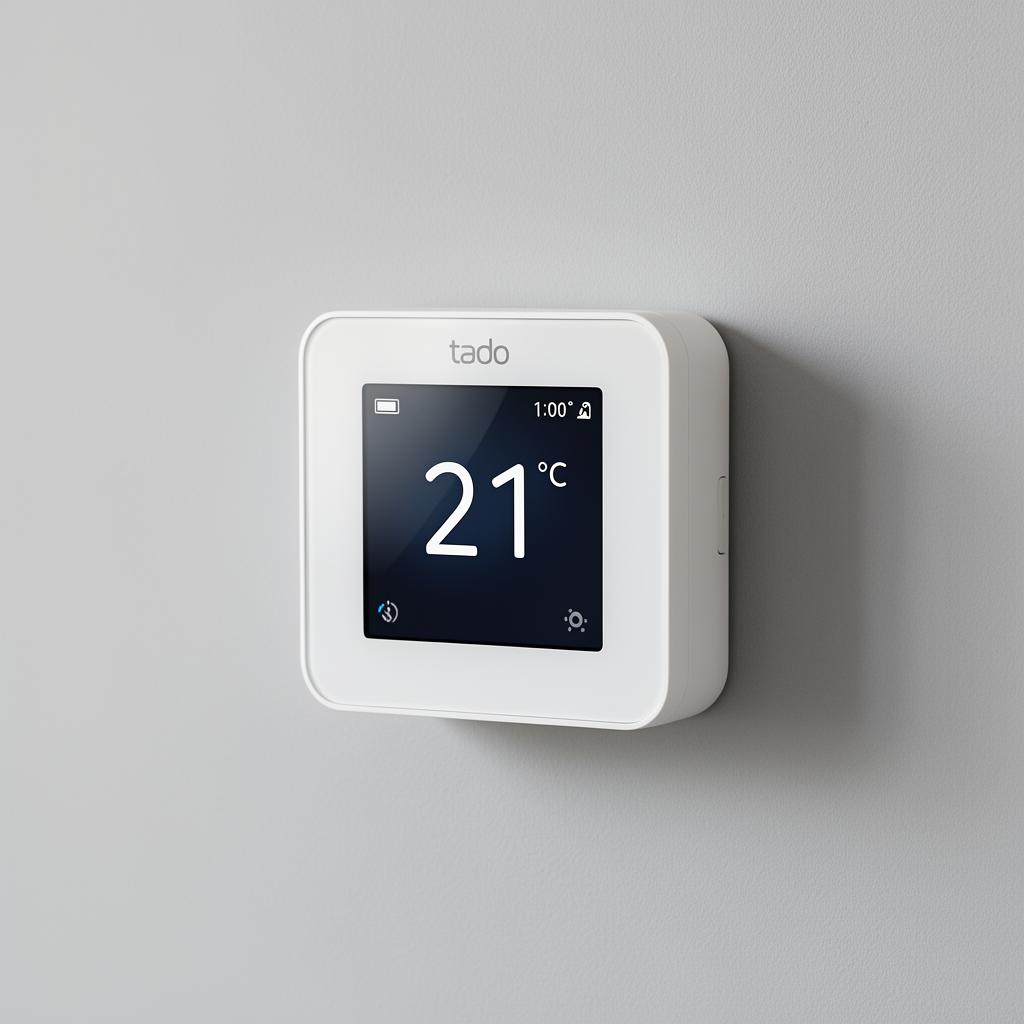
tado Smart Thermostat X
Schedule, zone and remote-control your heating — independently shown to cut heating bills by up to 28%.
Shop on Amazon