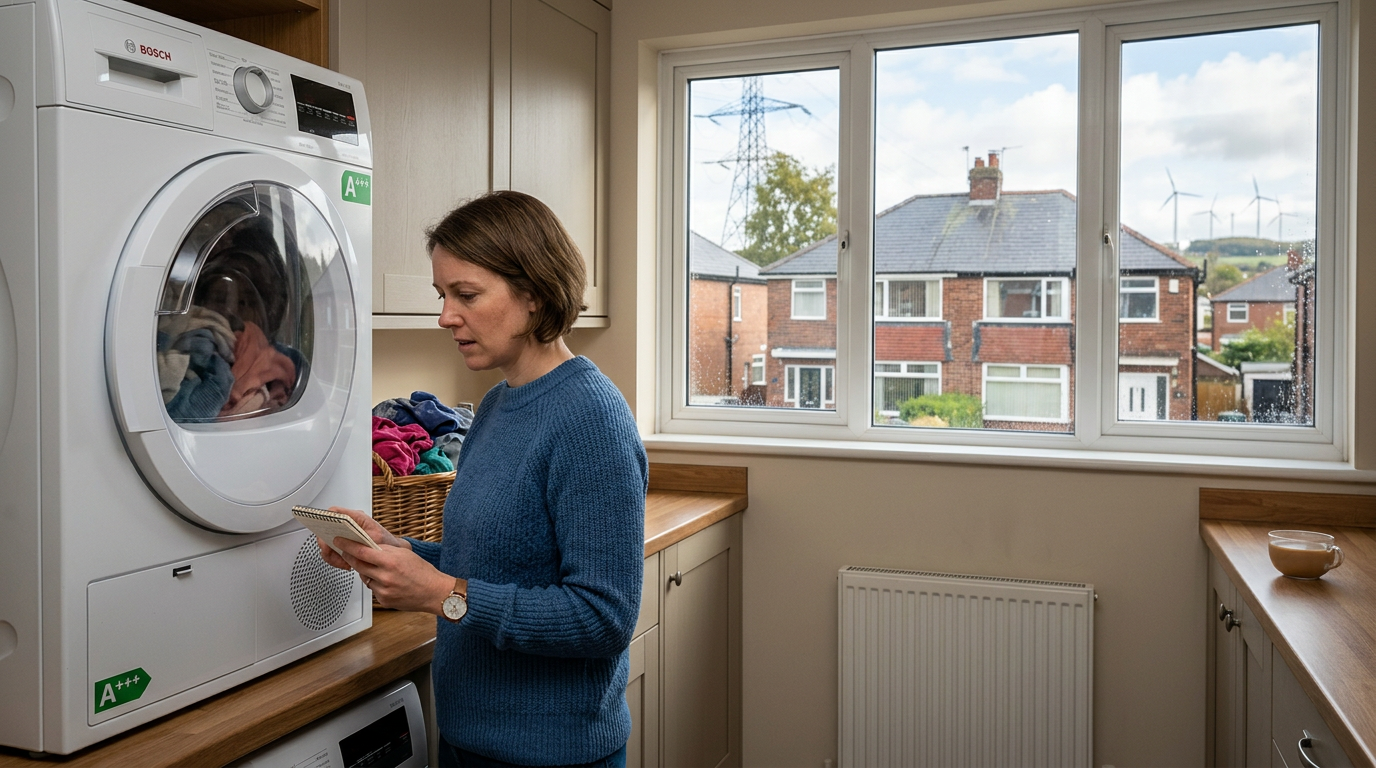
How Much Does a Tumble Dryer Cost to Run in the UK (2026)?
The humble tumble dryer, a seemingly ubiquitous appliance in many UK homes, often operates in the background, out of sight and out of mind. However, its energy appetite is anything but modest. As a senior energy journalist for Power Guardian UK, I can confirm that the tumble dryer is consistently ranked among the top three energy consumers in the average British household, often surpassed only by heating and refrigeration. With energy costs remaining a significant concern for households across the nation, understanding and mitigating the operational cost of your dryer is more critical than ever. This comprehensive guide will delve into the granular details of tumble dryer running costs in 2026, offering practical, UK-specific advice to help you dry smarter and save money.
The Landscape of UK Energy Costs in 2026
Before we dive into specific appliance costs, it’s crucial to contextualise these figures within the broader UK energy market. In 2026, while the volatility of previous years may have somewhat stabilised, the underlying cost of electricity remains elevated compared to pre-2021 levels. The Ofgem price cap, a regulatory ceiling on standard variable tariffs for domestic energy consumers, continues to be the benchmark for many households.
For the purpose of this analysis, we are using an average electricity unit rate of 24 pence per kilowatt-hour (kWh). It's vital to note that this is an average. Your actual unit rate could vary based on several factors:
- Supplier: Different energy companies offer varying tariffs.
- Tariff Type: Fixed-rate tariffs might be higher or lower than the price cap. Standard variable tariffs (SVTs) generally follow the price cap.
- Regional Variations: While the unit rate is largely consistent across Great Britain, standing charges – a daily fixed cost – can vary slightly by region (e.g., North Scotland, North West, London). These variations typically have a minor impact on high-usage appliances like tumble dryers.
- Time-of-Use (TOU) Tariffs: Tariffs like Octopus Energy's "Tracker" or "Go" offer significantly cheaper electricity during off-peak hours (e.g., overnight). This is a game-changer for appliance usage, as detailed below.
2026 Cost Per Cycle: A Detailed Breakdown
Let's dissect the energy consumption and associated costs for different types of tumble dryers commonly found in UK homes. The figures presented below are based on an average full load cycle, typically drying around 7-9kg of mixed laundry.
| Dryer type | Typical Energy Rating | kWh per Cycle (Avg) | Cost per Cycle (24p/kWh) | Annual Cost (150 cycles/yr) |
|---|---|---|---|---|
| Vented (Old) | B-C | 4.5 | 108p (£1.08) | £162 |
| Condenser | C-D | 3.5 | 84p | £126 |
| Heat Pump (Entry) | A++ | 1.5 | 36p | £54 |
| Heat Pump (Premium) | A+++ | 1.1 | 26p | £40 |
← Swipe to see more →
Understanding the Differences:
- Vented Dryers: These are the traditional workhorses. They draw in air, heat it, pass it through the drum, and then expel the moist air outside via a vent hose. Their inefficiency stems from continuously expelling heated air, requiring constant reheating of new air. Many older models (pre-2010) are B or C-rated, making them the most expensive to run.
- Condenser Dryers: A step up from vented, condenser dryers circulate heated air but instead of expelling it, they cool the moist air down (condensing the water into a removable tank) and then reheat the now-dry air for reuse. This recycling of heat makes them more efficient than vented models, typically C or D-rated. However, they still lose heat during the condensation process.
- Heat Pump Dryers: These are the pinnacle of tumble dryer efficiency. They operate on a closed-loop system, using a heat pump (similar to an air-source heat pump for home heating) to heat the air and then cool it to condense moisture. Crucially, they recover and reuse the heat generated, rather than expelling it. This significantly reduces energy consumption, leading to A++ or A+++ ratings. While they have a higher upfront cost and take longer to dry, their running costs are dramatically lower.
The Payback Period for Heat Pump Dryers:
As our initial content highlighted, a modern A+++ heat pump dryer effectively pays back its extra cost in 3–4 years of typical use. Let's crunch the numbers. If a basic condenser dryer costs £350 and an equivalent A+++ heat pump dryer costs £650 (a £300 difference), the annual saving of £86 (£126 - £40) means the payback is approximately 3.48 years. This is a compelling argument for upgrading, especially if your current dryer is old and inefficient.
Recommended Smart Energy Plug
Monitor appliance electricity usage in real time and identify expensive devices around your home.
View on Amazon UKTop 6 Ways to Significantly Cut Dryer Costs
Beyond simply upgrading your appliance, there are numerous behavioural and maintenance strategies that can dramatically reduce your tumble dryer's energy footprint and your utility bills.
- Spin Clothes at 1400+ rpm in Your Washing Machine Before Drying:
- Run Full Loads — But Don't Overload:
- Use the "Eco" or "Cupboard Dry" Setting:
- Clean the Lint Filter Every Cycle:
- Time It for Off-Peak If You're on a Time-of-Use (TOU) Tariff:
- Air-Dry When Possible:
Should You Replace an Old Vented Dryer?
The answer, in most cases, is a resounding yes, particularly if you use your dryer frequently – defined as 120+ cycles a year. This equates to roughly 2-3 cycles per week, which is common for families.
Let's revisit the numbers: * Old Vented Dryer (B-rated): £162 per year * New A+++ Heat Pump Dryer: £40 per year * Annual Saving: £122
Considering a new heat pump dryer costs anywhere from £550 to £800 (depending on brand, capacity, and features), the annual saving of £122 results in a payback period of 4.5 to 6.5 years. This does not even account for potential increases in electricity prices over that period, which would shorten the payback.
Beyond the Financials:
- Environmental Impact: Heat pump dryers have a substantially lower carbon footprint due to their reduced energy consumption, aligning with broader UK climate goals.
- Fabric Care: The lower drying temperatures of heat pump dryers are gentler on clothes, potentially extending the life of your garments.
- Noise/Heat: They tend to be quieter and don't expel hot, moist air into your home or outside, which can be a comfort factor.
- Government Grants (ECO4): It's worth investigating if you qualify for an ECO4 grant. The Energy Company Obligation (ECO4) scheme, funded by major energy suppliers, aims to improve the energy efficiency of low-income and vulnerable households. While direct appliance replacement grants can be harder to secure, if you're undergoing broader energy efficiency upgrades (like insulation or a new heating system), a new, efficient appliance like a heat pump dryer might be included in the package. Check with your local council or an approved ECO4 installer for eligibility criteria.
Practical Step-by-Step Guide to Calculating Your Dryer's Real Cost
Want to know precisely what your dryer is costing you? Follow these steps:
- Find Your Dryer's kWh per Cycle:
- Locate Your Exact Electricity Unit Rate:
- Estimate Your Weekly Cycles:
- Calculate Weekly Cost (for a single rate tariff):
- Calculate Annual Cost (for a single rate tariff):
- For TOU Tariffs (more advanced):
Example Calculation (Your Dryer):
- My current dryer is a Condenser (C-rated).
- kWh per cycle (from label/online): 3.8 kWh.
- My electricity unit rate: 26p/kWh (Ofgem cap).
- Weekly cycles: 4.
Weekly Cost: (3.8 kWh/cycle) x (26p/kWh) x (4 cycles/week) = 395.2p 395.2p / 100 = £3.95 per week
Annual Cost: £3.95 x 52 weeks = £205.40 per year
This personalised calculation provides a much clearer picture than general averages and can be a powerful motivator for implementing some of the cost-cutting strategies.
Recommended energy saving products
Independently chosen kit that helps UK households cut energy use.
Tapo P110 Smart Plug (Energy Monitoring)
See exactly which appliances are quietly inflating your bill — track real-time watts, kWh and runtime from your phone.
- Real-time energy monitoring
- Cuts standby/vampire power
- Schedule appliances off-peak
Estimated benefit: ~£40/yr standby savings
Shop on AmazonAd – affiliate link. PowerGuardian may earn a commission from Amazon or another approved affiliate partner at no extra cost to you.
Home Energy Monitor (Whole-House)
Track your whole-home electricity use live and find where the kWh are going before the bill lands.
- Whole-house live usage
- Spot expensive habits fast
- App history & alerts
Estimated benefit: Awareness cuts ~5-10% use
Shop on AmazonAd – affiliate link. PowerGuardian may earn a commission from Amazon or another approved affiliate partner at no extra cost to you.
tado Smart Thermostat Starter Kit
Schedule, zone and remote-control your heating — independently shown to cut heating bills meaningfully.
- Heat only when needed
- Geofencing & schedules
- Room-by-room control
Estimated benefit: Up to ~£140/yr
Shop on AmazonAd – affiliate link. PowerGuardian may earn a commission from Amazon or another approved affiliate partner at no extra cost to you.
Affiliate links — we may earn a small commission at no extra cost to you. This keeps PowerGuardian free and independent.
Current Supplier Watch
FAQs
Q1: Do condenser dryers really add humidity to my home? Is this an issue?
Yes, condenser dryers do release some humid air into the room, albeit much less than vented dryers. This can be an issue in poorly ventilated homes, potentially contributing to condensation, damp, and mould growth. Regularly airing the room or using a dehumidifier when drying indoors can mitigate this. Heat pump dryers are superior in this regard as they are fully sealed and release minimal moisture.
Q2: My new heat pump dryer takes ages to dry clothes compared to my old one. Is it broken?
No, this is normal and by design. Heat pump dryers operate at much lower temperatures (often around 50-60°C compared to 70-80°C for conventional dryers). While this is gentler on clothes and more energy-efficient, it inherently means longer drying cycles. Patience is key with these machines; the energy savings compensate for the increased time. Ensure your lint filter and heat exchanger are clean for optimal performance.
Q3: How much do those "dryer balls" actually save?
Dryer balls (wool or plastic) can offer marginal savings. They help to separate laundry, increasing airflow and reducing static, which can slightly shorten drying times – perhaps by 10-15%. However, their impact is less significant than pre-spinning clothes or cleaning the lint filter. They won't revolutionise your energy bill but can be a small contributing factor.
Q4: Should I use my tumble dryer for every wash load?
Absolutely not. While convenient, the tumble dryer should be seen as an auxiliary appliance, especially in the UK climate. Prioritise air-drying outdoors or indoors with good ventilation. Only use the tumble dryer for items that genuinely benefit from it (e.g., towels for softness) or when time/weather constraints make air-drying impossible. Reducing your dryer usage by just one cycle a week can save £20-£40 per year depending on your model.
Q5: Are washer-dryer combos as efficient as separate appliances?
Generally, no, a combined washer-dryer is less efficient, particularly on the drying cycle. They typically use a condenser drying method, similar to a standalone condenser dryer, but often with smaller drying capacities than washing capacities (meaning you can't fully dry a full wash load). If space is at an absolute premium, they're a compromise; otherwise, separate, modern appliances (especially a heat pump dryer) are demonstrably more efficient and effective.
The running cost of your tumble dryer is not a fixed expense; it's a dynamic figure influenced by your appliance choice, maintenance habits, and energy tariff. By understanding these factors and implementing the practical advice provided, UK households can make informed decisions to reduce their energy consumption, lower their utility bills, and contribute to a more sustainable energy future. Don't let your tumble dryer be a hidden drain on your finances – empower yourself with knowledge and take control of its running costs.
Recommended kit
Type 2 EV Charging Cable 7m 32A
Reliable 7m Mode 3 Type 2 to Type 2 cable for public chargepoints — supports up to 7.4kW single-phase charging.
Shop on Amazon