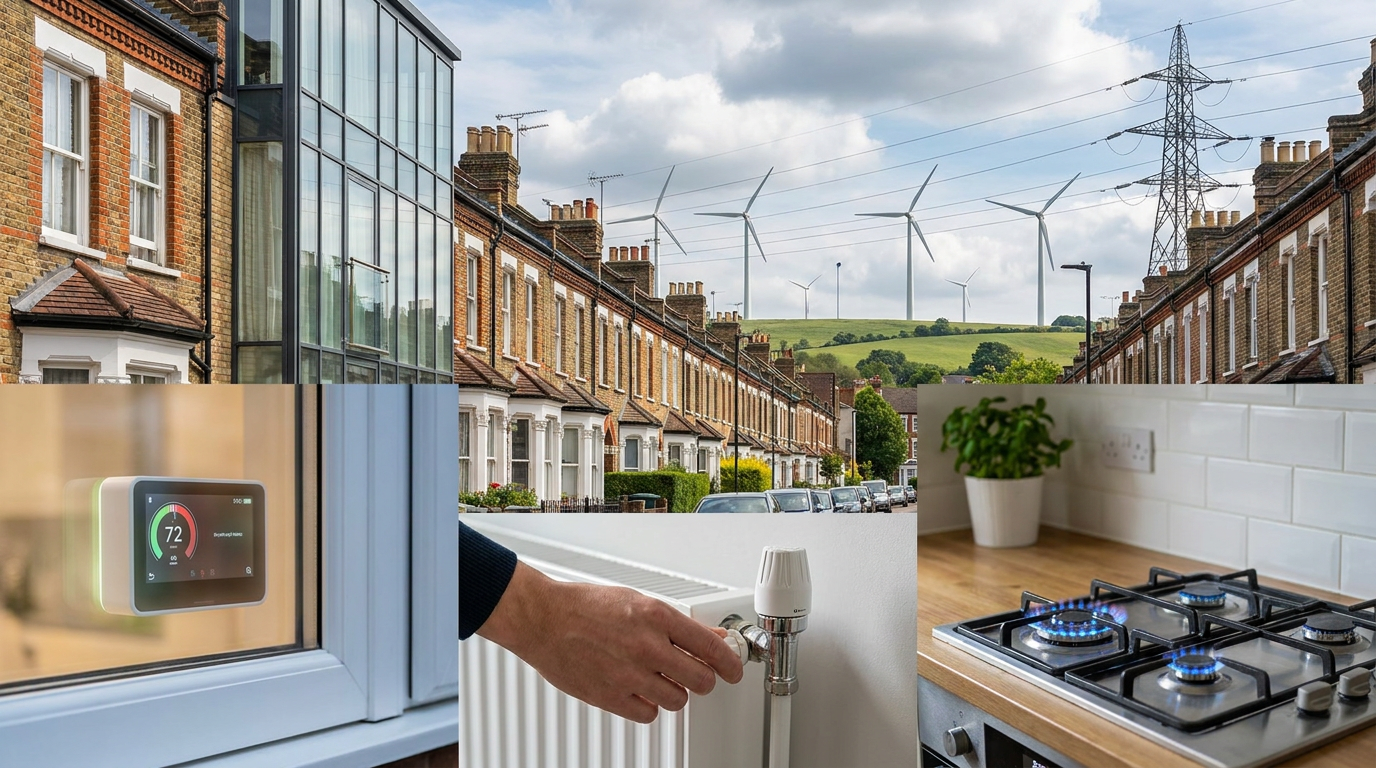
London households are paying around £152 a month for dual-fuel energy in 2026 — roughly 8% above the UK average of £141. If your bill is well above that, you are probably overpaying. Here is what is driving London prices this year and what you can actually do about it.
What the average London household is paying in 2026
For a typical 3-bedroom London home on a standard variable tariff, expect roughly:
- Dual fuel: £150–£165 per month (£1,800–£1,980 per year).
- Electricity-only flat: £85–£110 per month, depending on heating type.
- Gas-heated terrace or semi: £160–£180 per month in winter, £90–£110 in summer.
Standing charges in the London region currently sit at around 53p/day for electricity and 32p/day for gas — among the higher rates in the country. That is roughly £310/year before you use a single unit of energy.
Current Supplier Watch
Why London is more expensive than the UK average
London's prices are shaped by three things most other UK regions don't share to the same degree:
- Distribution costs. The capital is served by London Power Networks, whose network charges feed into your unit rate. Inner-London charges are lower than the South East but still above Yorkshire or the North West.
- Housing stock. A huge share of London homes are flats — many with electric-only heating, immersion hot water, or storage heaters. Electricity costs roughly 3–4× more per kWh than gas, which pushes total bills up.
- Period properties. Victorian and Edwardian terraces dominate Zones 2–4. They leak heat, so even gas-heated households burn more fuel to stay warm.
Add in higher prepayment meter usage in some boroughs, and the regional average drifts above the UK headline figure.
Are energy bills higher in inner London than outer London?
Slightly. Inner-London flats tend to use less gas (smaller spaces, communal heating in some blocks) but more electricity. Outer-London houses use more gas overall. The headline £/month figure ends up similar — within £10 either way for most households.
Do London flats really pay more than houses?
Per square metre, yes — especially all-electric flats. A 1-bed all-electric flat can easily pay £100–£130/month in winter, while a gas-heated 2-bed terrace nearby pays £140–£160 across both fuels. Electric heating is the single biggest cost driver.
What's the cheapest tariff for a London flat in 2026?
For most flats, a 12-month fixed dual-fuel deal currently undercuts the price cap by £150–£280/year. All-electric flats should look at Economy 7 or smart time-of-use tariffs if they can shift laundry, dishwasher and EV charging to off-peak hours.
Should Londoners switch to a fixed deal right now?
If you are on a standard variable tariff (SVT) and your annual cost is above £1,800, almost certainly yes. The cheapest fixed deals on the market in 2026 are 8–14% below the cap. Compare like-for-like (kWh used, not £/month) and avoid deals with exit fees over £75 per fuel.
How to cut your London energy bill
Three changes have the biggest impact in London homes specifically:
- Get off the standard variable tariff. Roughly 1 in 4 London households are still on SVT and overpaying by £200–£500/year. Compare and switch — it takes 20 minutes.
- Draught-proof period properties. Sash windows, letterboxes, and floorboards in Victorian terraces leak more heat than any other UK housing type. £30 of foam strip and chimney balloons typically saves £80–£120/year.
- Use a smart meter to find your big drains. In London flats, the immersion heater, tumble dryer, and electric showers are the usual suspects. Knowing the cost makes it easier to change behaviour.
- Check eligibility for the Warm Home Discount. If you are on certain benefits, you can claim £150 off your winter electricity bill automatically.
For a region-by-region comparison of unit rates and standing charges, see our Regional Price Map.
Check My Bill
If you live in London and pay more than £150/month for energy, you may be on the wrong tariff. Use our free Bill Checker to see in 30 seconds — most users find savings of £200–£500 per year.
Recommended kit
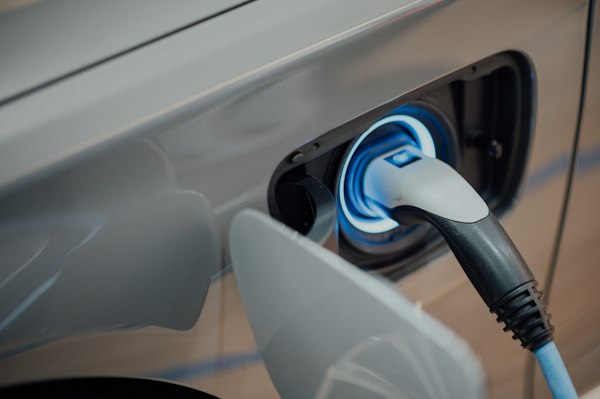
Type 2 EV Charging Cable 7m 32A
Reliable 7m Mode 3 Type 2 to Type 2 cable for public chargepoints — supports up to 7.4kW single-phase charging.
Shop on Amazon