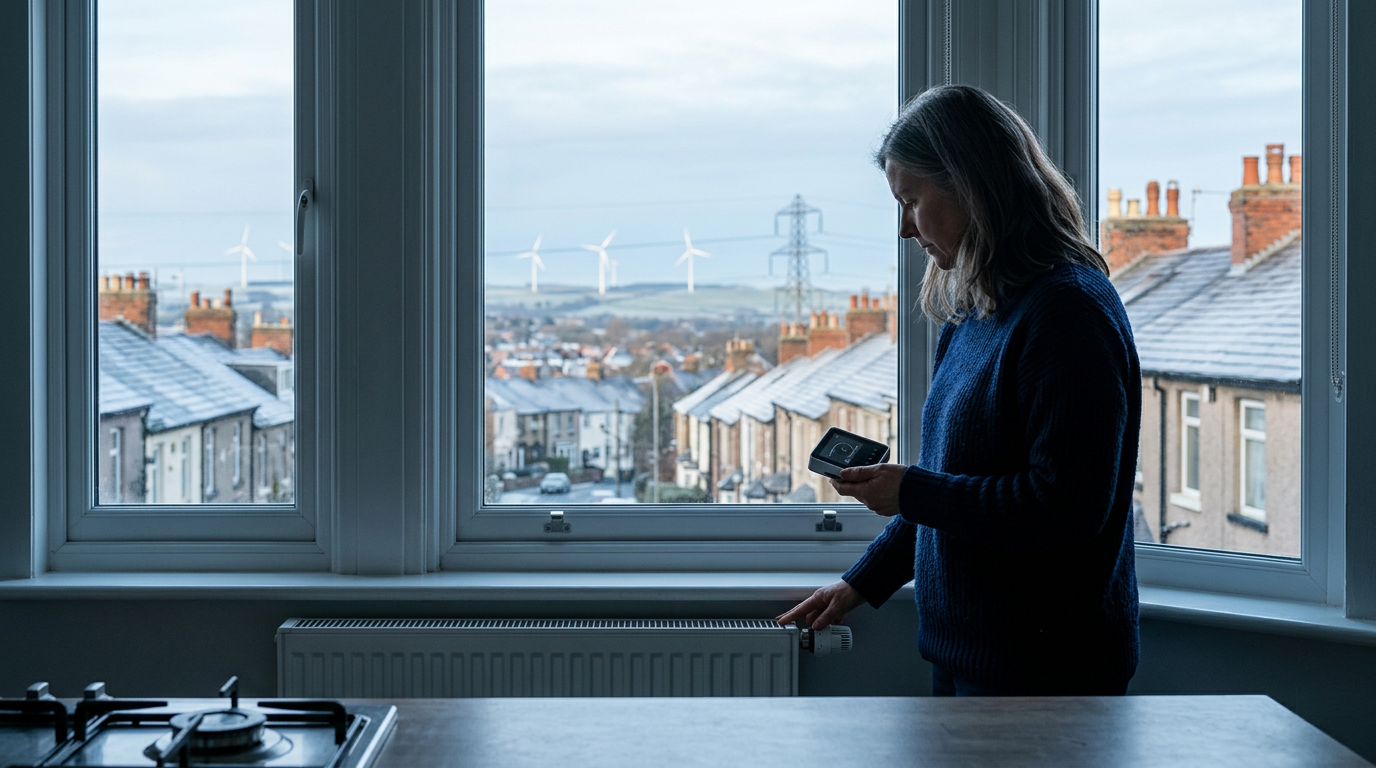
Summary Winter is when UK households burn 60% of their annual energy. The average home will spend £900–£1,200 on heating between November and March 2026. The good news: most families can knock £200–£450 off that with a weekend of effort and zero major spending.
What this means in plain English Forget the vague "wear a jumper" advice. Here are the 12 changes ranked by real impact, based on Energy Saving Trust data adjusted for 2026 prices, and crucially, incorporating UK-specific energy costs and regulatory insights. We'll delve into the practicalities for each.
Let's assume for our calculations a typical unit rate under the Ofgem Energy Price Cap for Winter 2025/2026, projected to be around 30p/kWh for electricity and 7.5p/kWh for gas, with standing charges of approximately 60p/day for electricity and 35p/day for gas. These are estimates, but provide a solid baseline for understanding savings.
- Switch tariff — £200–£500/year (15 minutes)
- Drop thermostat 1°C (from 21°C to 20°C) — £130/year
- Heating timer: 2 hours less per day — £90/year
- Draught-proof doors and windows — £60/year (£20 spend)
- Hot water cylinder jacket — £50/year (£15 spend)
- Bleed radiators + balance system — £40/year (free)
- TRVs on every radiator — £75/year (£60 spend)
- Shower 1 minute shorter — £35/year per person
- Wash clothes at 30°C — £30/year
- LED bulbs everywhere — £40/year
- Standby killer plugs — £45/year
- Loft insulation top-up to 270mm — £180/year (£300 spend, pays back in 2 winters)
Detailed Breakdown of Savings & Implementation
Let's unpack each point with practical, step-by-step guidance and UK context.
- Switch Tariff (£200–£500/year, 15 minutes)
- Drop Thermostat 1°C (£130/year)
- Heating Timer: 2 Hours Less Per Day (£90/year)
- Draught-Proof Doors and Windows (£60/year, £20 spend)
- Hot Water Cylinder Jacket (£50/year, £15 spend)
- Bleed Radiators + Balance System (£40/year, free)
- TRVs on Every Radiator (£75/year, £60 spend)
- Shower 1 Minute Shorter (£35/year per person)
- Wash Clothes at 30°C (£30/year)
- LED Bulbs Everywhere (£40/year)
- Standby Killer Plugs (£45/year)
- Loft Insulation Top-up to 270mm (£180/year, £300 spend)
How this affects your household bill A typical 3-bed UK home doing the top six items above (all free or under £100 total) saves around £415 over winter 2026. That is real money — enough to cover Christmas or a January holiday.
Here's a quick comparison of the top measures by annual savings and effort:
Current Supplier Watch
| Measure | Annual Saving (approx.) | Initial Cost (approx.) | Effort Level | Payback Period |
|---|---|---|---|---|
| Switch Tariff | £200-£500 | Free | Low (15 min) | Instant |
| Drop Thermostat 1°C | £130 | Free | Low | Instant |
| Heating Timer (2hrs less) | £90 | Free | Low | Instant |
| Draught-proof | £60 | £20 | Medium | 4 months |
| Hot Water Cylinder Jacket | £50 | £15 | Low/Medium | 4 months |
| Bleed & Balance Radiators | £40 | Free | Medium | Instant |
| TRVs on all radiators | £75 | £60 | Medium/High | 10 months |
| Loft Insulation (top-up) | £180 | £300 | High | ~20 months |
← Swipe to see more →
If you are on a standard variable tariff and have not switched in 18+ months, the single biggest win is almost always the tariff change — bigger than insulation, bigger than thermostat changes, bigger than anything you can do with the boiler. Always check that first.
Most exposed this winter: prepayment meter customers, all-electric homes without storage heater tariffs, and households still on default SVR tariffs from 2024 fix expirations. These groups often face the highest unit rates and therefore have the most to gain from proactive measures, particularly tariff switching and leveraging all available grants or support. For all-electric homes, optimising storage heaters (charging overnight on cheaper tariffs like Economy 7) or exploring air source heat pumps (with grants like the Boiler Upgrade Scheme) is crucial.
Check My Bill The easiest £200–£500 of the lot is making sure you are on a competitive tariff before you even touch the thermostat. Use our free Bill Checker to see in 30 seconds — most users find savings of £200–£500 per year. Our tool cross-references your current usage with the latest fixed deals and dynamically adjusts for projected Ofgem price cap movements, giving you a uniquely accurate forecast for 2026.
Regional Notes for UK Households
- Scotland: Benefits from milder winters in coastal areas but significantly colder, windier conditions inland and in the Highlands. Draught-proofing and robust insulation are paramount. Scotland also has its own energy efficiency schemes like the Warmer Homes Scotland program.
- Wales: Often experiences damp, mild winters, making condensation and draughts significant issues. Good ventilation and robust insulation are key, especially in older properties.
- Northern Ireland: Has its own energy market regulations and suppliers. While principles are similar, specific tariffs and support schemes will differ from Great Britain. Comparison sites specific to NI are essential.
- Urban vs. Rural: Flats in heated blocks benefit from 'insulation' from neighbours. Terraced and semi-detached homes enjoy some shared wall heat. Detached homes are most exposed and benefit most from insulation and draught-proofing. Rural homes on LPG or oil are not subject to the Ofgem price cap for mains gas/electricity, so their fuel price dynamics are different; bulk buying and market tracking are their equivalents of tariff switching.
### FAQ
#### Q1: Will these savings really apply in 2026, or are energy prices too unpredictable? A1: While wholesale energy prices can fluctuate, the savings percentages for these measures are largely consistent year-on-year. For example, dropping your thermostat by 1°C will always save roughly 10% of your heating bill, regardless of the absolute price per kWh. Our projected savings are based on current market forecasts for the Ofgem cap in Winter 2025/2026, making them as accurate as possible for the future.
#### Q2: I live in an older property. Can I still implement these changes effectively? A2: Absolutely, and older properties often have the most significant potential for savings! Draught-proofing, loft insulation, and radiator balancing are particularly effective in homes built before 1990. While some tasks might be slightly more challenging (e.g., dealing with single-glazed windows), the percentage saving on your overall bill will often be higher due to poorer initial insulation.
#### Q3: What if I can't afford the initial outlay for things like loft insulation or TRVs? A3: Focus on the free or low-cost options first. Switching tariffs, adjusting your thermostat, using the heating timer, bleeding radiators, and shortening shower times are all free and together can save over £500 per year. For larger investments, check government schemes like the Great British Insulation Scheme or local council grants, which often provide subsidies for energy efficiency improvements. Energy companies also have obligations to offer support under the Energy Company Obligation (ECO) scheme.
#### Q4: I have a smart meter. How can I use it to maximise these savings? A4: Your smart meter's in-home display (IHD) is a powerful tool. Use it to monitor your energy consumption in real-time. Turn off appliances one by one or implement a measure (like draught-proofing a window) and watch for immediate changes in your usage figures. This empowers you to identify energy-hungry habits and see the direct impact of your efforts. Also, ensure your smart meter is linked to the best available smart tariffs, which can sometimes offer lower off-peak rates.
#### Q5: Is it better to leave my heating on low all day or only turn it on when needed? A5: This is a common debate. For most well-insulated modern homes, keeping the heating on low all day can be more efficient, especially with a modern condensing boiler, as it prevents the house from cooling down significantly and requiring a lot of energy to reheat. However, if your home is poorly insulated or you're out for significant periods, it's generally more cost-effective to only heat it when occupied. Experiment with both to see what works best for your specific home and lifestyle.
#### Q6: Should I turn off radiators in rooms I don't use? A6: Yes, within reason. If a room is genuinely never used, turning off the radiator and closing the door will save energy. However, be cautious: entirely freezing a room can lead to damp, condensation, and potentially frozen pipes in extreme cold. If you have TRVs, setting the unused room to a very low frost-protection setting (e.g., 10°C) is a safer approach than switching it off completely.
The Power Guardian Conclusion for Winter 2026
The challenge of high energy bills is not diminishing, but neither is the power of informed action. These 12 strategies, backed by solid data and practical application, represent your most effective weapons against winter energy waste. The key is action. Don't be overwhelmed; start with the easiest, highest-impact changes like switching your tariff and adjusting your thermostat. From there, systematically work through the list. A combined effort, even small, can deliver substantial savings, ensuring a warmer, more affordable winter for your household in 2026. Remember, every penny saved on your energy bill is a penny earned and kept in your pocket.
Is the "wear a jumper" advice really that bad?
While wearing a jumper can help you feel warmer, it's often a vague piece of advice. This guide focuses on impactful, measurable changes based on Energy Saving Trust data adjusted for 2026 prices and UK-specific energy costs.
What are the estimated energy prices for Winter 2025/2026?
We're using projected Ofgem Energy Price Cap unit rates of around 30p/kWh for electricity and 7.5p/kWh for gas. Standing charges are estimated at 60p/day for electricity and 35p/day for gas, providing a solid baseline for savings calculations.
Why is switching tariffs considered the most impactful action?
Many UK households are on their supplier's Standard Variable Tariff (SVT), which is capped by Ofgem but rarely the cheapest option. New fixed-rate deals or specific flexible tariffs can offer significant savings, potentially 5-10% lower than the SVT for gas.
How much can I realistically save on my winter energy bill?
Most families can save between £200–£450 off their winter heating bill between November and March 2026. This can be achieved with a weekend of effort and minimal major spending, by implementing the 12 changes outlined.
Is it always better to completely turn off my heating when I'm out?
No, avoiding "on/off" heating is often more efficient. Especially in well-insulated homes, it's better to maintain a lower temperature for longer to prevent heat loss and condensation, rather than letting your home get cold and then blasting the heating.
Recommended kit
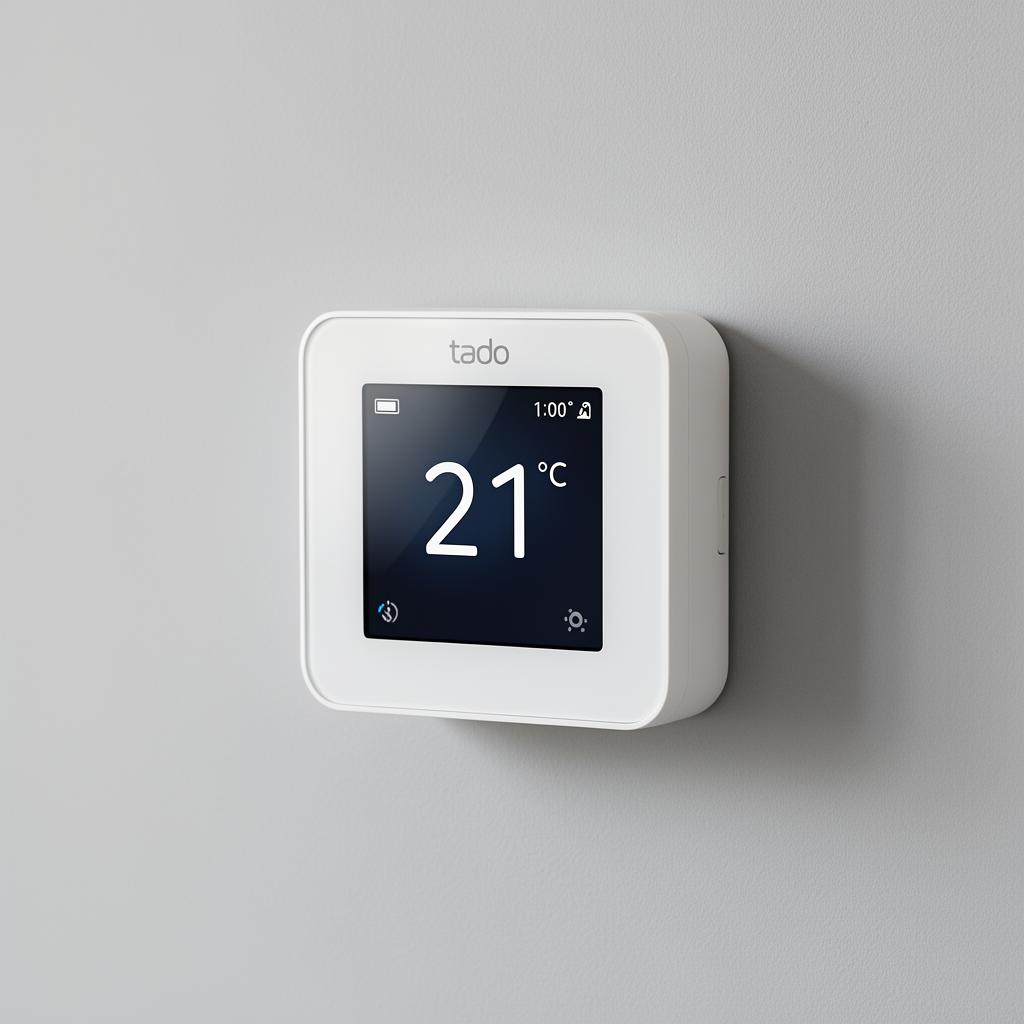
tado Smart Thermostat X
Schedule, zone and remote-control your heating — independently shown to cut heating bills by up to 28%.
Shop on Amazon