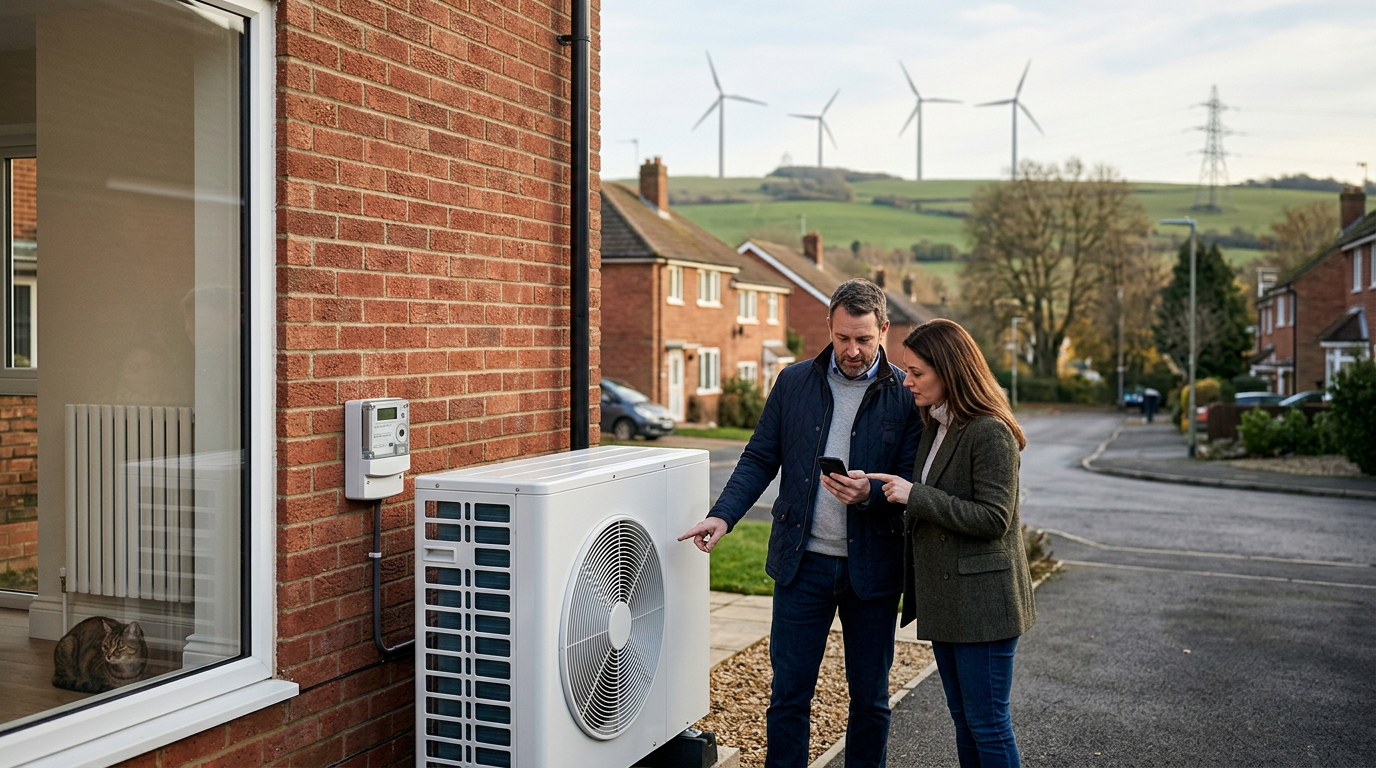
Air-Source Heat Pump Running Costs in the UK 2026: A Deep Dive
The UK energy landscape is in constant flux, and as we hurtle towards net-zero, air-source heat pumps (ASHPs) are increasingly heralded as the cornerstone of domestic decarbonisation. But for many homeowners, the ultimate question remains: what will it really cost to run one in 2026? At Power Guardian UK, we’ve crunched the numbers, dived into the data, and peeled back the layers of marketing hype to give you a definitive answer, broken down by home size, insulation, and the crucial role of your electricity tariff.
Our aim is to provide clarity amidst the noise, empowering you with the knowledge to make informed decisions about your home heating. Gone are the days of simple gas boiler comparisons; the future of heating is nuanced, and so too must be our understanding of its operational costs.
Setting the Scene: UK Energy Prices in 2026
Predicting energy prices with absolute certainty is a fool's errand, but we can make educated projections based on current trends, government targets, and industry forecasts. For the purpose of this analysis, we're assuming a blended electricity unit rate of approximately 22p/kWh for heat pump users on a favourable tariff, and a natural gas unit rate of around 8.25p/kWh. These figures are based on the expectation that while wholesale energy costs may fluctuate, government interventions and the increasing penetration of demand-side response tariffs will help manage electricity prices, particularly for high-consumption appliances like heat pumps. The Ofgem price cap, a key regulatory tool, is expected to continue guiding standard variable tariffs, but specialist heat pump tariffs are designed to offer more competitive rates, especially during off-peak hours.
Quick Figures (Projections for 2026 – Favourable Conditions)
Let's start with our headline figures, which reflect optimal running conditions for an ASHP – good insulation, a well-sized system, and a dedicated heat pump tariff. These numbers demonstrate the potential for competitive running costs against a gas boiler.
| Home Type | Annual Heat Demand (kWh) | Heat Pump Annual Cost (£) | Gas Boiler Annual Cost (£) | Potential Annual Saving (£) |
|---|---|---|---|---|
| 1-bed flat | 6,000 kWh | £420 | £495 | £75 |
| 3-bed semi-detached | 12,000 kWh | £840 | £990 | £150 |
| 4-bed detached | 18,000 kWh | £1,260 | £1,485 | £225 |
← Swipe to see more →
Assumptions for Heat Pump Cost:
- Coefficient of Performance (COP): 3.2 – This represents the efficiency of the heat pump. A COP of 3.2 means for every 1 unit of electricity consumed, the heat pump produces 3.2 units of heat.
- Electricity Unit Rate: Blended average of 22p/kWh on a heat-pump-friendly tariff.
- Gas Boiler Cost: Based on a modern condensing gas boiler with 90% efficiency and a gas unit rate of 8.25p/kWh.
These figures illustrate that even in 2026, with electricity prices generally higher than gas on a direct pence-per-kWh basis, an efficiently run air-source heat pump can indeed provide lower annual running costs. This is primarily due to its superior efficiency (COP) compared to a gas boiler.
What Significantly Changes the Cost: A Granular Analysis
While the quick figures are encouraging, they represent an ideal scenario. In reality, several crucial factors dictate your actual running costs. Understanding these is key to optimising your heat pump investment.
1. Insulation: The Unsung Hero of Efficiency
Perhaps the single most impactful factor on your running costs is your home's thermal efficiency. A well-insulated home retains heat, meaning your heat pump works less frequently and at lower power outputs, significantly reducing electricity consumption.
- Every U-value improvement cuts running cost ~6%. The U-value measures how quickly heat escapes through a material (walls, roof, windows). A lower U-value means better insulation. For example, upgrading uninsulated cavities to insulated ones, improving loft insulation from 100mm to 300mm, or replacing single-glazed windows with modern double-glazing can dramatically lower your home's heat demand.
- Practical Impact:
- Loft Insulation: Upgrading from minimal to 270mm of mineral wool could reduce heat demand by 15-25% for the space below. Over £100-£200 annual saving for an average semi-detached.
- Cavity Wall Insulation: For an uninsulated cavity wall, adding insulation can cut heat loss through walls by up to two-thirds, leading to 10-15% overall reduction in heat demand.
- Solid Wall Insulation (Internal/External): This is a larger investment but can reduce heat loss through walls by 60-70%, translating to significant overall energy savings, particularly in older properties common across the UK's housing stock (e.g., Victorian terraces in London, stone cottages in the Cotswolds).
- Step-by-Step for UK Homeowners:
2. Flow Temperature: The Sweet Spot for Efficiency
Air-source heat pumps operate most efficiently when producing heat at lower temperatures over longer periods. This is a fundamental difference from traditional gas boilers, which are designed for rapid, high-temperature heat delivery.
- Running at 45°C instead of 55°C raises COP from 2.8 to 3.6. This seemingly small temperature difference yields a massive 28% increase in efficiency. A higher COP directly translates to lower electricity consumption for the same amount of heat delivered.
- How it works: Heat pumps extract heat from the air. The larger the temperature difference between the ambient air and the desired flow temperature of your radiators/underfloor heating, the harder the compressor has to work, reducing efficiency.
- Radiator Sizing: To achieve comfort at lower flow temperatures, larger radiators are often required. This is a critical consideration during heat pump installation. An installer should perform a heat loss calculation for each room and specify appropriate radiator sizes. For instance, a typical double panel, double convective (Type 22) radiator might suffice for a well-insulated room at 55°C, but a larger Type 33 (triple panel, triple convective) or even oversizing a Type 22 might be needed for 45°C flow. In many UK homes, existing radiators are often undersized for optimal heat pump performance.
- Underfloor Heating: Underfloor heating systems are inherently designed for low flow temperatures (typically 35-45°C), making them an ideal partner for ASHPs and maximising efficiency.
3. Tariff: Your Gateway to Cost Savings
The UK's energy market, particularly for electricity, is evolving rapidly, with a growing number of tariffs specifically designed for heat pump users. Sticking to a standard variable tariff (SVT) with an ASHP is almost guaranteeing higher bills.
- Octopus Cosy or E.ON Heat Pump tariffs cut bills another 15–25%. These are examples of time-of-use tariffs or dynamic tariffs.
- How they work: They offer significantly cheaper electricity during off-peak hours (e.g., overnight, often 11:30 PM to 4:30 AM) and sometimes higher rates during peak demand periods.
- Heat Pump Optimisation: Heat pumps, especially with a well-insulated thermal store or buffer tank, can "charge" during cheap periods, drawing in electricity when it's cheapest and using that stored heat later. Smart controls can automate this process.
- Regional Variances (UK): While national tariffs exist, regional DNO (Distribution Network Operator) charges can slightly affect the absolute unit rate in different parts of the UK. However, the structure of these heat pump tariffs (cheap off-peak) remains consistent across regions like Scotland, North West England, or the South East.
- Step-by-Step for UK Homeowners:
Other Factors
- System Sizing and Installation Quality: An undersized heat pump will struggle to heat your home, running constantly and inefficiently. An oversized one will cycle on and off too frequently, also impacting efficiency. A high-quality, MCS-certified installer is crucial for correct sizing and installation.
- Maintenance: Regular servicing (typically annual) ensures your heat pump operates at peak efficiency, preventing minor issues from escalating into costly repairs or significant efficiency drops.
- User Behaviour: Setting appropriate temperatures, using programmers effectively, and not constantly turning the system on and off will impact running costs. Heat pumps prefer to maintain a consistent temperature.
Common Myths Debunked
Navigating the transition to new heating technologies often means confronting prevalent myths. Let's tackle two of the most common misconceptions about air-source heat pumps head-on.
"They don't work in cold weather"
This is a persistent myth, largely based on older technology or a misunderstanding of how modern ASHPs operate.
- Modern units run efficiently down to -15°C. Reputable manufacturers design and test their units to perform reliably in typical UK winter conditions, which rarely see prolonged periods below -5°C, let alone -15°C.
- How they work in cold: While the COP of a heat pump does decrease as ambient air temperature drops (it's harder to extract heat from colder air), modern units incorporate advanced refrigeration cycles (e.g., flash injection, EVI compressors) and defrost cycles that ensure continuous operation.
- Real-world UK example: In regions with notably colder winters, such as the Scottish Highlands or parts of the Pennines, ASHPs are successfully installed and run. Their performance in these challenging environments demonstrates their capabilities. Many new builds are opting for ASHPs as standard, regardless of regional climate.
"Bills will always be higher than gas"
This claim, often perpetuated by those unfamiliar with the technology's evolution and the structure of new electricity tariffs, is misleading and often incorrect under optimal conditions.
- Only true on a standard tariff with poor insulation. As our initial table demonstrates, when conditions are right (good insulation, low flow temperatures, and a specialist heat pump tariff), ASHP running costs can be lower than gas.
- The Energy Price Ratio: The key is the ratio between the electricity unit rate and the gas unit rate, offset by the heat pump's COP. While electricity is per kWh typically more expensive than gas
- Government Policy and Future Trends: UK energy policy is heavily geared towards decarbonisation. As more renewable energy comes online, the marginal cost of producing electricity can fall, making it cheaper outside of peak demand. Conversely, carbon taxes or levies on gas are likely to increase, pushing its price up relative to electricity. This long-term trend further strengthens the financial case for ASHPs.
Practical Step-by-Step Guidance for Potential ASHP Owners
- Assess Your Home's Suitability:
- Optimise Your Home's Efficiency:
- Choose Your Heat Pump System:
- Explore Financial Incentives:
- Select an Optimised Electricity Tariff:
- Maintain and Monitor:
FAQs
Q1: Will I need to replace all my radiators if I get an air-source heat pump? A1: Not necessarily all, but it's highly likely you'll need to install larger radiators in some rooms, especially in living areas, to achieve comfortable temperatures at the lower flow rates heat pumps operate at (typically 45-50°C). A professional heat loss survey will determine exact requirements.
Q2: How much noise do air-source heat pumps make? A2: Modern ASHPs are much quieter than older models, typically emitting around 40-50 dB(A) – comparable to a quiet refrigerator. Installation location is crucial to minimise disturbance to yourself and neighbours. Planning permission can be required in some cases if noise levels exceed certain thresholds or if the unit is close to a boundary.
Q3: What happens if there's a power cut? A3: Like any electric heating system, an ASHP will stop working during a power cut. However, well-insulated homes will retain heat for a significant period. Some systems can integrate with battery storage or backup generators, though this is less common for residential setups.
Q4: How long do air-source heat pumps last? A4: With proper installation and regular maintenance, an air-source heat pump can last 15-20 years, possibly even longer. This is comparable to, or often longer than, a gas boiler's lifespan (typically 10-15 years).
Q5: Are air-source heat pumps suitable for older, less insulated properties? A5: Yes, but with caveats. For older, less insulated properties (e.g., solid wall Victorian homes), significant insulation upgrades (like solid wall insulation) are often a prerequisite to ensure the heat pump operates efficiently and provides adequate comfort. Without these upgrades, running costs could be substantially higher.
Q6: Can I use an air-source heat pump for hot water as well? A6: Yes, most modern ASHPs are designed to provide both space heating and domestic hot water. They typically heat water in a dedicated hot water cylinder (like an unvented cylinder), rather than directly and instantaneously like a combi boiler.
Recommended energy saving products
Independently chosen kit that helps UK households cut energy use.

Tapo P110 Smart Plug (Energy Monitoring)
See exactly which appliances are quietly inflating your bill — track real-time watts, kWh and runtime from your phone.
- Real-time energy monitoring
- Cuts standby/vampire power
- Schedule appliances off-peak
Estimated benefit: ~£40/yr standby savings
Shop on AmazonAd – affiliate link. PowerGuardian may earn a commission from Amazon or another approved affiliate partner at no extra cost to you.

Home Energy Monitor (Whole-House)
Track your whole-home electricity use live and find where the kWh are going before the bill lands.
- Whole-house live usage
- Spot expensive habits fast
- App history & alerts
Estimated benefit: Awareness cuts ~5-10% use
Shop on AmazonAd – affiliate link. PowerGuardian may earn a commission from Amazon or another approved affiliate partner at no extra cost to you.
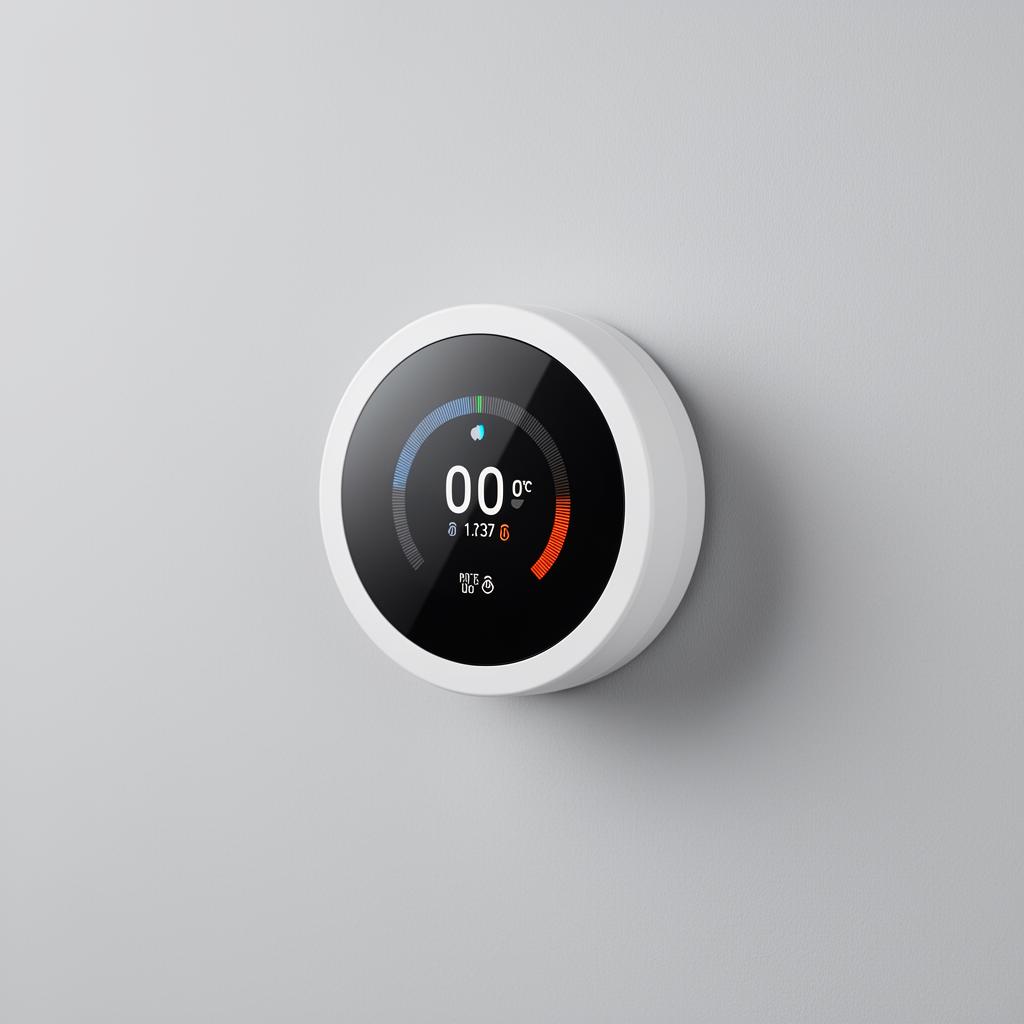
tado Smart Thermostat Starter Kit
Schedule, zone and remote-control your heating — independently shown to cut heating bills meaningfully.
- Heat only when needed
- Geofencing & schedules
- Room-by-room control
Estimated benefit: Up to ~£140/yr
Shop on AmazonAd – affiliate link. PowerGuardian may earn a commission from Amazon or another approved affiliate partner at no extra cost to you.
Affiliate links — we may earn a small commission at no extra cost to you. This keeps PowerGuardian free and independent.
Conclusion
The future of home heating in the UK is undeniably electric, and air-source heat pumps are at the forefront of this transformation. Our analysis for 2026 clearly shows that far from being an expensive luxury, an ASHP, when properly specified, installed in an efficient home, and paired with the right electricity tariff, can offer competitive, or even lower, running costs compared to a traditional gas boiler.
The critical takeaway is that this isn't a "plug and play" solution. Homeowners must be proactive in improving their property's thermal envelope, optimising flow temperatures, and, crucially, selecting a specialist heat pump electricity tariff. Government incentives like the Boiler Upgrade Scheme make the initial investment more palatable, but the long-term running costs are ultimately in the hands of informed homeowners.
As energy journalists at Power Guardian UK, we urge you to look beyond the headlines and delve into the detail. With a strategic approach, your air-source heat pump in 2026 won't just be an environmentally responsible choice; it will be a financially sound one too.
Will my air-source heat pump definitely be cheaper to run than a gas boiler in 2026?
Not necessarily. While projections show potential annual savings, these are based on good insulation, a well-sized system, and a dedicated heat pump tariff. Your home's specific conditions and tariff choice will impact costs.
What electricity price is assumed for heat pump running costs in 2026?
The analysis assumes a blended electricity unit rate of approximately 22p/kWh for heat pump users on a favourable tariff. This is based on expectations of government interventions and demand-side response tariffs.
How much does insulation affect air-source heat pump running costs?
Insulation is crucial, with every U-value improvement potentially cutting running costs by around 6%. For example, upgrading loft insulation from minimal to 270mm could reduce heat demand by 15-25%.
What is a good Coefficient of Performance (COP) for a heat pump, according to this article?
A COP of 3.2 is considered for the optimal running cost projections. This means the heat pump produces 3.2 units of heat for every 1 unit of electricity it consumes.
What is the projected natural gas price per kWh in 2026 for comparison?
The article projects a natural gas unit rate of around 8.25p/kWh for comparison with heat pump running costs. This is used when calculating gas boiler operational expenses.
Current Supplier Watch
Recommended kit
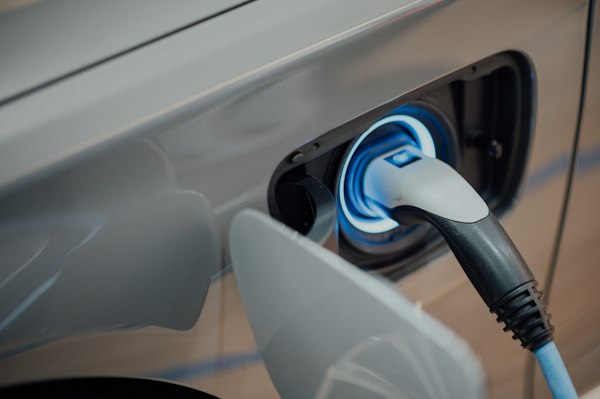
Type 2 EV Charging Cable 7m 32A
Reliable 7m Mode 3 Type 2 to Type 2 cable for public chargepoints — supports up to 7.4kW single-phase charging.
Shop on Amazon