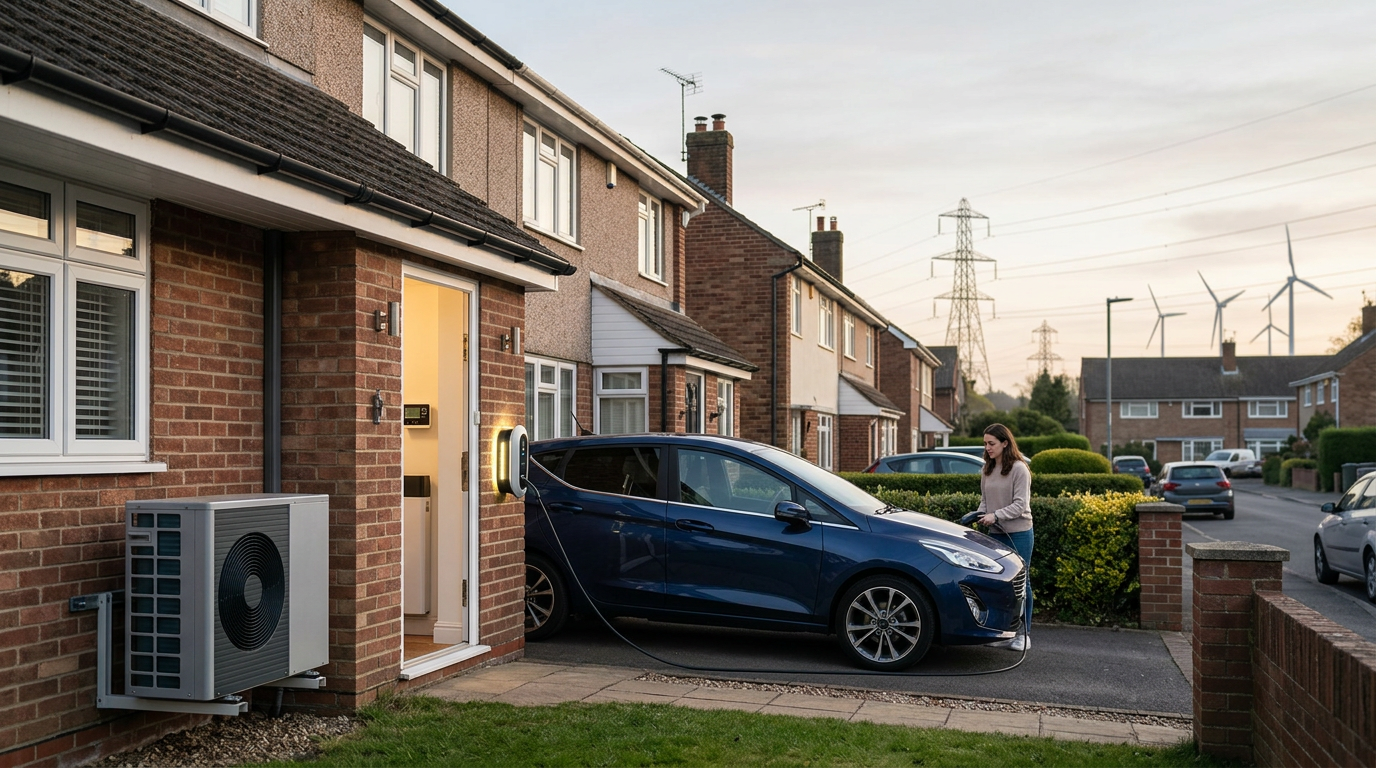
What is Economy 7?
Economy 7 is a UK electricity tariff that gives you two unit rates instead of one: a cheaper off-peak rate for 7 hours overnight (usually somewhere between 11pm and 8am, depending on supplier and meter type), and a higher peak rate for the other 17 hours.
It was originally designed for homes with night storage heaters, which charge up overnight on the cheap rate and slowly release heat during the day.
Current Supplier Watch
How the rates compare in 2026
In 2026, a typical Economy 7 tariff in the UK looks roughly like this:
- Off-peak rate: around 12–18p/kWh
- Peak rate: around 30–38p/kWh
- Standard single-rate: around 24–28p/kWh
The gap between off-peak and peak is what makes or breaks Economy 7. The bigger the gap, and the more of your usage you can shift overnight, the better it works.
When Economy 7 still wins
Economy 7 makes sense in 2026 if you can genuinely move at least 40% of your electricity use into the off-peak window. That usually means:
- Night storage heaters as your main heating source.
- Electric vehicle (EV) charged overnight at home.
- Hot water cylinder heated by an immersion timer overnight.
- Home battery charged off-peak and discharged during the day.
- Dishwasher, washing machine and tumble dryer run on delay timers.
If you tick three or more of these, Economy 7 will almost always beat a standard tariff.
When Economy 7 costs you more
It's a bad fit if your day looks normal: kids home from school, kettle on, oven on, TV on in the evening. In that case, you're paying the higher peak rate for most of your usage, and the small overnight saving doesn't come close to covering it.
Watch out especially if:
- You have a gas boiler (most heating cost is on gas, not electricity).
- You're out at work all day and only home in peak hours.
- You have a heat pump that runs throughout the day — most heat pump tariffs are now better value than Economy 7.
EV-specific tariffs are usually better than Economy 7
If the main reason you're thinking about Economy 7 is to charge an EV, look at dedicated EV tariffs instead. Several UK suppliers now offer overnight EV rates as low as 6–8p/kWh for a 4–6 hour window — about half the cost of a typical Economy 7 off-peak rate.
You'll usually need a smart meter and a compatible charger, but the savings on EV charging alone can be £300–£600 per year compared with Economy 7.
Quick checklist: should I stay on Economy 7?
- ✅ Storage heaters or heat pump tied to off-peak hours.
- ✅ EV charged overnight (and no better EV-specific tariff available).
- ✅ You can shift most laundry, dishwashing and hot water to night.
- ❌ Gas central heating with low electricity use.
- ❌ Most appliances used between 8am and 11pm.
- ❌ EV available — switch to a dedicated EV tariff instead.
How to check if it's worth it for you
- Get a recent bill that shows your peak vs off-peak split.
- Multiply each by your supplier's standard single-rate to see what a flat tariff would cost.
- Compare to your actual Economy 7 bill (don't forget the standing charge).
If your single-rate estimate is lower, it's time to switch. Use our Bill Calculator and Switching Guide to find a tariff that fits your real usage pattern in 2026.
What are the main rate differences between Economy 7 and a standard tariff in 2026?
In 2026, Economy 7 off-peak rates are around 12–18p/kWh, peak rates are 30–38p/kWh. A standard single-rate tariff is typically 24-28p/kWh. The larger the gap between Economy 7's peak and off-peak, the more crucial it is to shift usage to the cheaper window.
When does Economy 7 usually save you money in 2026?
Economy 7 is beneficial if you can shift at least 40% of your electricity use to the off-peak hours. This includes using night storage heaters, charging an EV or home battery overnight, heating your hot water cylinder, or running appliances like dishwashers on timers.
Recommended Smart Heating Product
Control heating remotely and reduce wasted energy with one of the UK’s most popular smart thermostats.
View on Amazon UKWhy might Economy 7 cost me more than a standard tariff?
It costs more if most of your electricity use occurs during the day, between 8am and 11pm, as you'll be paying the higher peak rate. This is common if you have a gas boiler for heating or are out all day. Some heat pump tariffs are also better value.
Are dedicated EV tariffs better than Economy 7 for charging an electric car?
Yes, dedicated EV tariffs are usually better. They can offer rates as low as 6–8p/kWh for a 4–6 hour overnight window, which is significantly cheaper than typical Economy 7 off-peak rates. These can save £300–£600 annually compared to Economy 7 for EV charging.
How can I check if Economy 7 is worth it for my household?
Get a recent bill and identify your peak and off-peak electricity usage. Calculate what your bill would be if all your usage was charged at your supplier’s standard single-rate. Compare this estimated cost with your actual Economy 7 bill to see which is cheaper.
Recommended kit
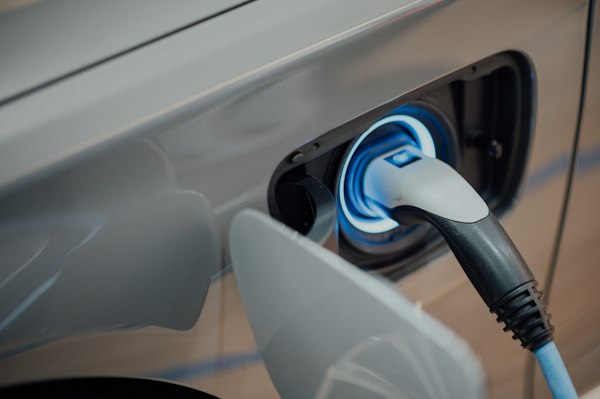
Type 2 EV Charging Cable 7m 32A
Reliable 7m Mode 3 Type 2 to Type 2 cable for public chargepoints — supports up to 7.4kW single-phase charging.
Shop on Amazon