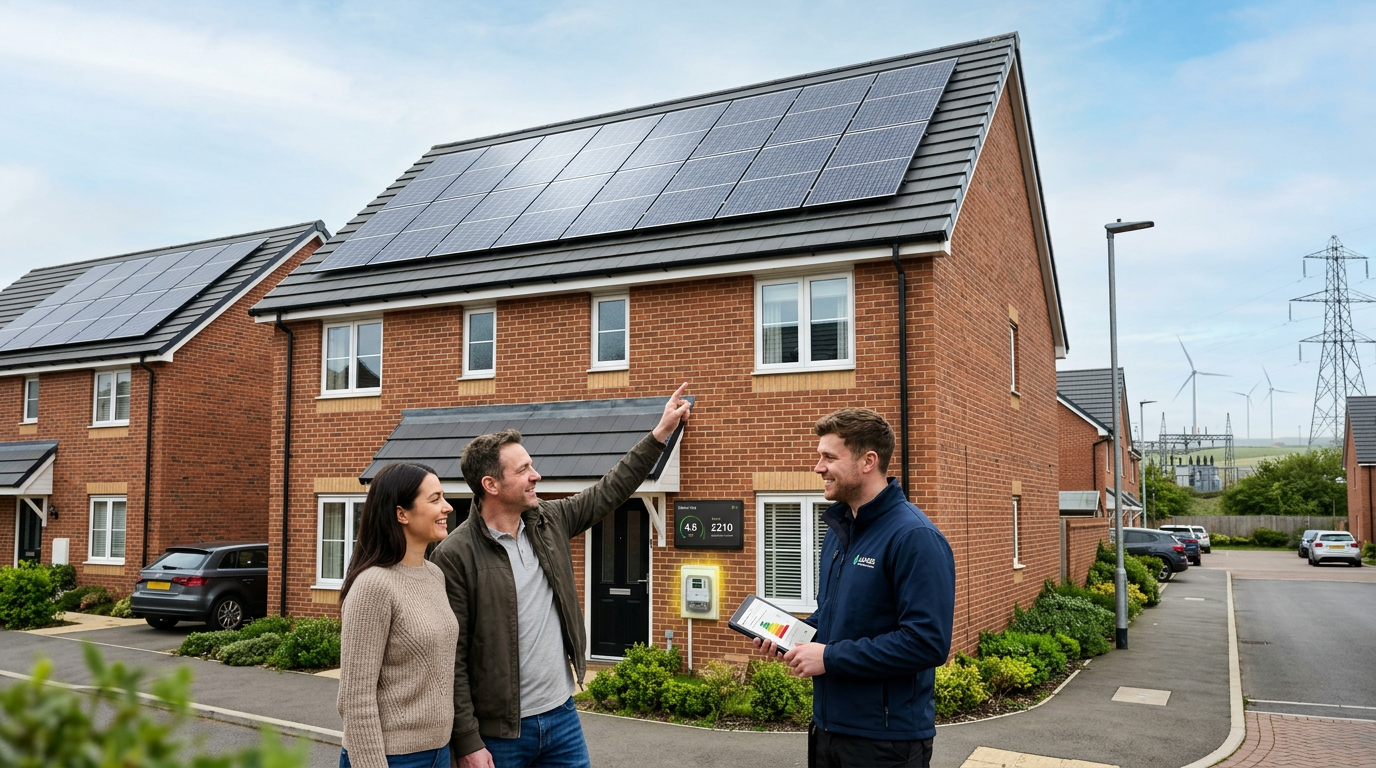
How much do solar panels cost in 2026?
For a typical UK 3-bed semi, a 4 kWp solar PV system costs roughly £5,000 to £7,500 fully installed in 2026. Prices vary by panel quality, roof complexity and whether you add a battery.
A rough breakdown:
- 3 kWp system (small home): £4,000–£5,500
- 4 kWp system (typical 3-bed): £5,000–£7,500
- 6 kWp system (4-bed or high usage): £7,500–£10,500
- Add a 5 kWh battery: +£3,500–£5,000
0% VAT on residential solar still applies in 2026, which keeps prices noticeably lower than pre-2022.
Current Supplier Watch
How much can you actually save?
A 4 kWp system in the UK typically generates 3,400–4,000 kWh/year. What that's worth depends on how much you use directly vs export back to the grid.
With a typical mix of self-use and export at 2026 prices:
- Direct savings on your bill: £350–£500/year
- Export earnings via Smart Export Guarantee (SEG): £80–£200/year
- Total annual benefit: roughly £430–£700/year
That puts payback for most homes at 8–13 years, with panels guaranteed for 25+ years.
What affects your payback
Four things move the number more than anything else:
- South-facing roof, pitched 30–40°. East/west cuts output ~15%, north-facing isn't worth it.
- Shading. A single chimney or tree shadow can knock 20–30% off output. Optimisers help but cost more.
- Self-consumption rate. The more you use while the sun shines, the better. Heat pump, EV charging in daytime, dishwasher on a timer — all push your savings up.
- Your tariff. SEG export rates range from 3p to 15p/kWh depending on supplier. Shop around.
Are batteries worth it in 2026?
A home battery lets you store solar for evening use, or charge from cheap off-peak grid electricity and discharge at peak.
The maths in 2026:
- Solar-only battery payback: typically 9–12 years on its own.
- Battery + time-of-use tariff (e.g. octopus-style cheap windows): 6–9 years.
- Battery + EV + smart tariff: can pay back in 5–7 years.
For most solar-only households, batteries are still borderline worth it on pure economics — but they massively increase self-consumption and resilience during outages.
What to watch out for
- Hard-sell installers quoting £12,000+ for a basic 4 kWp system. Get at least 3 quotes.
- Performance estimates that assume 100% self-use — be realistic.
- Battery oversizing. A 10 kWh battery for a 3 kWh/day home is a waste.
- Roof age. If your roof needs replacing in <10 years, do it first.
Quick payback checklist
- ✅ South, south-east or south-west facing roof
- ✅ Little to no shading from 10am–4pm
- ✅ Roof in good condition for 20+ years
- ✅ You're home some weekdays, or have an EV/heat pump
- ✅ At least 3 quotes from MCS-certified installers
- ❌ Heavy shading or a north-only roof
- ❌ Planning to move within 5 years
Should you go solar in 2026?
If you tick the boxes above, solar is one of the most reliable home investments you can make right now — better return than a savings account, and the savings rise if energy prices rise. Use our Bill Calculator to see what your current usage costs, then ask installers to model how much of it solar would actually offset.
How much do solar panels typically cost for a UK home in 2026?
A 4 kWp solar PV system for a typical 3-bed semi costs roughly £5,000 to £7,500 fully installed in 2026. This price includes 0% VAT on residential solar.
What annual savings can I expect from solar panels in the UK?
With a 4 kWp system, you can expect total annual benefits of roughly £430–£700 per year. This comes from direct savings on your electricity bill and earnings from exporting surplus energy via the Smart Export Guarantee.
How long does it take for solar panels to pay back their cost?
For most homes, the payback period for solar panels is 8–13 years. This is based on typical costs and annual savings, with panels guaranteed for 25+ years.
Are home batteries a worthwhile investment with solar panels in 2026?
For solar-only households, batteries are borderline worth it on pure economics, with a payback of 9–12 years. However, if combined with time-of-use tariffs or an EV, payback can significantly reduce to 5–9 years.
What are the most important factors for getting a good return on solar panels?
Key factors include a south-facing roof with optimal pitch (30-40°), minimal shading, and a high self-consumption rate. Additionally, shopping around for the best Smart Export Guarantee tariff can significantly boost your savings.
Recommended kit
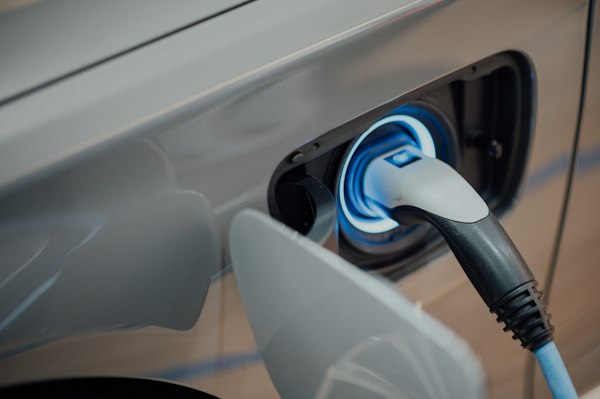
Type 2 EV Charging Cable 7m 32A
Reliable 7m Mode 3 Type 2 to Type 2 cable for public chargepoints — supports up to 7.4kW single-phase charging.
Shop on Amazon