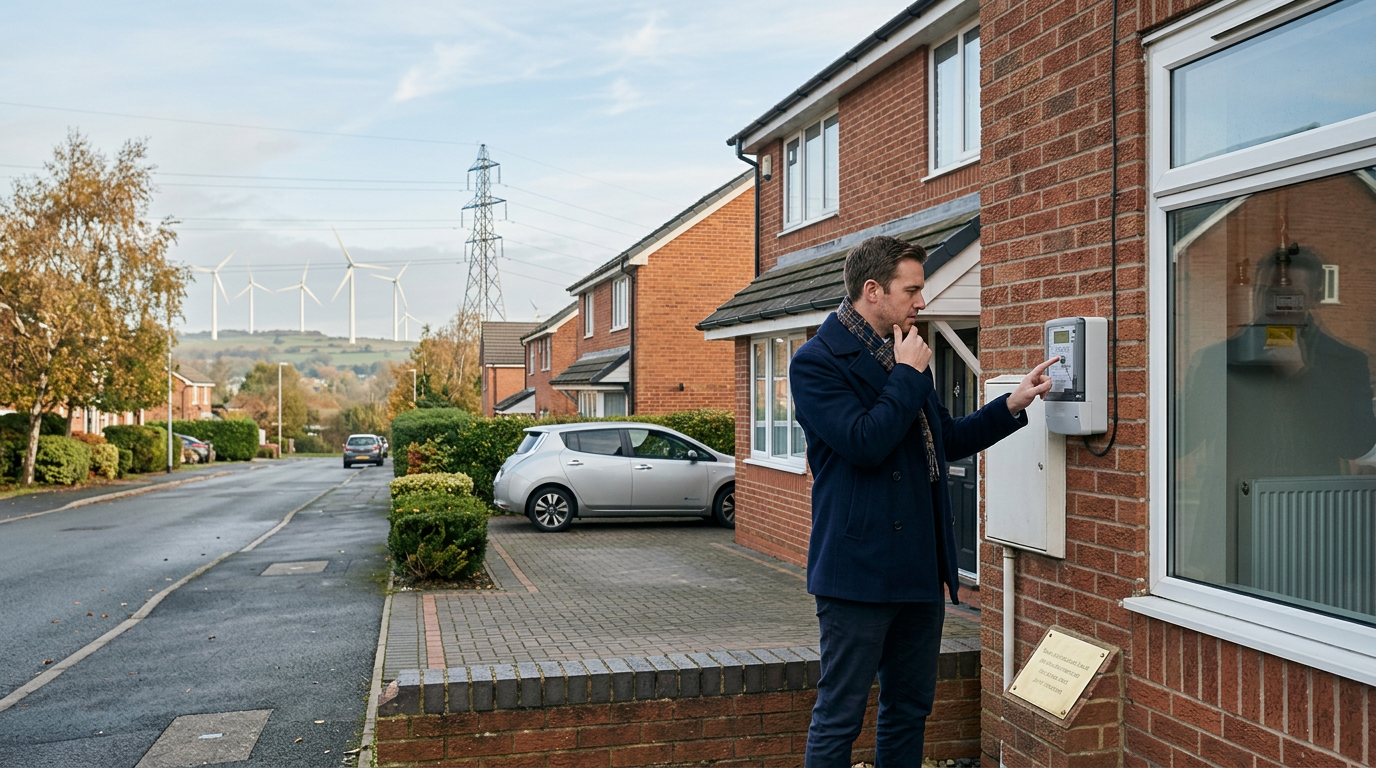
The Price Cap vs Fixed Tariff Conundrum: A Deep Dive for UK Consumers in 2026
Welcome to 2026, a year that, for many UK households, continues the familiar anxiety of managing energy bills. The perpetual question of whether to stick with the Ofgem price cap or opt for a fixed-rate tariff remains as pertinent as ever. At Power Guardian UK, our mission is to cut through the noise and provide clear, actionable insights. This guide significantly expands on our initial analysis, offering detailed depth, UK-specific data, step-by-step guidance, and a comprehensive FAQ to empower your decision-making.
The Decision in One Rule: Refined for 2026
Our core principle remains the same, but with enhanced nuance:
Fix if:
- *The most competitive 12-month fixed deal available to you is at least 5% below the current Ofgem price cap's headline annual equivalent. This isn't just about unit rates; it's about the entire estimated annual cost for your specific usage*.
- Your informed forecast (or our Power Guardian UK forecast) strongly indicates that the Ofgem price cap is likely to rise significantly over the next 12 months, or at least remain elevated. This is the crucial speculative element.
In early 2026, this rule holds substantial weight for many. We are indeed seeing best-in-market fixed tariffs sitting comfortably around 7% below the current Ofgem price cap. This 2% margin above our 5% threshold provides a compelling incentive to consider fixing.
What to Compare: A Deeper Dive into the Numbers
Making an informed decision requires looking beyond the headline figures. Here’s how to conduct a thorough comparison:
1. Annual Cost: Your Usage, Your Price
This is the bedrock of your financial decision. Forget general averages; you need to calculate this based on your household's specific energy consumption.
- Understanding the Ofgem Price Cap (Early 2026 Context):
- Typical Unit Rates (Early 2026 indicative, based on previous trends & forecasts):
- Electricity: Around 28-30 pence per kWh (p/kWh)
- Gas: Around 7-8 p/kWh
- Standing Charges (Daily):
- Electricity: Approximately 50-60 pence per day
- Gas: Approximately 25-30 pence per day
- Note: These figures represent national averages. Regional variations exist. For instance, standing charges and unit rates in areas like Merseyside and North Wales (Region 01) or the North Scotland (Region 04) can sometimes be slightly higher than in the East Midlands (Region 07) or London (Region 08). Always check the exact cap rates for your specific postcode.
- Typical Unit Rates (Early 2026 indicative, based on previous trends & forecasts):
- Calculating Your Annual Cost under the Cap:
- (Electricity kWh usage) x (Ofgem cap electricity unit rate)
- (Gas kWh usage) x (Ofgem cap gas unit rate)
- (Electricity standing charge per day) x 365
- (Gas standing charge per day) x 365
- Calculating Your Annual Cost with a Fixed Tariff:
- Comparison Table Example (Illustrative, using hypothetical 2026 rates for a typical household):
| Cost Component | Ofgem Price Cap (2,900 kWh Elec, 12,000 kWh Gas) | Best 12-Month Fixed Tariff (Example) |
|---|---|---|
| Electricity Unit Rate | 29.5 p/kWh | 27.0 p/kWh |
| Gas Unit Rate | 7.8 p/kWh | 7.0 p/kWh |
| Electricity Standing Chg | 55p/day (£200.75/yr) | 55p/day (£200.75/yr) |
| Gas Standing Chg | 28p/day (£102.20/yr) | 28p/day (£102.20/yr) |
| Estimated Annual Cost | £1,960 (approx.) | £1,820 (approx.) |
| Annual Saving/Cost | N/A | -£140 (saving) |
← Swipe to see more →
2. Exit Fees on the Fixed Deal
- The Catch: Most fixed tariffs come with exit fees, typically around £75 per fuel (so £150 for dual fuel). This means if you break your contract early (e.g., switch to another tariff or supplier before the 12 months are up), you’ll be charged this fee.
- When do Exit Fees Apply? They generally apply if you switch before the last 49 days of your contract. Ofgem rules allow you to switch without penalty in the final 49 days.
- Consideration: If you foresee moving house, needing to renegotiate due to unforeseen financial changes, or if a dramatically better fix appears halfway through your contract, these fees become a risk. Calculate if your potential savings outweigh the potential £150 exit fee. In our example above, a £140 saving would be entirely wiped out by leaving early.
3. Length of the Fix
- 12-month vs. 24-month (or longer): History shows that 12-month fixes have generally outperformed longer contracts for consumers. While a 24-month fix might offer slightly lower initial rates, it locks you in for twice as long, exposing you to two additional Ofgem cap review periods. If the market shifts significantly downwards after 12 months, you're stuck on a comparatively expensive long-term deal.
- Our Recommendation for 2026: Stick to a 12-month fix. It offers a good balance of price certainty and flexibility. The energy market is still volatile, and locking in for longer carries greater risk.
Our 2026 View: A Deeper Forecast
Our independent energy market analysis at Power Guardian UK, factoring in global gas prices, geopolitical stability, carbon pricing, and UK supply-demand dynamics, indicates a strong likelihood of continued volatility.
- Likely Cap Movement: While the cap saw some reductions in late 2025, our models suggest a potential modest rise in the April 2026 and/or July 2026 Ofgem cap reviews. This is due to anticipated mild increases in wholesale gas demand and ongoing pressures on generation costs. We don't foresee a return to the extreme highs of 2022-2023, but neither do we expect sustained, significant drops below current levels.
- Our Estimate: Based on current offerings and our forecast, fixing now on a competitive 12-month tariff could result in savings ranging from £100 to £180 over the next 12 months for a typical household. This saving is based on the assumption of one or more modest cap increases within the fixed term.
- Further Information: For the most up-to-date figures and a detailed breakdown of our modelling assumptions, please refer to our full Energy Price Forecast report, updated monthly.
Recommended Smart Energy Plug
Monitor appliance electricity usage in real time and identify expensive devices around your home.
View on Amazon UKPractical Step-by-Step Guidance: Securing Your Best Deal
Here’s a clear roadmap to navigate the decision and potentially secure a fixed tariff:
- Gather Your Data:
- Check the Ofgem Price Cap Rates for Your Region:
- Calculate Your Annual Cost on the Price Cap:
- Use an Ofgem-Accredited Comparison Site:
- Identify Top Fixed Deals & Their Details:
- Assess the "5% Rule" and Power Guardian UK Forecast:
- Consider Supplier Reputation:
- Initiate the Switch (If Decided):
FAQs
Q1: What exactly is the Ofgem Price Cap? A1: The Ofgem Price Cap is a maximum limit on the amount energy suppliers can charge for each unit of gas and electricity, as well as the daily standing charge, for customers on standard variable tariffs (SVTs) or default tariffs. It's reviewed quarterly by the energy regulator Ofgem and applies to approximately 85% of UK households. Its purpose is to protect consumers from excessive charges, particularly during periods of high wholesale energy costs.
Q2: Should I fix even if the saving is less than 5%? A2: Our 5% rule is a strong guideline. If the saving is smaller (e.g., 2-3%), the decision becomes more about your personal risk appetite. A smaller saving means the benefit of fixing could be more easily eroded by a small, unexpected drop in the cap, or wiped out by exit fees if you need to switch early. However, if you highly value budget certainty and believe the cap will rise, even a small saving could be worthwhile for peace of mind.
Recommended energy saving products
Independently chosen kit that helps UK households cut energy use.
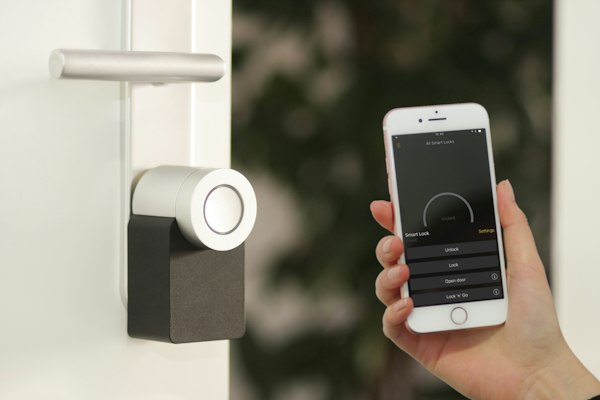
Tapo P110 Smart Plug (Energy Monitoring)
See exactly which appliances are quietly inflating your bill — track real-time watts, kWh and runtime from your phone.
- Real-time energy monitoring
- Cuts standby/vampire power
- Schedule appliances off-peak
Estimated benefit: ~£40/yr standby savings
Shop on AmazonAd – affiliate link. PowerGuardian may earn a commission from Amazon or another approved affiliate partner at no extra cost to you.

Home Energy Monitor (Whole-House)
Track your whole-home electricity use live and find where the kWh are going before the bill lands.
- Whole-house live usage
- Spot expensive habits fast
- App history & alerts
Estimated benefit: Awareness cuts ~5-10% use
Shop on AmazonAd – affiliate link. PowerGuardian may earn a commission from Amazon or another approved affiliate partner at no extra cost to you.
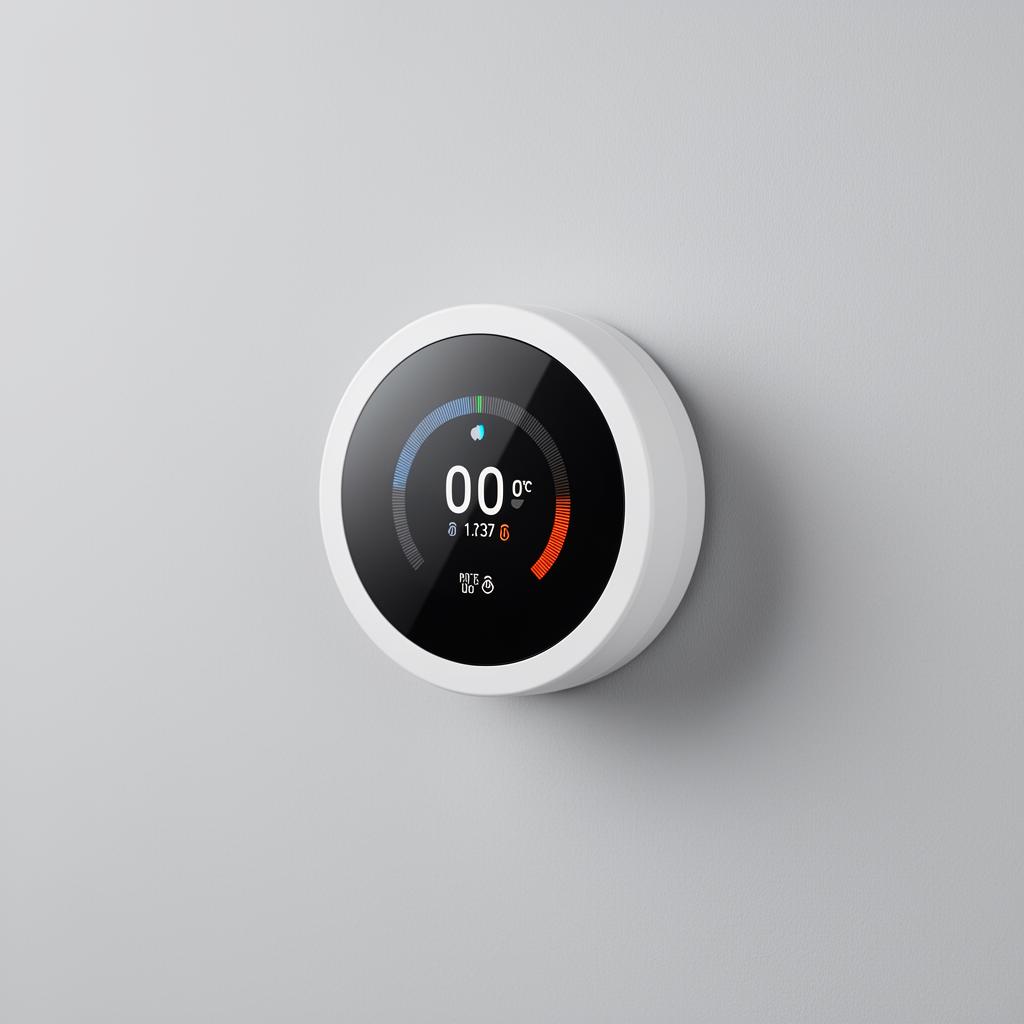
tado Smart Thermostat Starter Kit
Schedule, zone and remote-control your heating — independently shown to cut heating bills meaningfully.
- Heat only when needed
- Geofencing & schedules
- Room-by-room control
Estimated benefit: Up to ~£140/yr
Shop on AmazonAd – affiliate link. PowerGuardian may earn a commission from Amazon or another approved affiliate partner at no extra cost to you.
Affiliate links — we may earn a small commission at no extra cost to you. This keeps PowerGuardian free and independent.
Q3: What if I’m still in debt with my current supplier? Can I switch? A3: Generally, yes, if the debt is less than 28 days old. If your debt is older than 28 days and you owe less than £500 per fuel, you can still switch provided you agree on a repayment plan with your current supplier or repay the debt before switching. If your debt is over £500 per fuel or very old, your current supplier may object to the switch until the debt is cleared.
Q4: Will fixing my tariff protect me from future energy bill increases entirely? A4: Yes, for the duration of your fixed contract (e.g., 12 months), your unit rates and standing charges will remain constant, regardless of changes to the Ofgem price cap. This provides complete price certainty for that period. However, your total bill can still fluctuate based on your actual energy consumption. If you use more energy, your bill will be higher, even on a fixed tariff.
Q5: What happens when my fixed tariff ends? A5: Your energy supplier will usually notify you near the end of your fixed term (typically 49 days before). If you do nothing, you will automatically be rolled onto your supplier's standard variable tariff (SVT), which is subject to the Ofgem price cap. This is almost always a more expensive option than finding a new fixed deal. It's crucial to proactively compare tariffs again in the final 4-6 weeks of your contract.
Q6: What if I move house while on a fixed tariff? A6: Most suppliers allow you to transfer your fixed tariff to your new property, provided they supply energy to that address. However, if they don't, or if you prefer to switch, you would typically incur the exit fees unless you are outside of the notice period (last 49 days). Always check your supplier's terms and conditions regarding moving house.
Conclusion: Act Decisively in early 2026
For UK households in early 2026, the data points towards a clear advantage for locking in a fixed tariff. With competitive 12-month fixes currently sitting significantly below the Ofgem price cap and a strong likelihood of the cap seeing upward adjustments later in the year, decisive action now could translate into tangible savings.
Our analysis suggests securing a fixed rate could lead to an annual saving of £100-£180 for a typical household over the next 12 months. This isn't just about saving money; it's also about gaining crucial budget certainty in an otherwise unpredictable market.
Follow our step-by-step guide, use Ofgem-accredited comparison tools, and don't delay. The energy market is dynamic, and the best deals can change rapidly. Empower yourself with information and make the switch that’s right for your household.
Power Guardian UK is committed to providing independent and authoritative analysis to help UK consumers navigate the complex energy market. All forecasts are based on current market data and informed expert opinion and are subject to change.
What exactly is the Ofgem price cap in 2026?
The Ofgem price cap sets the maximum unit rates and standing charges energy suppliers can charge for default tariffs. It's reviewed quarterly and impacts how much you pay if you aren't on a fixed deal. For early 2026, electricity unit rates are around 28-30 p/kWh and gas around 7-8 p/kWh, with daily standing charges of 50-60p for electricity and 25-30p for gas.
How do I calculate my annual energy cost under the price cap?
You need your household's annual usage in kWh for electricity and gas. Multiply your usage by the Ofgem cap's unit rates, then add the total standing charges for 365 days. Always use the specific cap rates for your postcode, as regional variations exist.
When should I consider fixing my energy tariff in 2026?
You should consider fixing if the best available 12-month fixed deal is at least 5% below your estimated annual cost on the current Ofgem price cap. Additionally, fix if forecasts strongly suggest the cap will rise significantly or remain high over the next year.
What are exit fees, and how do they impact fixed tariffs?
Most fixed tariffs include exit fees, typically around £75 per fuel (or £150 for dual fuel). These are charged if you switch suppliers or tariffs before the final 49 days of your contract. You must weigh potential savings against the risk of incurring these fees if your circumstances change.
How can I find the best fixed-rate energy deal for my household?
Use Ofgem-accredited comparison websites like Uswitch or MoneySuperMarket, ensuring you input your actual annual energy usage. These sites will then display estimated annual costs for various fixed tariffs, helping you identify the lowest 12-month option.
Current Supplier Watch
Recommended kit

Philips Hue White LED Smart Bulbs
Energy-efficient LEDs you can schedule and dim — a quick win for cutting lighting electricity use.
Shop on Amazon