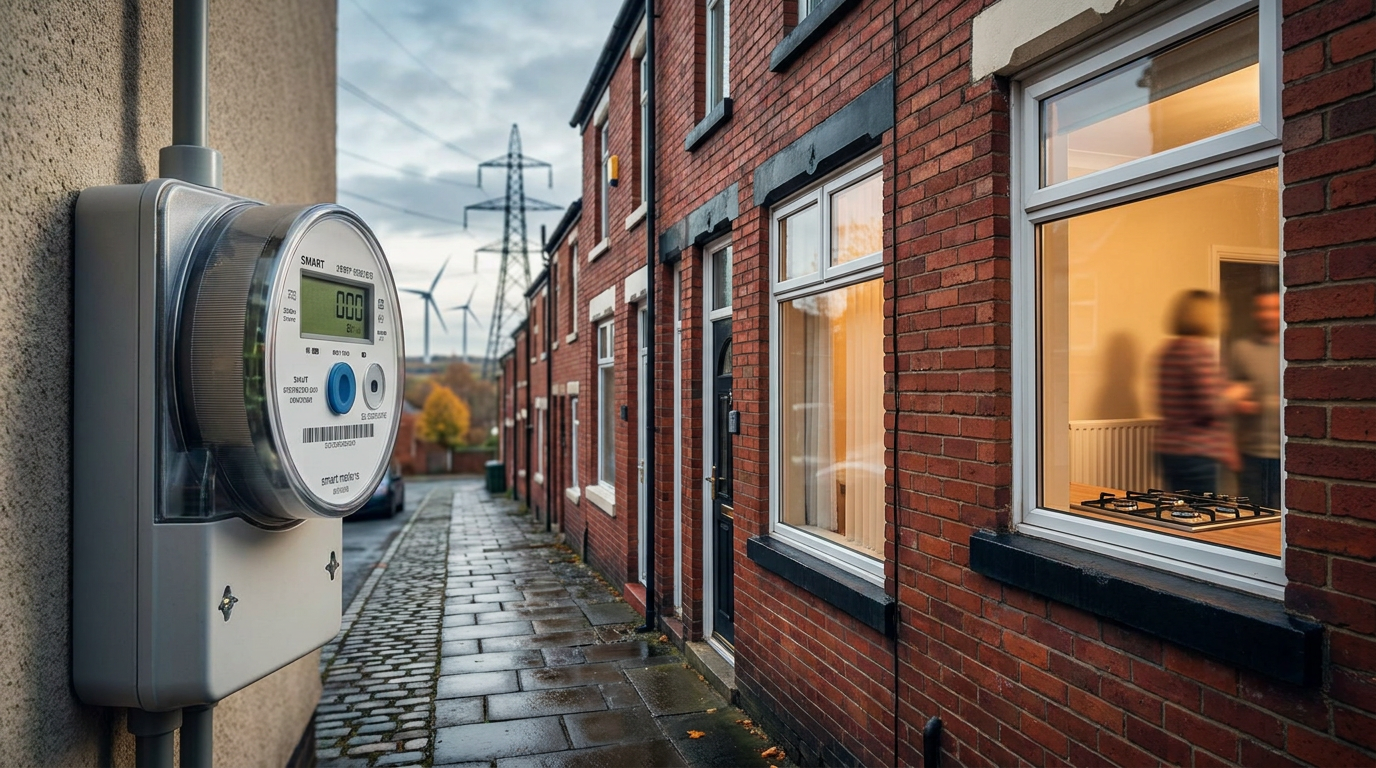
How the UK Energy Price Cap Works (and What It Means for Your Bill)
Summary The Ofgem energy price cap sets the maximum a supplier can charge per unit of gas and electricity, plus the daily standing charge, for households on a standard variable tariff. It is updated every three months. It does not cap the total amount you pay each year — that depends on how much energy you use. This fundamental distinction is often misunderstood, leading to confusion and frustration for millions of households across the UK.
Current Supplier Watch
What this means in plain English
A lot of people, understandable given the naming, think the price cap is a maximum bill. It is not. This is a critical misconception that Power Guardian UK aims to clarify. It is, in fact, a maximum price per unit plus a daily fee to be connected. Let's break down these components:
- Unit rate: This is the price you pay for each kilowatt-hour (kWh) of gas or electricity you consume. Think of it like the price per litre of petrol – the more you drive, the more you pay, even if the price per litre is capped. For electricity, this typically covers the cost of generation, transmission, and distribution. For gas, it includes the cost of extraction, importation, and network delivery.
- Standing charge: This is a fixed daily fee that all households on a standard variable tariff pay, regardless of how much energy they consume. It’s designed to cover the fixed costs associated with supplying energy, such as maintaining the network, meter reading, billing, and customer service. Even if you use no energy for a day, you will still incur this charge. The standing charge has been a point of significant contention and debate recently, particularly for low-energy users or those with second homes, as it disproportionately impacts their overall bill percentage.
- Cap level changes every three months based on wholesale gas and electricity costs. Ofgem reviews and adjusts the cap every quarter (January, April, July, October) based on a methodology that primarily reflects the volatile wholesale energy market. This includes forward-looking wholesale prices for gas and electricity, but also accounts for network charges, operating costs, policy costs (like government environmental levies), and a small profit margin for suppliers. This quarterly adjustment means that bills can fluctuate significantly throughout the year, even for those on standard tariffs. For instance, a sharp increase in global liquefied natural gas (LNG) prices, or geopolitical events impacting supply chains (such as the conflict in Ukraine), will almost certainly translate into a higher price cap in subsequent quarters.
- Around 22 million UK households are on a standard variable tariff (SVT) and so are directly exposed to the cap. This represents the vast majority of British homes. An SVT is the default tariff you fall onto if your fixed-term contract ends and you don’t switch, or if you’ve never proactively chosen a different tariff. While many actively sought better deals before the energy crisis, the collapse of numerous smaller energy suppliers and the subsequent market instability led to a significant proportion of consumers being moved onto SVTs, where they remained due to the lack of competitive fixed deals. During the height of the energy crisis, the SVT was often the cheapest available tariff.
If you are on a fixed tariff, the cap does not apply to you — your prices are locked in until your fix ends. This means you are protected from any increases in the cap during your contract period, but conversely, you won't benefit from any decreases either. Before the energy crisis, fixed tariffs were almost always cheaper than the SVT. Now, with the cap stabilising somewhat, competitive fixed deals are starting to re-emerge, offering consumers the opportunity to secure their rates for a set period, typically 12 or 24 months.
How the Price Cap is Calculated: A Deeper Dive
Ofgem’s methodology is complex, but understanding its core components helps to demystify bill changes. The cap isn't just about wholesale energy; it's a sum of various cost elements:
- Wholesale Energy Costs (approx. 50-60%): This is the largest component, reflecting the price suppliers pay for gas and electricity on the open market.
- Network Costs (approx. 15-20%): Charges paid to operate and maintain the national grid (transmission and distribution).
- Operating Costs (approx. 10-15%): Suppliers' internal costs like billing, customer service, and IT.
- Environmental and Social Obligation Costs (approx. 5-10%): Costs associated with government schemes like the Renewable Obligation, Warm Home Discount, and Energy Company Obligation (ECO).
- VAT (5% of the total bill): Standard UK VAT rate for domestic energy.
- Supplier Pre-payment Headroom and Profit Margin (approx. 1-2%): A tiny allowance for suppliers, often criticised as being too low by the industry.
- Bad Debt: An increasingly significant factor, covering the costs of customers who cannot pay their bills.
These components are calculated for a "typical" household and then translated into unit rates and standing charges.
Regional Variations
It's crucial to understand that the energy price cap is not uniform across the entire UK. There are regional variations for both electricity and gas unit rates, as well as standing charges. This is primarily due to differences in network distribution costs. For example, homes in more rural or sparsely populated areas (like parts of Scotland or the South West) often face slightly higher distribution costs per customer because the network needs to cover larger distances for fewer homes.
Example Regional Unit Rates (hypothetical Q3 2024 snapshot, illustrative based on previous caps)
| Region | Electricity Unit Rate (p/kWh) | Gas Unit Rate (p/kWh) | Electricity Standing Charge (p/day) | Gas Standing Charge (p/day) |
|---|---|---|---|---|
| East Midlands | 25.00 | 6.50 | 50.00 | 30.00 |
| London | 25.50 | 6.60 | 52.00 | 31.00 |
| North West | 24.80 | 6.45 | 49.50 | 29.50 |
| Scotland (Hydro) | 26.00 | 6.70 | 53.00 | 31.50 |
| South West | 25.80 | 6.65 | 52.50 | 30.50 |
← Swipe to see more →
Note: These figures are purely illustrative and do not represent the actual current or future price cap levels. Always refer to Ofgem's official publications for the latest cap figures relevant to your specific region.
These variations mean that while one household might see an electricity unit rate of 25.00p/kWh, another in a different part of the country might be paying 26.00p/kWh under the exact same cap period. The "typical" household figures published by Ofgem are averages across all regions.
How this affects your household bill
For a typical household using 2,700 kWh of electricity and 11,500 kWh of gas a year (Ofgem's "typical" figures), every 5% rise in the cap typically adds roughly £80 to £100 a year to the annual bill. Let's take a concrete example based on a simplified Q2 2024 illustration:
| Component | Assumed Unit Rate (p/kWh) | Assumed Standing Charge (p/day) | Typical Annual Usage | Annual Cost (£) |
|---|---|---|---|---|
| Electricity Unit Cost | 24.50 | - | 2,700 kWh | 661.50 |
| Electricity Standing Charge | - | 53.00 | 365 days | 193.45 |
| Gas Unit Cost | 6.00 | - | 11,500 kWh | 690.00 |
| Gas Standing Charge | - | 30.00 | 365 days | 109.50 |
| Subtotal | 1654.45 | |||
| VAT (5%) | 82.72 | |||
| Total Annual Bill | 1737.17 |
← Swipe to see more →
Again, these figures are illustrative and simplified. Actual costs would vary by region, cap period, and individual usage.
Standing charges have risen sharply in recent years and now make up a meaningful chunk of the total — especially for low users. This trend has been particularly contentious. While the unit rates fluctuate widely with wholesale prices, standing charges have typically seen a more consistent upward trajectory, partly due to some 'socialisation' of costs that were previously recouped through unit rates. For a household employing significant energy-saving measures or an individual with low personal consumption, the standing charge can represent a disproportionately large percentage of their total bill, negating some of the financial benefits of reduced usage. For example, a household using half the typical energy might still pay almost £300 a year purely in standing charges.
You are most exposed if you:
- Are on a standard variable tariff. As discussed, this is the default and exposes you directly to quarterly cap changes.
- Have electric heating (no gas). Electricity is consistently more expensive per kWh than gas, often by a factor of three or four. Households relying solely on electricity for heating and hot water, especially those in off-grid properties or flats without gas heating, face considerably higher bills for the same level of warmth, as electric heating elements convert electricity directly into heat rather than using more efficient heat pumps.
- Use prepayment meters. Prepayment customers historically faced higher unit rates and standing charges compared to direct debit customers. Although Ofgem has recently taken steps to equalise these rates, the legacy of higher costs and the practical challenges of topping up remain. Furthermore, they are at risk of self-disconnection if they run out of credit.
- Live in a poorly insulated home. Energy efficiency is paramount. A home with poor insulation, single-glazed windows, or old, inefficient heating systems will leak heat rapidly, requiring a constant input of energy to maintain comfortable temperatures. This directly translates to higher kWh consumption and, therefore, higher bills under the cap.
Recommended energy saving products
Independently chosen kit that helps UK households cut energy use.
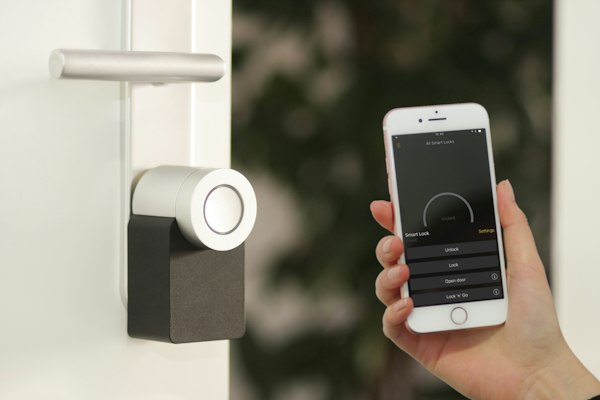
Tapo P110 Smart Plug (Energy Monitoring)
See exactly which appliances are quietly inflating your bill — track real-time watts, kWh and runtime from your phone.
- Real-time energy monitoring
- Cuts standby/vampire power
- Schedule appliances off-peak
Estimated benefit: ~£40/yr standby savings
Shop on AmazonAd – affiliate link. PowerGuardian may earn a commission from Amazon or another approved affiliate partner at no extra cost to you.

Home Energy Monitor (Whole-House)
Track your whole-home electricity use live and find where the kWh are going before the bill lands.
- Whole-house live usage
- Spot expensive habits fast
- App history & alerts
Estimated benefit: Awareness cuts ~5-10% use
Shop on AmazonAd – affiliate link. PowerGuardian may earn a commission from Amazon or another approved affiliate partner at no extra cost to you.
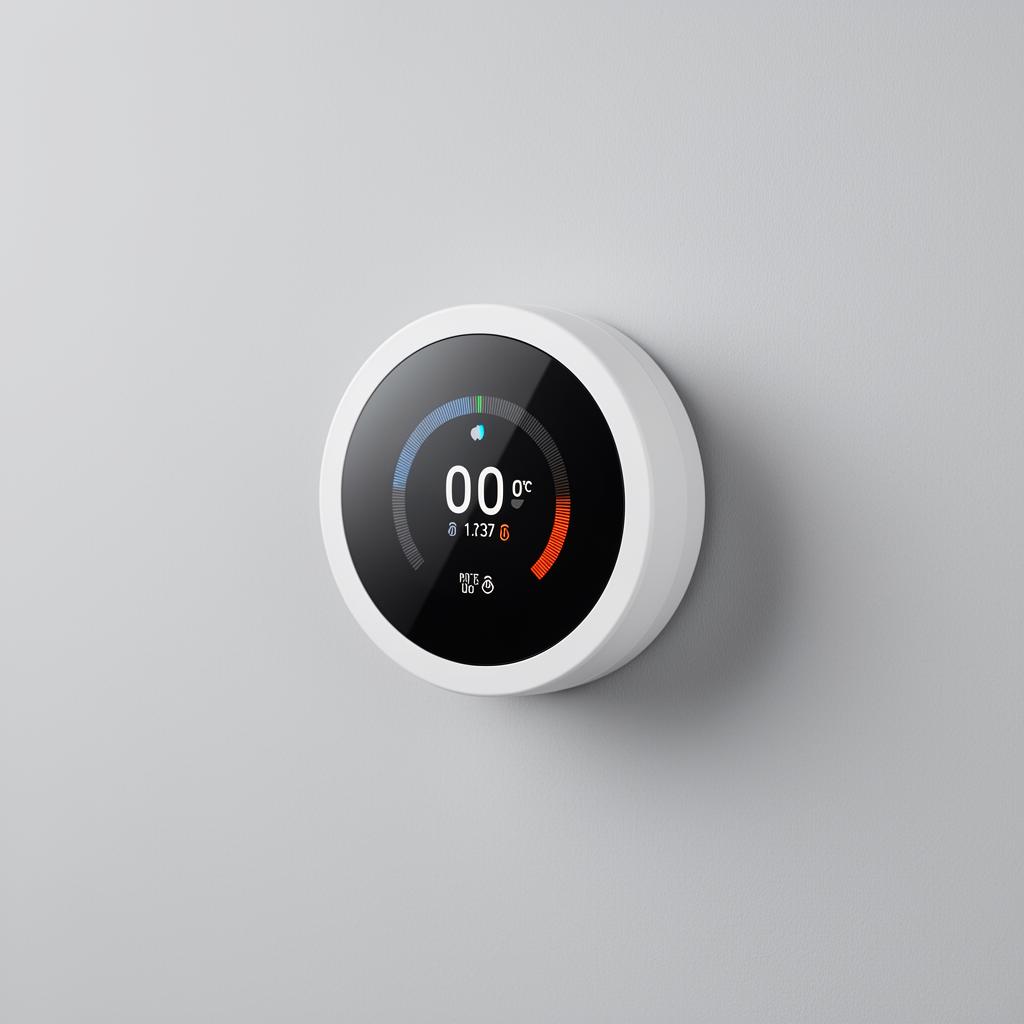
tado Smart Thermostat Starter Kit
Schedule, zone and remote-control your heating — independently shown to cut heating bills meaningfully.
- Heat only when needed
- Geofencing & schedules
- Room-by-room control
Estimated benefit: Up to ~£140/yr
Shop on AmazonAd – affiliate link. PowerGuardian may earn a commission from Amazon or another approved affiliate partner at no extra cost to you.
Affiliate links — we may earn a small commission at no extra cost to you. This keeps PowerGuardian free and independent.
Check My Bill: Practical Steps to Take
The cap protects you from extreme price spikes — it does not guarantee you are getting a fair deal. Many fixed tariffs are now cheaper than the cap, and the market is showing signs of increased competition. Use our free Bill Checker to see in 30 seconds — most users find savings of £200–£500 per year.
Here's a step-by-step guide to understanding your bill and potentially reducing costs:
- Locate Your Key Information:
- Compare Against the Current Price Cap:
- Use a Reputable Comparison Tool (like the Power Guardian UK Bill Checker):
- Consider Energy Efficiency Upgrades:
- Optimise Your Usage Habits:
Government and Supplier Support
The energy crisis has led to various support mechanisms. Ensure you know if you are eligible for any:
- Warm Home Discount Scheme: A one-off discount on your electricity bill for those on certain benefits or low incomes.
- Winter Fuel Payment: An annual payment for older people to help with heating costs.
- Cold Weather Payment: Paid during periods of very cold weather for certain benefit recipients.
- Energy Company Obligation (ECO): Requires energy suppliers to help households with energy-saving measures, often free insulation or boiler upgrades.
Additionally, if you are struggling to pay your bills, contact your energy supplier immediately. They have an obligation to help and can offer payment plans, advise on grants, or direct you to further support.
FAQs
Q1: Will my bill go down if the price cap drops?
If you are on a standard variable tariff, yes, your unit rates and standing charges will automatically reduce in line with the new, lower cap. If you are on a fixed tariff, your rates will remain the same until your contract ends.
Q2: I'm on a fixed deal. Can I switch even if there are exit fees?
It depends on the size of the exit fee versus the potential savings. Use a comparison tool to calculate how much you would save annually on a new tariff, then subtract the exit fee. If the net saving is still substantial, it might be worth switching. Many suppliers waive exit fees if your fixed deal is within 49 days of ending.
Q3: What's the difference between a smart meter and a traditional meter for the cap?
The cap applies regardless of your meter type. However, a smart meter gives you real-time data on your energy usage, helping you identify areas to reduce consumption and potentially lower your overall bill. It also ensures accurate billing, avoiding estimates.
Q4: Why are standing charges so high, even if I use very little energy?
Standing charges cover fixed costs that suppliers incur regardless of how much energy you use, such as network maintenance, billing, and customer service. Ofgem has recently adjusted the balance between unit rates and standing charges, sometimes shifting more costs to the standing charge to provide more stable unit rates. This disproportionately affects low users.
Q5: Is it better to be on a direct debit or prepayment meter regarding the cap?
Traditionally, direct debit customers received slightly lower rates under the cap. However, Ofgem has taken steps to equalise these rates, aiming for parity between direct debit and prepayment. While unit costs should now be similar, direct debit still offers administrative convenience and typically avoids disconnection risks.
Q6: Does the cap apply to businesses?
No, the Ofgem energy price cap is specifically for domestic households. Businesses negotiate their energy contracts directly with suppliers, and their prices are not regulated in the same way. There have been separate government support schemes for businesses during the energy crisis, but these are different from the domestic price cap.
Conclusion
Understanding the UK energy price cap is fundamental to managing your household finances. It's not a ceiling on your total bill, but a limit on the individual components – the unit rates and standing charges – that make up your bill. For the majority of UK households on standard variable tariffs, quarterly adjustments to this cap directly dictate their energy costs.
While the cap offers vital protection against unchecked supplier charges, it does not absolve consumers of the responsibility to manage their own energy consumption or to seek out more competitive deals when they emerge. With the energy market showing signs of normalising, the opportunity to fix your prices below the cap is increasingly available. By diligently monitoring your usage, exploring energy efficiency improvements, and regularly using tools like Power Guardian UK's Bill Checker, you can take proactive steps to mitigate the impact of energy costs on your budget. Stay informed, stay vigilant, and empower yourself to make the best energy choices for your home.
Does the energy price cap limit my total energy bill?
No, the energy price cap does not limit your total bill. It sets the maximum price your supplier can charge per unit of gas and electricity (p/kWh) and the daily standing charge. Your total bill still depends entirely on how much energy you use.
How often does the price cap change?
The energy price cap is reviewed and updated by Ofgem every three months. This means the unit rates and standing charges can change in January, April, July, and October each year. These adjustments are primarily based on the fluctuating wholesale cost of energy.
What is a standing charge and why do I pay it?
A standing charge is a fixed daily fee you pay regardless of how much energy you consume. It covers the fixed costs of providing energy, such as network maintenance, meter reading, and customer service. Even if you use no energy, you will still be charged this daily fee.
Does the price cap apply to everyone in the UK?
The price cap directly applies to approximately 22 million UK households on a standard variable tariff. If you are on a fixed-term tariff, the cap does not apply to you until your contract ends. Regional variations in unit rates and standing charges also exist due to differing network distribution costs.
What factors determine the level of the price cap?
Ofgem calculates the price cap based on several cost components. The largest factors are wholesale energy costs (50-60%), followed by network costs, operating costs, environmental levies, and a small profit margin for suppliers. These are then converted into the unit rates and standing charges.
Recommended kit
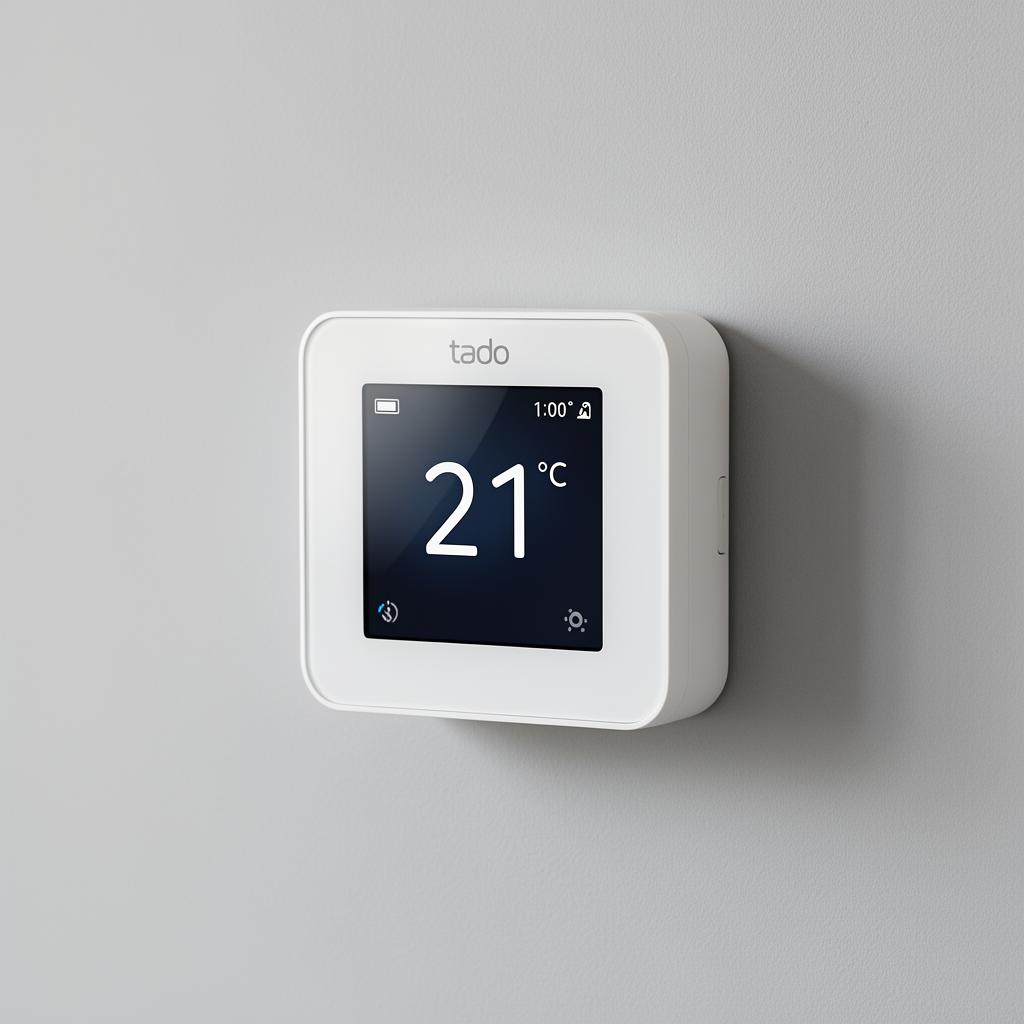
tado Smart Thermostat X
Schedule, zone and remote-control your heating — independently shown to cut heating bills by up to 28%.
Shop on Amazon