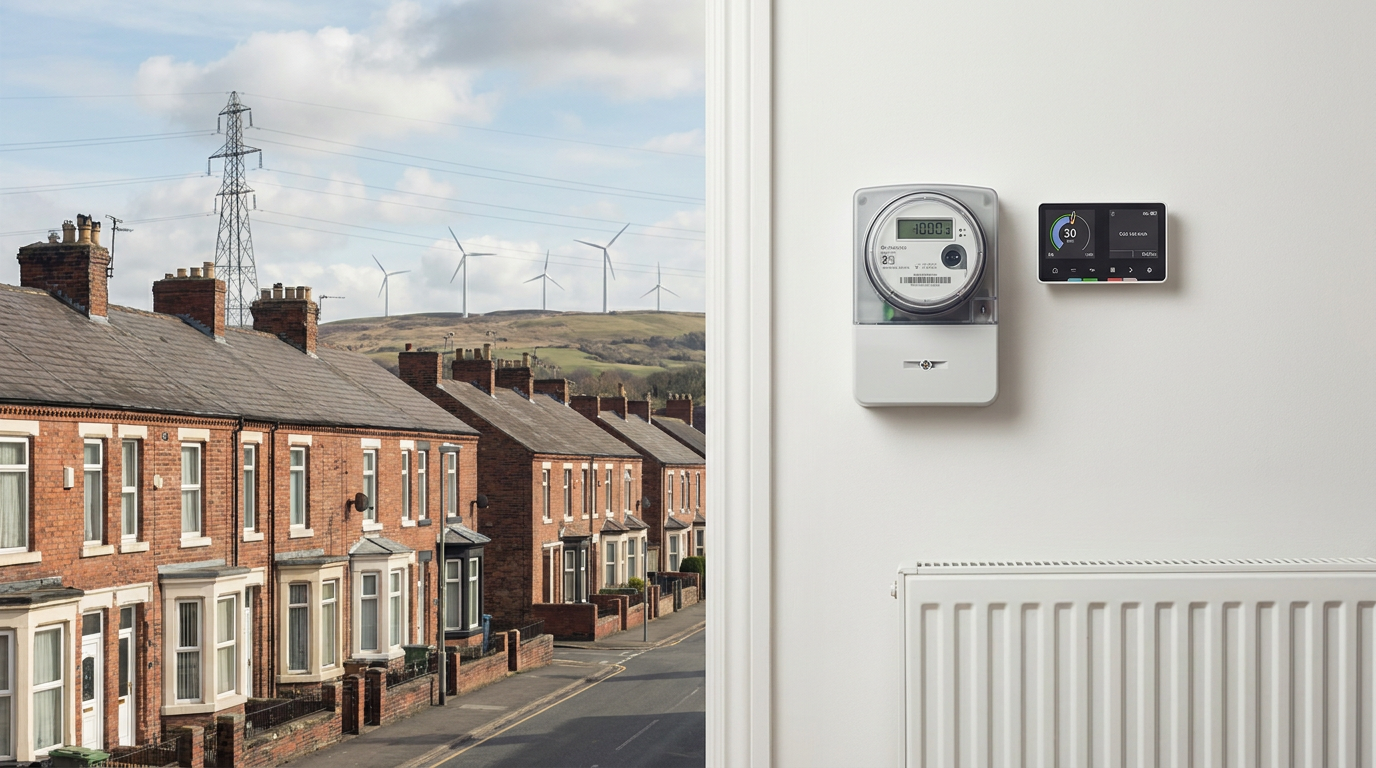
Smart meters are the most divisive bit of kit on the UK energy network. Some households love the live usage display; others worry about reliability, privacy, or the impact on their bill. Here is what the data actually shows in 2026.
What a smart meter does (and does not)
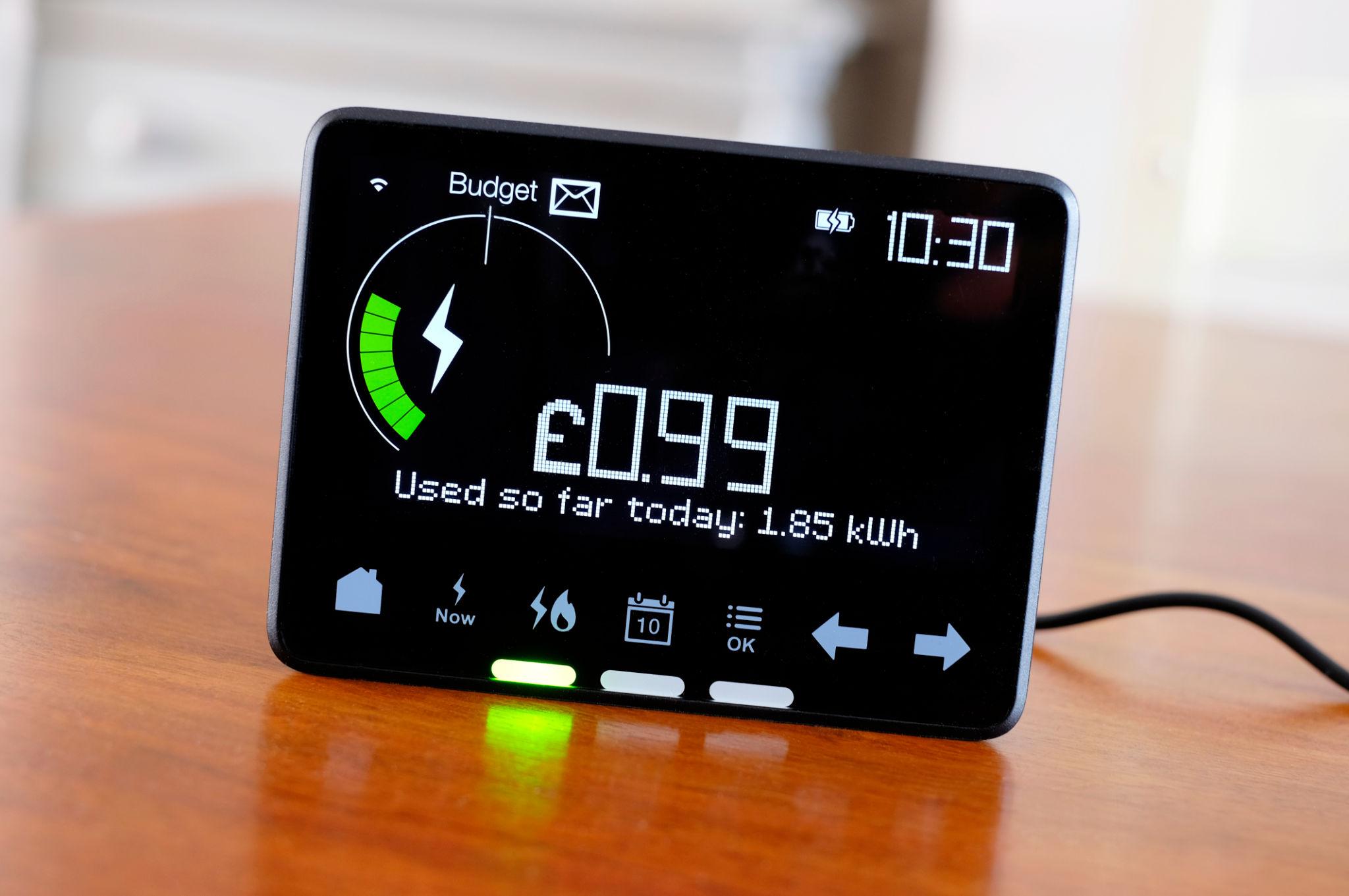
A SMETS2 smart meter sends your gas and electricity readings to your supplier automatically — usually every 30 minutes for electricity and once a day for gas. You get an in-home display (IHD) showing live usage in pence and kWh. That is it. The meter does not change the price you pay; your tariff does. It's crucial to understand this distinction: the smart meter is a measurement and communication device, not a price-setting tool. Your unit rates per kilowatt-hour (kWh) and standing charges are still dictated by your energy supplier and the prevailing market conditions, often influenced by the Ofgem price cap.
For example, under the current Ofgem price cap (effective 1st April 2024 to 30th June 2024), the typical household average unit rates are around 24.50p/kWh for electricity and 6.04p/kWh for gas, with average standing charges of 60.10p/day for electricity and 31.43p/day for gas. These rates vary significantly by region. For instance, customers in the North East may see slightly different rates compared to those in London or the South West due to distribution network charges. The smart meter simply ensures these charges are applied to actual consumption, not estimates.
Inside the SMETS2 Meter
The "SMETS2" (Smart Metering Equipment Technical Specifications 2) designation is key. These meters are designed to be interoperable and remain 'smart' even if you switch suppliers. They communicate via a dedicated, secure national network managed by the Data Communications Company (DCC), which is separate from your home Wi-Fi. This network acts as a secure 'highway' for your meter data, transmitting it directly to your energy supplier and, if you permit, to third-party energy management services.
The IHD, often a small handheld device, displays real-time energy consumption in an easy-to-understand format. It can show: Current usage: How much electricity and/or gas you're consuming right now*. Cost:* The real-time cost of that consumption, applying your current tariff's unit rates. Historical data:* Daily, weekly, or monthly usage trends, allowing you to compare your energy habits over time. Budgeting tools:* Some IHDs allow you to set a daily or weekly budget and alert you if you're approaching it.
This continuous feedback loop is the core mechanism through which smart meters facilitate behaviour change. Without it, energy consumption remains abstract and invisible until the monthly bill arrives.
Current Supplier Watch
How much do smart meters actually save?
DESNZ (Department for Energy Security and Net Zero) figures suggest households with a smart meter save roughly £20–£60 a year on average — almost entirely from behaviour change driven by the in-home display, not from the meter itself. The bigger savings come from time-of-use tariffs (Octopus Agile, EDF GoElectric, etc.) which are only available with a smart meter.
Let's break down these savings. The £20-£60 figure represents the impact of increased energy awareness. Seeing your consumption in real-time encourages small adjustments: turning off lights in empty rooms, unplugging unused chargers, reducing shower times, or being mindful of boiling only the water you need in the kettle. While these individual actions might seem negligible, collectively they add up over a year. For a household on the current Ofgem price cap, saving £40 a year equates to reducing electricity usage by roughly 163 kWh or gas by approximately 663 kWh.
Example Scenario: Behavioural Savings Consider a typical family of four in a semi-detached house. Before Smart Meter:* Unaware of small energy leaks. Lights left on, devices on standby. After Smart Meter:* IHD shows cost spiking with certain appliances. * They start turning off lights more diligently (saving ~£5/year). * They unplug phone chargers and turn off TVs at the wall (saving ~£10/year). * They become more efficient with their kettle and tumble dryer usage (saving ~£15/year). * Total behavioural saving: ~£30/year. This is well within the DESNZ estimate and demonstrates the cumulative effect of small changes.
The Real Game Changer: Time-of-Use (ToU) Tariffs
This is where smart meters unlock significant financial benefits beyond mere behavioural adjustments. ToU tariffs, also known as dynamic or flexible tariffs, charge different unit rates for electricity at different times of the day, reflecting wholesale energy prices. These tariffs are only possible with a smart meter because they require accurate, half-hourly consumption data to apply the correct pricing.
Comparison Table: Standard vs. Time-of-Use Tariff (Illustrative)
| Feature | Standard (Ofgem Price Cap Avg.) | Time-of-Use (e.g., Octopus Tracker/Agile) |
|---|---|---|
| Eligibility | Any meter | Smart Meter (SMETS2 recommended) |
| Electricity Unit Rate | ~24.50p/kWh (flat rate) | Varies significantly by time of day; can be <10p/kWh off-peak, >30p/kWh peak |
| Gas Unit Rate | ~6.04p/kWh (flat rate) | Typically flat, sometimes marginal variations |
| Standing Charge | ~60.10p/day (electricity) + ~31.43p/day (gas) | Similar or slightly higher/lower |
| Best For | Predictable use, low flexibility | High-usage households, EV owners, those with flexible appliances (washing machine, dishwasher, water tank) |
| Potential Savings | Behavioural only (£20-£60/year) | Behavioural + significant shifting of usage (potentially hundreds of pounds/year) |
← Swipe to see more →
Practical Example: Shifting Usage with ToU Tariffs Consider an Electric Vehicle (EV) owner. Charging an EV at standard peak rates (e.g., 28p/kWh) can be expensive. With a ToU tariff, they might charge their vehicle overnight during off-peak hours when the rate drops to, say, 7p/kWh. A 70kWh EV battery charged fully during off-peak windows could save £14 per charge compared to peak rates. If they charge twice a week, that’s over £1,400 per year in electricity savings just for EV charging.
Similarly, running a washing machine, dishwasher, or tumble dryer in the late evening or early morning can capitalise on cheaper rates. Many modern appliances even have 'delay start' functions, making this shift effortless.
Step-by-Step Guidance for Maximising Smart Meter Savings with ToU Tariffs: 1. Get a SMETS2 Smart Meter: Ensure your home is equipped with a functional SMETS2 meter. If you have an older SMETS1 that isn't working smart, ask your current supplier to re-enrol it or consider waiting for a SMETS2 upgrade. 2. Research ToU Tariffs: Explore options from suppliers like Octopus Energy (Agile, Tracker, GoFaster), EDF (GoElectric), E.ON (Next Drive), and others. Compare their peak/off-peak windows, unit rates, and standing charges. 3. Analyse Your Usage: Use your smart meter's IHD or your supplier's app/online portal to understand when you use energy. Identify high-consumption activities that could be shifted. 4. Identify Flexible Appliances: What appliances can be programmed or manually run during off-peak hours? (EV charger, washing machine, dishwasher, tumble dryer, immersion heater, storage heaters). 5. Develop a Strategy: EV:* Always charge during off-peak if possible. Laundry/Dishes:* Use delay start functions to run these overnight or in the early morning. Heating:* If you have an immersion heater for hot water, consider programming it to heat water during off-peak hours. Cooking:* For energy-intensive cooking, try to plan meals for slightly before or after peak windows if feasible. 6. Monitor and Adjust: Regularly check your IHD or energy app to see the impact of your shifting habits. Your savings might take a few weeks to become apparent, but consistent effort pays off.
Do I have to get a smart meter?
No. Suppliers are required to offer one but you can decline. You can also ask for it to run in "dumb mode" — sending no data — though most people who do this still end up with an IHD they ignore. The government target is for every home and business in Great Britain to be offered a smart meter by the end of 2025. While suppliers are under pressure to meet these targets, there is no legal obligation for consumers to accept one. You retain the right to refuse installation. If you choose to decline, your existing traditional "dumb" meter will continue to function as normal, and your supplier will continue to rely on manual meter readings (either self-submitted or through engineer visits) for billing purposes.
Will my bill go up after a smart meter is installed?
Not because of the meter. If your bill jumps, it is usually because previous estimated readings were too low and the smart meter is now sending accurate ones. Check the previous 12 months on your bill to see if you were under-billed. This is a common misconception and a source of frustration for many. A smart meter itself does not charge you more for energy. However, if your previous bills were based on consistently underestimated readings, the switch to accurate smart meter data will reveal the true extent of your usage. This can lead to a 'catch-up' bill or a higher ongoing direct debit to cover actual consumption. It's not the smart meter's fault; it's simply providing a truthful account.
How to check for under-billing: 1. Examine past bills: Look at the "meter readings" section of your last 12-24 months of bills. 2. Identify 'E' vs. 'A': 'E' typically denotes an estimated reading, while 'A' or 'M' denotes an actual or manual reading. 3. Compare readings to usage: If you see a long string of 'E' readings, especially if they are lower than your typical seasonal usage, it's highly likely you've been under-billed. 4. Check final traditional meter reading: When the smart meter is installed, the installer takes a final reading from your old meter. This 'actual' reading closes your old account and ensures a seamless transition. Any discrepancy between estimated and actual usage up to that point will be reconciled.
Are smart meters secure?
Yes — they use the dedicated DCC network, not your home Wi-Fi, and the data is encrypted. Suppliers cannot see what specific appliances you are using; they only see total consumption per half hour. The security aspects of smart meters are often a point of concern. The DCC network is a highly secure, independent communications network specifically built for smart meters. It uses advanced encryption techniques to protect data during transmission. Key security points: * Dedicated Network: Not reliant on your broadband, protecting against common home Wi-Fi vulnerabilities. * Encryption: All data transmitted is encrypted to prevent interception and manipulation. Anonymity (Device Level): Energy suppliers receive aggregated half-hourly consumption data. They cannot discern which specific appliance* in your home used energy. They see a total load, not individual device fingerprints. * Data Control: You control how frequently your data is shared (half-hourly, daily, or monthly). You can also opt-out of sharing half-hourly data with third parties, or even entirely switch off the smart meter's communication for basic billing, though this limits the benefits.
What if my smart meter goes dumb after I switch supplier?
This was common with first-generation SMETS1 meters. SMETS2 meters (installed since 2018) keep their smart functions when you switch. If you have a SMETS1 meter that has gone dumb, ask your new supplier to "enrol" it on the DCC network — most can do this remotely now. The issue of 'dumb' smart meters after switching suppliers was a significant problem with early SMETS1 meters. When you switched suppliers, the new supplier's systems often couldn't communicate with the old supplier's SMETS1 meter, rendering it effectively 'dumb' and requiring manual readings again. This undermined consumer confidence and the entire smart meter rollout.
The SMETS2 Solution: SMETS2 meters were specifically designed to overcome this interoperability problem. They communicate directly with the central DCC network, which acts as a universal hub for all energy suppliers. This means that regardless of which supplier you're with, your SMETS2 meter should maintain its smart functionality – sending readings automatically and allowing you to access ToU tariffs.
What to do if you have a SMETS1 meter that went dumb: 1. Identify your meter type: Sometimes it's marked on the meter itself, or your supplier can tell you. SMETS1 meters were installed before 2018; SMETS2 after. 2. Contact your current (new) supplier: Explain that you have a SMETS1 meter that stopped working intelligently after your switch. 3. Request "enrolment" or "adoption": Ask them to "enrol" or "adopt" your SMETS1 meter onto the DCC network. A large-scale programme to migrate SMETS1 meters to the DCC network has been underway for several years, making many of them 'smart' again, regardless of supplier. This process is usually remote. 4. Patience: While often successful, this process can sometimes take a few weeks. If after a reasonable period it's still not working, log a complaint with your supplier and if necessary, escalate it to the Energy Ombudsman.
Our take
If your supplier offers you a free SMETS2 install, say yes — especially if you might want a time-of-use tariff later. If you have a working dumb meter and never plan to switch tariff types, there is no urgency. Either way, do not let an installer pressure you into a smart meter to "qualify" for a tariff: any tariff that requires a smart meter will get you one for free as part of the switch.
In summary, for most UK households in 2026, a SMETS2 smart meter is a net positive. The immediate behavioural savings, while modest, are a tangible benefit. More importantly, it future-proofs your home for potentially significant savings through time-of-use tariffs, particularly if you have an electric vehicle, heat pump, or other high-consumption appliances that can be run flexibly. The security concerns are largely unfounded, and the 'dumb meter' issue with supplier switching has been mostly resolved with the second generation of devices. Embrace the opportunity for greater energy awareness and control that a smart meter provides.
***
FAQs
- Will a smart meter increase my standing charge or unit rates?
- Can my energy supplier turn off my energy remotely with a smart meter?
- What if my in-home display (IHD) stops working? Does my smart meter still send readings?
- How long does a smart meter installation take?
- Can I get a smart meter even if I have prepayment or pay-as-you-go?
- What if I live in a rural area with poor mobile signal? Will my smart meter work?
Recommended kit
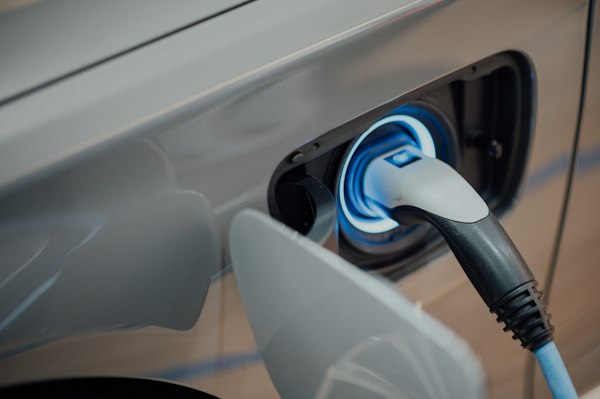
Type 2 EV Charging Cable 7m 32A
Reliable 7m Mode 3 Type 2 to Type 2 cable for public chargepoints — supports up to 7.4kW single-phase charging.
Shop on Amazon