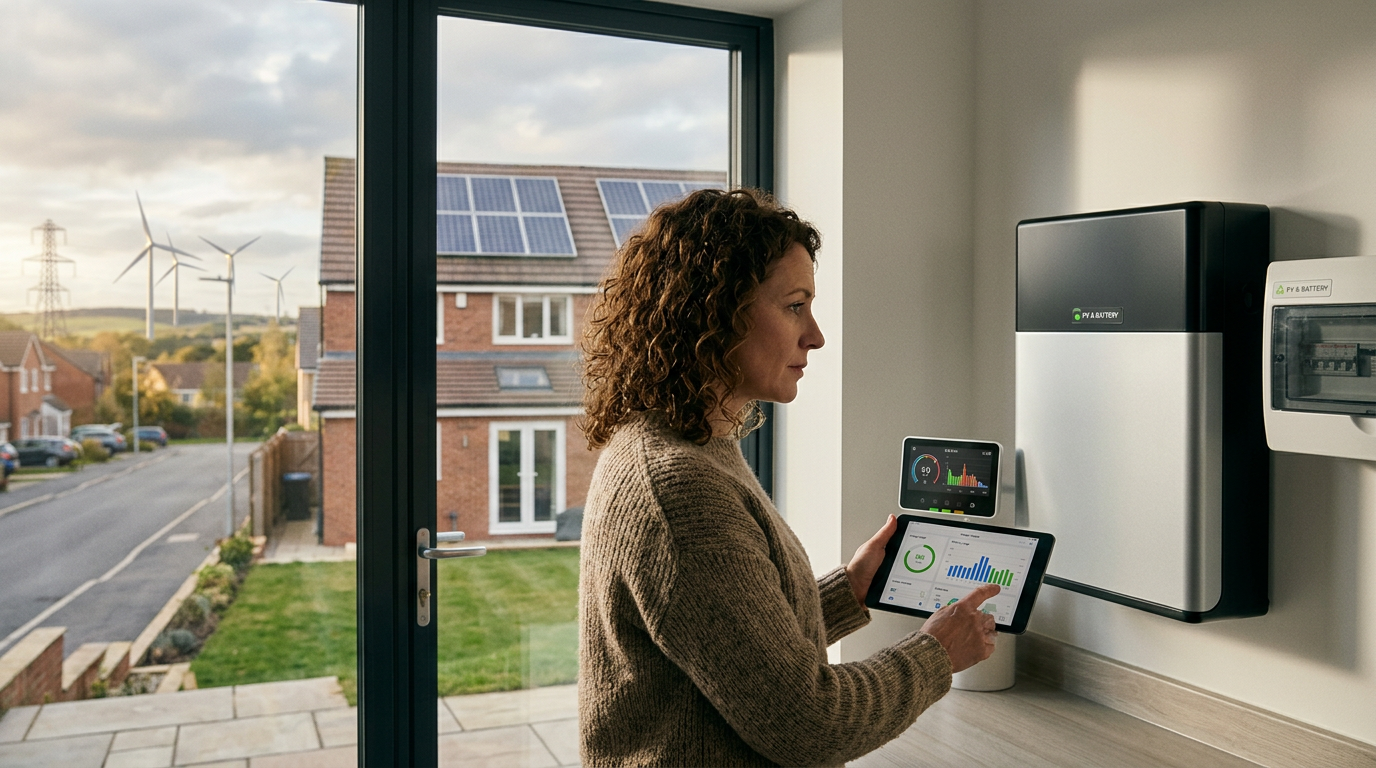
What a battery actually does: A Deep Dive into UK Home Energy Storage
The concept of a home battery isn't new, but its viability in the UK energy landscape of 2026 has transformed dramatically. At its core, a home energy storage battery is a sophisticated device designed to capture electricity when it's abundant and cheap, then release it for use when grid electricity is expensive, or when your solar panels aren't generating. This fundamental principle underpins its financial and environmental benefits.
Imagine your home as a small, interconnected energy ecosystem. During the day, particularly with solar PhotoVoltaic (PV) panels, your roof could be generating more electricity than your immediate household demand. Without a battery, this surplus energy is typically exported back to the grid for a relatively low feed-in tariff (FIT) or Smart Export Guarantee (SEG) rate – often around 15p/kWh, though this can fluctuate with market conditions and supplier offers. With a battery, that energy is stored, ready for use during the evening peak.
Similarly, even without solar, a battery paired with a smart, time-of-use tariff (like Octopus Intelligent Octopus Go, OVO Charge Anywhere, or EDF GoElectric) becomes a powerful tool for arbitrage. These tariffs offer significantly cheaper electricity during off-peak hours (typically overnight, e.g., 12:30 AM to 4:30 AM). Your battery can be programmed to draw power from the grid during these super-cheap windows, charging itself fully. Then, throughout the day and evening, instead of importing expensive electricity from the grid (which, under the current Ofgem price cap for a typical direct debit customer in April-June 2024, is around 24.5p/kWh for electricity), your home runs on the stored, cheap electricity. This is the essence of demand shifting and cost optimisation.
Let's illustrate with current (April-June 2024) Ofgem Price Cap unit rates for context, though we’re projecting for 2026 where these rates might evolve. For a typical UK household, the electricity unit rate under the cap is roughly 24.5p/kWh. In contrast, an off-peak tariff like Octopus Go offers rates as low as 7.5p/kWh for several hours overnight. A 10 kWh battery, charged at 7.5p/kWh, can then displace 10 kWh of electricity that would have cost 24.5p/kWh. That's a saving of 17p per kWh, or £1.70 per full cycle. Over a year, with 300 cycles (accounting for some days of no or partial charge/discharge), that's £510 saved, just from grid arbitrage. This doesn't even factor in solar self-consumption benefits.
Current Supplier Watch
Typical 2026 Costs: An Evolving Landscape
The cost of battery storage has been on a downward trajectory for years, driven by advancements in lithium-ion technology, increased manufacturing scale, and growing market competition. Our projected 2026 costs reflect this continued decline, making batteries more accessible than ever. These figures typically include the battery unit itself, the inverter (if not integrated), installation labour, wiring, and commissioning.
| System Capacity (kWh) | Typical Use Case | Projected Installed Cost (2026) | Regional Variations |
|---|---|---|---|
| Entry (5 kWh) | Evening peak shifting for smaller homes; modest solar self-consumption. | £3,200 | Generally consistent, but rural areas might incur slightly higher travel costs for installers. |
| Mid-range (10 kWh) | Full overnight shifting for average UK household; significant solar self-consumption. | £5,400 | Minor variations, London installers may have higher labour rates but also greater competition. |
| Premium (15 kWh+) | Whole-home backup capability; large energy users; EV charging from battery. | £7,800+ | As above, larger systems may be subject to more bespoke pricing. |
← Swipe to see more →
It's crucial to obtain at least three quotes from MCS-certified (Microgeneration Certification Scheme) installers. The cost can vary based on brand, warranty specifics, inverter type (AC-coupled for existing solar PV, DC-coupled for new solar PV installations), and the complexity of your home's electrical system. For regional relevance, installers in the South East often have a greater pipeline of solar and battery work, which can sometimes lead to more competitive pricing due to economies of scale, though this is not a hard rule.
Recommended Backup Power Station
Portable backup power for home working, emergency charging and energy resilience during outages.
View on Amazon UKAnnual Savings (UK Average)
The financial benefits of a home battery are multifaceted and depend heavily on your existing energy setup, consumption patterns, and chosen tariff. Our figures are based on modelled data for a typical UK household (consuming around 2,900 kWh/year electricity, and 12,000 kWh/year gas, though gas is irrelevant for battery savings). We assume an average electricity unit rate of 24.5p/kWh and an off-peak rate of 7.5p/kWh for arbitrage calculations, and a SEG rate of 15p/kWh for exported solar.
- With solar PV (4 kWp): £550–£780/year
- This is where batteries truly shine. A 4 kWp solar array on a UK roof typically generates around 3,400-3,600 kWh annually. Without a battery, much of this generation occurs during the day when many households are out, leading to significant exports. A battery dramatically increases your self-consumption rate from 30-40% to 70-90%.
- Example: A 4kWp system might generate 15 kWh on a sunny day, but your house only uses 5 kWh during daylight hours. The remaining 10 kWh is either exported at 15p/kWh (£1.50) or stored in your battery. If stored, you then use it in the evening, displacing 10 kWh you would have bought at 24.5p/kWh (£2.45). That's an additional saving of 95p on that day, plus you avoided the low export rate. Over a year, this adds up significantly. This figure also includes arbitrage from any off-peak charging you might do when solar generation is low.
- Battery only + off-peak tariff: £380–£520/year
- Often overlooked, this scenario offers solid returns even without solar. The strategy here is purely arbitrage. Charge the battery during the cheapest overnight hours (e.g., 7.5p/kWh) and discharge it during peak times (e.g., 24.5p/kWh).
- Step-by-step example for a 10 kWh battery user:
- Battery + EV + solar: £900+/year
- This is the 'trifecta' scenario, maximising savings. An electric vehicle adds a significant electricity load (typically 3,000-5,000 kWh/year for charging).
- How it works:
- By effectively shifting EV charging from 24.5p/kWh down to 7.5p/kWh or even 0p/kWh (from solar), the savings multiply rapidly. An EV charging 4,000 kWh/year at 24.5p costs £980. At 7.5p, it costs £300, a saving of £680 just on EV charging. Add this to home battery savings, and the £900+ target is easily achievable.
Payback Period: The Crucial Calculation
The payback period is the time it takes for your cumulative savings to offset the initial investment cost. This is often the make-or-break factor for many homeowners.
- Solar + battery: 7–9 years
- Given the average cost of a 10 kWh battery (£5,400) and annual savings of £700 (mid-point of range), the payback is £5,400 / £700 = 7.7 years. This is highly favourable, especially considering the 10-year typical warranty.
- Battery only: 9–12 years
- Using the mid-range cost (£5,400) and savings (£450), the payback is £5,400 / £450 = 12 years. This is still within or just beyond the typical warranty period, suggesting careful consideration is needed. However, if energy prices rise significantly post-2026, this payback could shorten dramatically.
- Warranty: Typically 10 years / 6,000 cycles.
- It's important to understand this dual warranty. Most batteries are warrantied for 10 years or a certain number of cycles (charge/discharge events), whichever comes first. For example, 6,000 cycles over 10 years means an average of 1.6 cycles per day. A typical UK household battery will likely reach the 10-year mark before the cycle count, ensuring longevity. The warranty also typically guarantees a certain percentage of the original capacity remains (e.g., 70-80% after 10 years).
When it's Worth It: Key Indicators
- You already have (or are getting) solar panels. A battery acts as the perfect companion to solar PV, maximising your self-sufficiency and financial returns on generation. Without a battery, a significant portion of your solar generation might be exported at suboptimal rates.
- You drive an EV and have an off-peak tariff. The high energy demand of an EV provides a substantial opportunity for cost savings through smart charging from cheap grid electricity or surplus solar, amplified by a battery.
- You stay in your home long-term. A payback period of 7-12 years means that to fully realise the financial benefits, you need to remain in the property. If you're planning to move within 5 years, the resale value addition might not fully cover the unrecouped cost.
- You are on (or willing to switch to) a flexible/time-of-use tariff. Without an off-peak tariff, the arbitrage potential for a battery-only system is severely limited, drastically extending payback.
- You value energy independence and resilience. While not purely financial, the ability to power critical appliances during grid outages (if your system has backup functionality) or simply reduce your reliance on fluctuating grid prices is a significant non-monetary benefit for many.
- Your household has high evening / night-time electricity consumption. If you use a lot of electricity when solar isn't generating (e.g., cooking, entertainment, EV charging, heat pumps running in the evening), a battery helps meet this demand cheaply.
When to Skip It: Red Flags
- You're on a standard variable tariff with no solar. Without cheap off-peak electricity or free solar generation to store, a battery has little financial value. You'd be buying grid electricity at regular rates, storing it, and then using it, making no saving.
- You're moving within 5 years. The upfront cost is significant. While a battery can add value to your home, it's unlikely to be a 1:1 return on investment if you sell before the payback period is complete.
- Your daytime usage is already low. If you're home all day and consume most of your solar generation directly, the incremental benefit of a battery for self-consumption might be less pronounced, though off-peak charging still offers value.
- You have very low overall electricity consumption. If your annual electricity bill is already minimal (e.g., under £500), the absolute savings from a battery might not be enough to justify the capital expenditure within a reasonable timeframe.
- Your home lacks suitable installation space. Batteries are often installed in garages, utility rooms, or outdoors. Ensure you have adequate, safe space as per manufacturer guidelines.
Practical Step-by-Step Guidance for UK Homeowners
- Assess Your Energy Usage:
- Evaluate Your Current Setup:
- Determine Optimal Battery Size:
- Research and Select Installers:
- Understand the Installation Process:
- Optimise Your Usage (Post-Installation):
Comparison Table: Leading UK Home Battery Brands (Indicative)
| Feature / Brand | GivEnergy (e.g., All in One) | Myenergi Libbi | Tesla Powerwall 2 |
|---|---|---|---|
| Capacity Range | 3 - 17.4 kWh | 5 - 20 kWh | 13.5 kWh |
| Inverter Integrated | Yes, hybrid inverter | Yes, hybrid inverter | Yes |
| AC/DC Coupled | Both (hybrid) | Both (hybrid) | AC-coupled |
| Key Differentiator | Very popular in UK, competitive pricing, good app, often paired with Eddi (hot water diverter). | Focus on eco-smart energy management, designed to integrate with Eddi & Zappi EV charger. | Market leader, sleek design, strong brand recognition, excellent app for ecosystem management. |
| Backup Functionality | Yes, via EPS | Yes, via EPS | Yes, via Gateway |
| Typical Cost (10 kWh installed, 2026 est.) | £5,000 - £6,000 | £5,500 - £6,800 | £7,000 - £8,500 |
← Swipe to see more →
Note: EPS stands for Emergency Power Supply, ensuring essential circuits remain powered during grid outages.
FAQs
Q1: How long do home batteries last?
Most modern home batteries come with a warranty of 10 years or a specific cycle count (e.g., 6,000 cycles), guaranteeing a minimum capacity retention (typically 70-80%) at the end of the warranty period. In practice, many are expected to operate effectively beyond 10 years, albeit with some degradation in capacity, similar to a smartphone battery.
Q2: Can I get financial support or grants for a battery in the UK?
Currently, there are no widespread, dedicated government grants specifically for home battery storage in the UK, unlike the previous support for solar PV. However, if installing solar PV and a battery together, the entire system (including the battery) benefits from 0% VAT on installation costs until March 2027. Some regional or local authority schemes might exist, so it's worth checking with your local council.
Q3: What happens during a power cut? Will my home still have electricity?
This depends on the specific battery system. If your battery has "backup functionality" (often requiring a separate backup switch or inverter feature like an Emergency Power Supply - EPS), it can automatically disconnect from the grid and power designated "essential" circuits (e.g., lights, fridge, internet) during an outage. Standard battery systems that do not have this feature will also shut down during a power cut to prevent back-feeding the grid and ensure safety for engineers. Always clarify backup capability with your installer.
Q4: Is a home battery safe? Are there fire risks?
Modern lithium-ion home batteries undergo rigorous safety testing and adhere to strict international and UK safety standards. While any electrical appliance carries some inherent risk, the chance of a properly installed and manufacturer-approved home battery catching fire is extremely low. Installation by an MCS-certified professional is key to ensuring all safety protocols are followed. They are typically installed in cool, protected areas like garages or utility rooms.
Q5: What impact does a battery have on my home's EPC (Energy Performance Certificate)?
Installing solar PV significantly improves your home's EPC rating. While a battery alone doesn't directly register as a separate component on the EPC (as it doesn't directly reduce energy demand but rather shifts how that demand is met), its synergy with solar PV and its role in optimising energy use indirectly contributes to a more energy-efficient home, which can positively influence factors considered in an EPC assessment.
Recommended energy saving products
Independently chosen kit that helps UK households cut energy use.
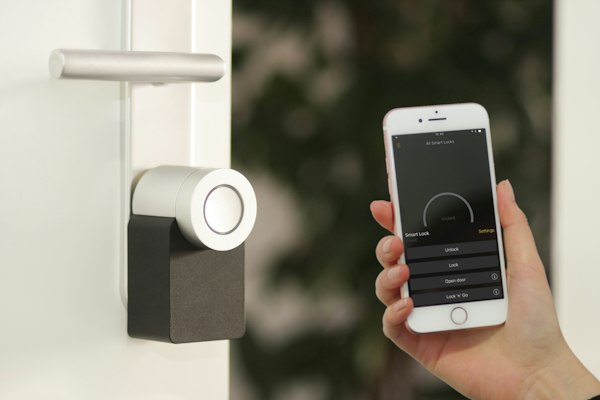
Tapo P110 Smart Plug (Energy Monitoring)
See exactly which appliances are quietly inflating your bill — track real-time watts, kWh and runtime from your phone.
- Real-time energy monitoring
- Cuts standby/vampire power
- Schedule appliances off-peak
Estimated benefit: ~£40/yr standby savings
Shop on AmazonAd – affiliate link. PowerGuardian may earn a commission from Amazon or another approved affiliate partner at no extra cost to you.

Home Energy Monitor (Whole-House)
Track your whole-home electricity use live and find where the kWh are going before the bill lands.
- Whole-house live usage
- Spot expensive habits fast
- App history & alerts
Estimated benefit: Awareness cuts ~5-10% use
Shop on AmazonAd – affiliate link. PowerGuardian may earn a commission from Amazon or another approved affiliate partner at no extra cost to you.
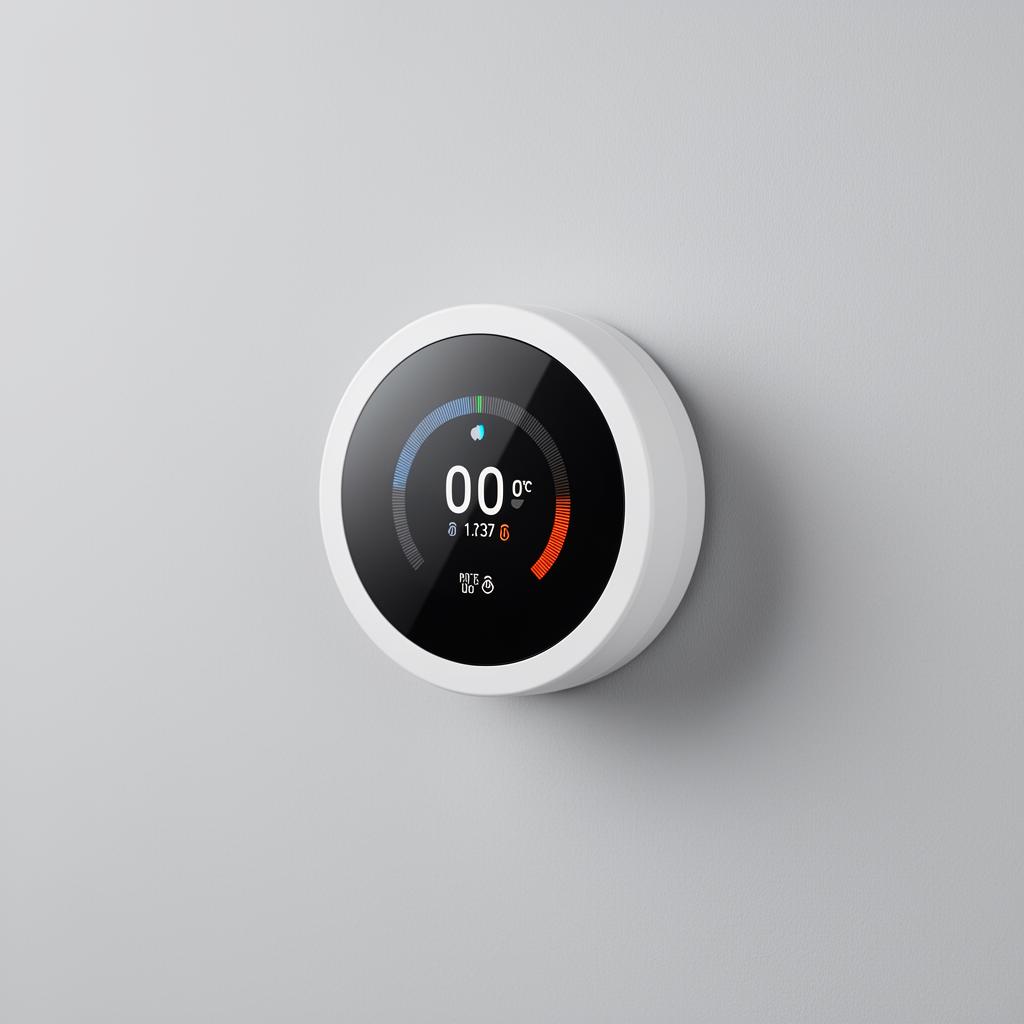
tado Smart Thermostat Starter Kit
Schedule, zone and remote-control your heating — independently shown to cut heating bills meaningfully.
- Heat only when needed
- Geofencing & schedules
- Room-by-room control
Estimated benefit: Up to ~£140/yr
Shop on AmazonAd – affiliate link. PowerGuardian may earn a commission from Amazon or another approved affiliate partner at no extra cost to you.
Affiliate links — we may earn a small commission at no extra cost to you. This keeps PowerGuardian free and independent.
Conclusion: A Smart Investment for the Modern UK Homeowner
In 2026, the case for solar battery storage in the UK is stronger than ever. The significant reduction in cost, coupled with increasingly volatile energy prices and the proliferation of smart tariffs, means batteries are no longer a niche luxury but a pragmatic investment for many. For those with solar PV, a battery transforms your energy independence and vastly improves your return on investment. For EV owners, it’s a powerful tool to slash charging costs. Even without solar, the arbitrage potential on an off-peak tariff offers compelling savings.
While the upfront cost remains substantial, the declining payback periods and the long-term benefits – from financial savings and increased energy resilience to a smaller carbon footprint – position home batteries as a cornerstone of the future UK energy landscape. As a senior energy journalist for Power Guardian UK, my analysis indicates that for the long-term homeowner with an eye on sustainability and financial shrewdness, 2026 is indeed the year that home energy storage truly becomes worth the money.
How does a home battery save me money?
A home battery saves money by storing electricity when it's cheap (either from solar panels or off-peak grid tariffs) and releasing it when grid electricity is expensive. This allows you to avoid importing high-priced electricity during peak hours. For example, charging at 7.5p/kWh overnight and using it later to displace 24.5p/kWh electricity saves 17p/kWh.
How much does a home battery cost in the UK in 2026?
The projected installed cost for a home battery in 2026 ranges from £3,200 for an entry-level 5 kWh system to over £7,800 for premium 15 kWh+ systems. A mid-range 10 kWh system, suitable for an average UK household, is projected to cost around £5,400. These costs include the unit, inverter, labour, and commissioning.
What annual savings can I expect with a battery and solar panels?
With a 4 kWp solar PV system, you can expect annual savings of £550–£780. This is achieved by significantly increasing your self-consumption of solar energy and reducing reliance on expensive grid electricity, as well as incorporating off-peak charging.
Can a battery save me money even without solar panels?
Yes, a battery without solar PV can still generate significant savings, estimated at £380–£520 per year. This is primarily through "arbitrage," where the battery charges using cheap off-peak electricity from the grid and discharges during more expensive peak times.
What capacity battery do I need for my UK home?
The capacity you need depends on your typical energy use. A 5 kWh battery might suit smaller homes for evening peak shifting, while a 10 kWh battery is ideal for full overnight shifting in an average UK household. Larger homes or those wanting whole-home backup might opt for 15 kWh+.
Recommended kit
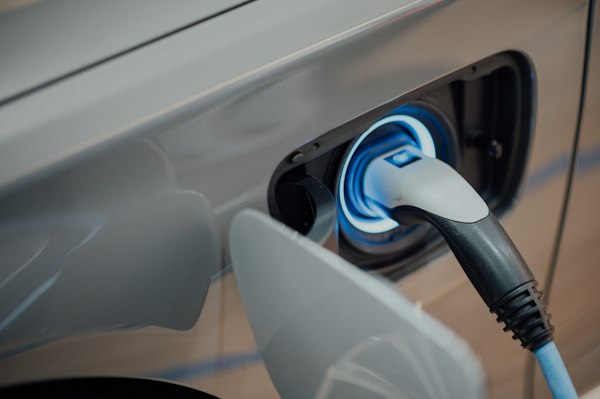
Type 2 EV Charging Cable 7m 32A
Reliable 7m Mode 3 Type 2 to Type 2 cable for public chargepoints — supports up to 7.4kW single-phase charging.
Shop on Amazon