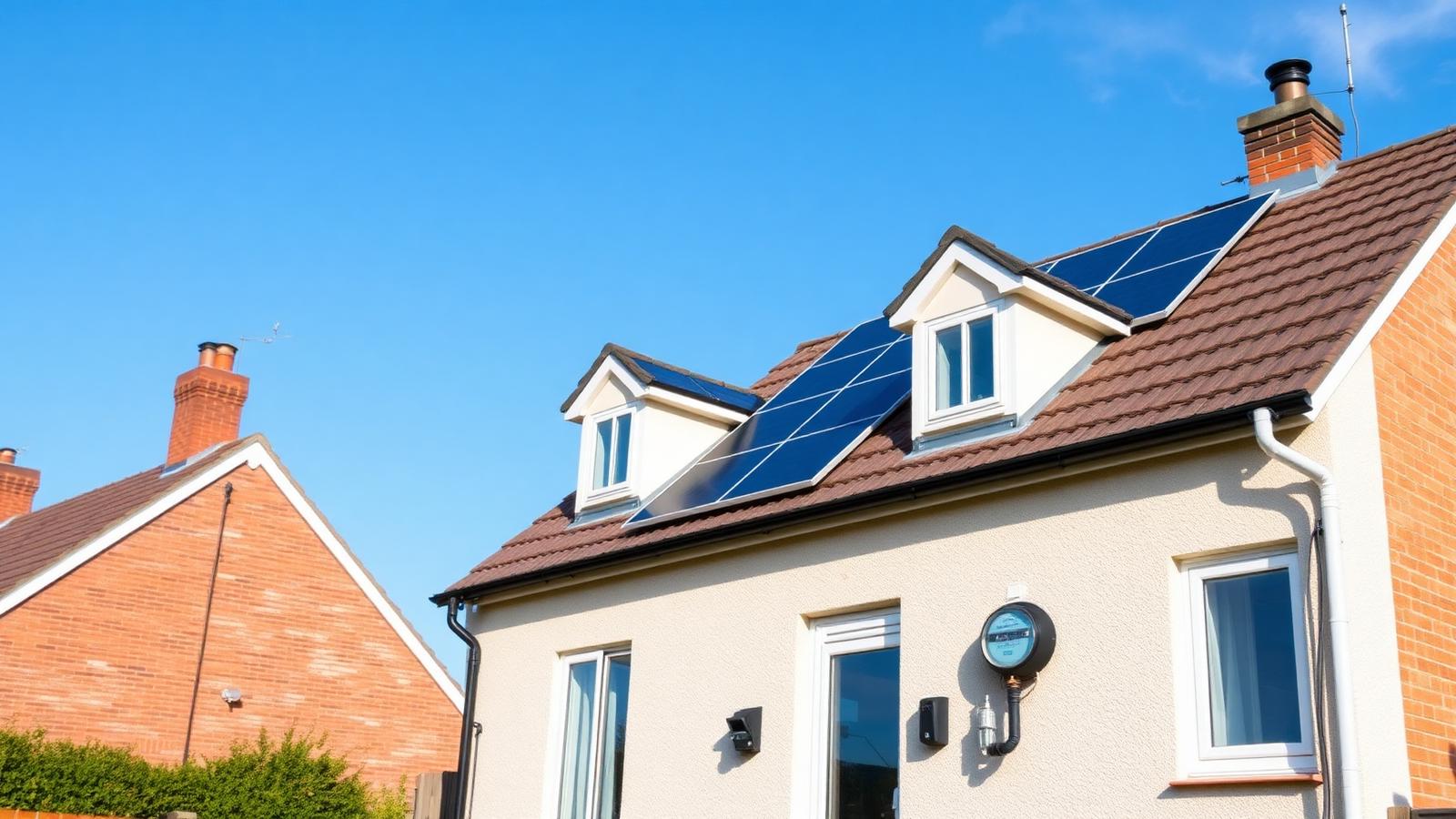
Smart Export Guarantee (SEG) Tariffs Guide
The Smart Export Guarantee lets eligible UK households earn money for surplus renewable electricity they export back to the National Grid. Choosing the right SEG tariff can significantly increase the long-term savings from your solar investment.
What Is the Smart Export Guarantee?
The Smart Export Guarantee (SEG) is a UK government-backed scheme, launched on 1 January 2020, that requires larger energy suppliers to pay you for surplus renewable electricity you export to the National Grid. If your solar panels generate more than you use, that spare power is sent back to the grid — and under SEG, you get paid for every unit.
Why it replaced the Feed-in Tariff. The Feed-in Tariff (FIT) closed to new applicants on 31 March 2019. It paid for both generation and export and became costly as solar prices fell. SEG is a simpler, market-based replacement: suppliers set their own competing export rates, so it pays to shop around.
Which technologies qualify. Solar PV, wind, hydro, micro-CHP and anaerobic digestion all qualify, up to 5 MW (50 kW for micro-CHP). Solar PV is by far the most common.
Who can apply and how payments work. Any GB household or business with an eligible, certified generator and a smart meter that measures export can apply. Your SEG supplier reads your half-hourly export and pays you — as bill credit or direct payment — at your agreed rate.
How SEG Tariffs Work
Whatever your solar doesn't power in your home is exported and measured. Here's the journey every exported unit takes:
Solar panels generate
Your panels turn daylight into electricity throughout the day.
Home uses electricity
Your appliances, lights and devices use solar power first — this is self-consumption.
Surplus is exported
Any electricity you don't use flows back out to the National Grid.
Smart meter measures export
Your smart meter records exactly how much you send back, half-hourly.
Supplier pays you SEG
Your SEG supplier credits or pays you for every unit exported at your agreed rate.
- Measuring export. A smart or export meter records exactly how much you send to the grid, half-hourly.
- Smart meter requirement. Most tariffs need a SMETS2 smart meter reporting half-hourly readings.
- Payment methods. You're paid as bill credit or a direct payment, usually monthly, quarterly or annually.
- Fixed tariffs. A set rate per unit for the whole contract — predictable income.
- Variable tariffs. Rates can change over time, following the market.
- Time-of-use export. Smart tariffs pay more when you export at peak-demand times — ideal with a home battery.
Who Can Apply?
SEG is open to households and businesses in Great Britain with an eligible renewable generator. Your installation usually needs to be certified under the Microgeneration Certification Scheme (MCS) or an equivalent standard, and you must have a meter that measures export.
Solar PV
Up to 5 MWThe most common SEG technology — rooftop solar panels on homes and businesses.
Wind
Up to 5 MWSmall domestic and community wind turbines that export surplus generation.
Hydro
Up to 5 MWMicro-hydro schemes using flowing water to generate renewable electricity.
Micro-CHP
Up to 50 kWMicro combined heat and power units that generate electricity as a by-product of heating.
Anaerobic digestion
Up to 5 MWGeneration from biogas produced by breaking down organic matter.
Certification & size limits. Generation capacity must be 5 MW or less (50 kW or less for micro-CHP). Keep your MCS certificate, meter MPAN and installation photos to hand — you'll need them when you apply.
Which Suppliers Offer SEG Tariffs?
SEG rates and features vary widely between suppliers. The table below compares typical 2026 export rates, tariff type and compatibility. Rates change frequently — always confirm the current rate before applying, and remember you can use a different supplier for export than for your electricity.
| Supplier | Export rate | Type | Smart tariff | Battery | EV tariff |
|---|---|---|---|---|---|
| Octopus Energy | 15p – 27p/kWh | Fixed & Variable | |||
| E.ON Next | 16.5p/kWh | Fixed | |||
| British Gas | 15.1p/kWh | Fixed | |||
| OVO Energy | 20p/kWh | Fixed | |||
| EDF Energy | 12p – 15p/kWh | Fixed & Variable | |||
| Scottish Power | 12p/kWh | Fixed | |||
| So Energy | 10p – 20p/kWh | Fixed & Variable | |||
| Good Energy | 16p/kWh | Fixed |
Rates are illustrative 2026 estimates and change regularly. Compare live rates on our Supplier Monitor and each supplier's own website before signing up.
How Much Could You Earn?
Your SEG income depends on how much you generate, how much you export and your tariff rate. These examples assume a mid-market ~15p/kWh rate and around half of generation exported:
| System | Typical home | Annual generation | Est. export | Est. SEG income |
|---|---|---|---|---|
| Small — 2 kW | Flat or small terraced home | ~1,700 kWh / yr | ~850 kWh / yr | £85 – £150 / yr |
| Average — 4 kW | Typical semi-detached home | ~3,400 kWh / yr solar generation (not household consumption) | ~1,700 kWh / yr | £170 – £300 / yr |
| Large — 6 kW+ | Larger detached home | ~5,100 kWh / yr | ~2,800 kWh / yr | £280 – £500 / yr |
Disclaimer: earnings vary considerably depending on your generation, how much you self-consume, your export rate and the weather. Get a personalised estimate with the Solar Savings Calculator.
How Battery Storage Affects SEG
A home battery changes the maths. Instead of exporting surplus solar immediately at the SEG rate, you can store it and use it later — or export it when rates are highest.
- Self-consumption. Storing surplus to use in the evening avoids buying grid electricity at ~25p+/kWh — usually worth more than the SEG rate.
- Exporting stored electricity. On a smart time-of-use tariff, you can discharge to the grid at peak times for a premium rate.
- Time-of-use charging. Charge from cheap off-peak power overnight, then self-use or export at peak.
- Maximising value. The best strategy blends self-consumption and well-timed export.
- Export vs store. As a rule: self-consume first (biggest saving), then export what's left.
SEG vs Feed-in Tariff (FIT)
SEG replaced FIT for new installations, but the two schemes work quite differently. If you're already on FIT, you keep it — and it often pays more, so most FIT customers should stay put.
| Feature | Smart Export Guarantee | Feed-in Tariff |
|---|---|---|
| Availability | Open to new installations since 1 January 2020. | Closed to new applicants on 31 March 2019. |
| Eligibility | Solar PV, wind, hydro, micro-CHP and anaerobic digestion up to 5 MW. | Same technologies, but no longer accepting new sign-ups. |
| Payments | Export only — you're paid for electricity you send to the grid. | Both a generation tariff (for everything you produced) and an export tariff. |
| Meter requirements | A smart or export meter that measures half-hourly export. | Often estimated export at a deemed 50% of generation. |
| Export calculation | Metered — you're paid for exactly what you export. | Usually deemed (assumed) rather than actually measured. |
| Existing FIT customers | You keep your FIT payments — you can't have both, so stay on FIT if it pays more. | Continue receiving payments for the remainder of your 20/25-year term. |
How to Maximise SEG Payments
Small changes can noticeably increase your export income. These are the highest-value moves, rated by effort and impact:
Compare SEG tariffs regularly
Export rates vary hugely between suppliers and change often. Reviewing your rate yearly is the single easiest win.
Install a smart meter
A SMETS2 smart meter that reports half-hourly is required for most SEG tariffs and unlocks smart time-of-use rates.
Add battery storage
A battery lets you store surplus and export it at peak times on a smart tariff, or self-consume more to cut import costs.
Shift heavy use off-peak of generation
Run the dishwasher, washing machine and EV charging around your export window to balance self-use and income.
Monitor export performance
Use your supplier app or inverter monitoring to check you're actually being paid for what you export.
Keep panels clean and clear
Dirt, moss and shading cut generation. Occasional cleaning keeps export volumes — and income — up.
Optimise inverter settings
A good installer can tune charge/discharge and export limits so you export when rates are highest.
Consider EV charging strategy
Charging an EV from surplus solar reduces export but avoids costly grid imports — often worth more than the SEG rate.
Common SEG Mistakes
Choosing the wrong tariff type
A high fixed rate suits homes with no battery; a smart time-of-use rate rewards those who can export at peak. Pick the one that matches how you use energy.
Missing smart meter readings
If your smart meter isn't reporting export readings, you won't be paid. Check your export readings are flowing to your supplier.
Not comparing suppliers
You can be with one supplier for import and another for SEG export. Many people leave money on the table by never switching their export tariff.
Ignoring battery settings
A poorly configured battery may export cheaply at the wrong time or hold charge it should be selling. Review your settings each season.
Assuming every supplier pays the same
SEG rates range from a few pence to over 25p/kWh. The gap between the best and worst tariff can double your export income.
The Future of SEG
As the UK grid decarbonises, exporting flexibly is becoming more valuable. Here's where SEG is heading:
Smart export tariffs
More suppliers are launching time-of-use export rates that pay far more when the grid needs power most.
Time-of-use export
Half-hourly settlement lets you be paid the true value of your electricity, minute by minute, rather than a flat rate.
Vehicle-to-grid (V2G)
V2G chargers will let your EV battery export to the grid at peak times, turning your car into a household income source.
Home battery integration
Tighter integration between batteries, tariffs and grid signals will automatically export at the most profitable times.
Flexible electricity markets
As the grid decarbonises, households that can shift and export flexibly will be rewarded with the best rates.
SEG & Solar Calculators
To estimate your export income, start with the Solar Savings Calculator to see how much you'd generate and self-use, then use the Energy Bill Calculator to understand your current spend and how much export could offset it.
A dedicated SEG Earnings Calculator is on the way — for now these tools give you an accurate picture of the income your exported solar could deliver.
Related PowerGuardian Tools
Put real numbers to your solar, export and bills.
SEG Earnings Calculator
Estimate your annual SEG income from system size, export share and tariff.
Estimate my incomeSolar Savings Calculator
Estimate the savings and export income from solar panels.
Estimate savingsEnergy Bill Calculator
Turn your usage into an accurate annual electricity cost.
Estimate my costsEV Charging Cost Calculator
Pair solar with an EV and cost up your charging.
Open calculatorHome Energy Efficiency Score
Check your home is ready for solar and storage.
Score my homeStanding Charge Calculator
See how daily charges add to your electricity bill.
Open calculatorRelated Guides
Keep exploring the Solar & Battery Hub.
Solar & Battery Hub
Every solar and storage guide and tool in one place.
Open hubHome Battery Storage Guide
How home batteries work and whether storage pays off.
Read guideGreen Energy Guide
Renewable tariffs and greener home energy choices.
Read guideSolar Savings Calculator
See how solar and export income could pay back.
Estimate savingsHome EV Charging
Cost up charging an EV from surplus solar.
Open calculatorEnergy Saving Tips
Use less so your solar and export go further.
Read tipsExplore the Knowledge Centre
Find related calculators, guides and reports in our Solar & Battery hub — part of the PowerGuardian Knowledge Centre.
Frequently Asked Questions
Explore this topic
Solar panels and battery storage
This page is part of our UK solar panels and home battery guide, which separates bill savings, export income and total financial return.
Useful calculators
- Independent solar quotation checkerScreen a solar quotation against published UK cost and warranty benchmarks.
PowerGuardian research
- Solar Savings Report 2026PowerGuardian research on UK solar costs and savings.
Continue Saving Money
Free calculators picked for this topic.
UK Solar Savings Calculator
Estimate your yearly solar savings from system size, self-use and export rate.
Open CalculatorHome Energy Efficiency Score
Score your home's efficiency and see which improvements cut the most off your bills.
Open CalculatorEnergy Bill Calculator
Enter your kWh usage, unit rate and standing charge for daily, monthly and annual totals.
Open CalculatorCompare Energy Suppliers
Independent PowerGuardian scores out of 100 for relevant suppliers, as at 5 October 2026.
Octopus Energy
91/100Octopus continues to lead the UK market on customer service and complaint handling, backed by genuinely competitive smart tariffs and strong financial backing. The clear front-runner on our intelligence dashboard.
Compare SupplierSo Energy
78/100Backed by ESB, So Energy combines competitive fixed tariffs with consistently strong service scores. A solid mid-market performer.
Compare SupplierEDF Energy
73/100EDF is a steady, financially robust supplier with mid-table service and fair fixed-tariff renewals. Few surprises in either direction.
Compare SupplierFrequently Asked Questions
Quick answers to the questions people ask most about this topic.
Free PowerGuardian Report
Solar Savings Report
Real-world payback figures for UK home solar in 2026, including export rates, battery storage and break-even timelines.
Save This Advice
Create your free personalised dashboard to keep track of useful guides, calculators and savings opportunities.