Unpacking the Standing Charge: The UK's Unseen Energy Bill Component
As a seasoned observer of the UK energy market, I often encounter consumer frustration and confusion regarding the standing charge. It's the silent, relentless line item on your bill that ticks up daily, regardless of whether your lights are on or your boiler is firing. For many, it feels like paying for thin air, especially when away on holiday. However, from a grid operator's perspective, this fixed daily fee is as crucial to maintaining our energy infrastructure as the variable unit rates are to covering the fuel itself.
This deep dive will demystify the standing charge, dissect its components, provide concrete UK-specific data, and offer actionable strategies for managing its impact on your energy expenditure.
What Standing Charges Actually Pay For: The Hidden Costs of Infrastructure
The standing charge isn't a profit-generating mechanism for suppliers; rather, it’s a consolidation of several essential, non-energy-consumption-dependent costs that ensure a reliable and accessible energy supply to every connected home in the UK. Let's break down its constituent parts:
- Maintaining the Wires & Pipes to Your Home (Network Costs): This is arguably the largest component. It covers the colossal undertaking of maintaining the vast network of electricity pylons, underground cables, gas pipelines, and local distribution networks (National Grid Electricity Transmission, National Gas Transmission, and the various regional Distribution Network Operators – DNOs and GDNs). This includes:
- Routine inspections and repairs (e.g., fixing storm damage, upgrading ageing infrastructure).
- Vegetation management around power lines.
- Emergency response to outages.
- The capital investment required for future-proofing the grid, such as integrating more renewable energy sources or accommodating the growth of electric vehicles and heat pumps.
- These costs are regulated by Ofgem and are passed through to consumers via suppliers.
- Meter Operation & Maintenance: This covers the cost of providing, maintaining, and reading your electricity and gas meters. Whether you have a traditional meter, a smart meter, or an out-of-service meter, there's a cost associated with its presence and the data it provides (or would provide). This includes:
- Installation and replacement of meters.
- Data collection and processing (even for smart meters, the data has to be transmitted and managed).
- The upkeep of the national smart meter infrastructure.
- Network Upgrades & Reinforcement: As the UK transitions to a net-zero economy, significant investment is needed to upgrade and reinforce the national grid. This includes:
- Building new transmission lines.
- Upgrading substations to handle increased demand or fluctuating renewable generation.
- Developing "smart grid" technologies to improve efficiency and resilience.
- These long-term, strategic investments ensure the grid can cope with future energy demands and integrate cleaner energy sources effectively.
- Bad-Debt Costs from Non-Paying Customers: This is a particularly contentious, yet unavoidable, component. When customers are unable to pay their energy bills, suppliers often incur losses. These 'bad debts' are not simply absorbed; they are socialised across the entire customer base. Ofgem estimates the current cost of bad debt to be around £28 per year per household for 2026, a figure that can fluctuate with economic conditions and energy prices. While suppliers are encouraged to offer support to vulnerable customers, a certain level of unrecoverable debt is unfortunately inherent in the system.
- Supplier Operating Costs (Indirect): While not explicitly listed as a separate line item, a small portion of the standing charge also contributes to the supplier's administrative overheads that are not volume-dependent, such as billing systems, customer service infrastructure, and regulatory compliance.
The Financial Impact: Current UK Standing Charge Averages (2023-2026 Outlook)
The standing charge is a significant, non-negotiable part of your annual energy expenditure. While the figures for 2026 are projections based on current trends and regulatory frameworks, let's look at the current Ofgem price cap rates and projected changes.
Ofgem Price Cap (Oct-Dec 2023):
| Fuel Type | Standing Charge (per day) | Annualised Cost | Unit Rate (per kWh) |
|---|---|---|---|
| Electricity | 53.35p | £194.72 | 27.35p |
| Gas | 29.60p | £108.04 | 6.89p |
← Swipe to see more →
Source: Ofgem Price Cap Rates, October-December 2023. These are national average rates; regional variations apply.
2026 Projected Averages (as per existing content):
- Electricity: 60p/day (£219/year)
- Gas: 31p/day (£113/year)
These projections indicate a continued upward trend in standing charges, largely driven by ongoing network investments and inflationary pressures. It's crucial to acknowledge that these are national averages.
Regional Variations:
Standing charges are not uniform across the UK. They can vary slightly by region, reflecting the specific costs incurred by the regional DNOs and GDNs. For instance, the standing charge for electricity in the North West (Electricity North West) might differ slightly from that in London (UK Power Networks) or Scotland (Scottish and Southern Electricity Networks / SP Energy Networks). These differences are typically minor but contribute to the overall regional disparity in energy bills. You can usually find the exact rates for your specific postcode on your supplier's website or check Ofgem's regional price cap breakdowns.
Recommended energy saving products
Independently chosen kit that helps UK households cut energy use.

Tapo P110 Smart Plug (Energy Monitoring)
See exactly which appliances are quietly inflating your bill — track real-time watts, kWh and runtime from your phone.
- Real-time energy monitoring
- Cuts standby/vampire power
- Schedule appliances off-peak
Estimated benefit: ~£40/yr standby savings
Shop on Amazon
Home Energy Monitor (Whole-House)
Track your whole-home electricity use live and find where the kWh are going before the bill lands.
- Whole-house live usage
- Spot expensive habits fast
- App history & alerts
Estimated benefit: Awareness cuts ~5-10% use
Shop on Amazon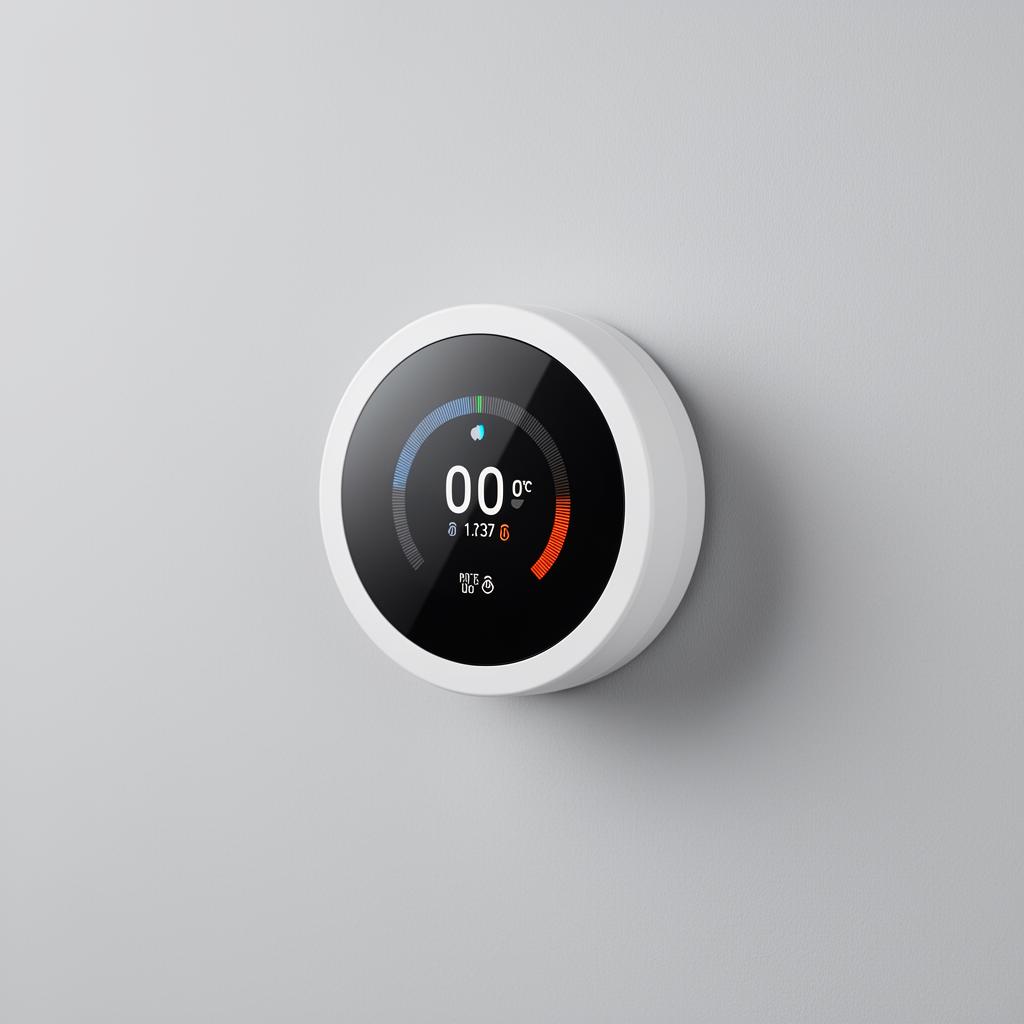
tado Smart Thermostat Starter Kit
Schedule, zone and remote-control your heating — independently shown to cut heating bills meaningfully.
- Heat only when needed
- Geofencing & schedules
- Room-by-room control
Estimated benefit: Up to ~£140/yr
Shop on AmazonAffiliate links — we may earn a small commission at no extra cost to you. This keeps PowerGuardian free and independent.
Strategies to Reduce Your Standing Charge Burden
Given that standing charges are largely fixed and often mandated by Ofgem, outright elimination isn't an option for most connected homes. However, several strategies can help you mitigate their financial impact.
1. Switch to a Low or Zero-Standing-Charge Tariff (The most impactful step)
This is by far the most direct and effective way to reduce or even eliminate your standing charge. While less common than standard tariffs, some suppliers offer innovative tariffs designed to appeal to different consumption habits.
How it works: Suppliers offering low or zero-standing-charge tariffs typically compensate for the lost daily fee by charging a higher unit rate (p/kWh) for the electricity and/or gas you consume.
Who benefits most? Low Energy Users:* If you have exceptionally low energy consumption (e.g., a single person, a highly energy-efficient home, or a property that is vacant for extended periods like a holiday home or a second residence you rarely visit), these tariffs can lead to significant savings. The higher unit rate will be offset by your minimal usage. Holiday Home Owners/Second Home Owners: This is particularly relevant. Instead of paying 30-60p every single day* on a property you use for only a few weeks a year, a zero-standing-charge tariff means you only pay for the energy when you're actually there and using it.
Example Suppliers (check current availability): EDF Energy:* Their "Essentials" tariff has historically offered a lower standing charge, sometimes even a zero-standing charge for electricity for specific customer segments, paired with a higher unit rate. Utility Warehouse:* Known for their multi-service bundling, Utility Warehouse has occasionally offered tariffs with reduced or zero standing charges as part of their energy package. Smaller, Niche Suppliers:* Keep an eye on new entrants or more agile smaller suppliers who might experiment with these tariff structures to gain market share. Compare rigorously!
Practical Step-by-Step Guidance: 1. Gather Your Data: Have your annual/monthly electricity and gas consumption figures (in kWh) readily available. This is usually on your energy bill or accessible via your online account. 2. Use an Ofgem-Accredited Comparison Site: Websites like MoneySavingExpert's Cheap Energy Club, Uswitch, or Citizens Advice comparison tool are excellent resources. 3. Enter Your Usage: Crucially, input your actual annual kWh usage. The comparison tool will then factor in both the unit rate and the standing charge of various tariffs to give you an accurate annual cost. 4. Filter/Look for "Zero Standing Charge" or "Low Standing Charge": Be explicit in your search. 5. Compare Total Annual Costs: Don't just look at the standing charge or the unit rate in isolation. A tariff with a zero standing charge but an extremely high unit rate might be more expensive if you're a high user. Conversely, a standard tariff with a "competitive" unit rate can still be pricier if its standing charge is high and your usage is low. 6. Read the T&Cs: Always understand any exit fees, contract lengths, and specific conditions associated with the tariff.
Example Comparison Table (Illustrative & Simplified):
| Tariff Type | Standing Charge (p/day) | Elec. Unit Rate (p/kWh) | Gas Unit Rate (p/kWh) | Annual Cost (Low User - 1500 kWh Elec, 5000 kWh Gas) | Annual Cost (High User - 3500 kWh Elec, 12000 kWh Gas) |
|---|---|---|---|---|---|
| Standard Fixed | 55 (Elec) / 30 (Gas) | 28.0 | 7.0 | £427.50 + £350 = £777.50 | £1067.50 + £840 = £1907.50 |
| Low SC Tariff | 20 (Elec) / 10 (Gas) | 30.0 | 7.5 | £443.00 + £375 = £818.00 | £1113.00 + £900 = £2013.00 |
| Zero SC Tariff | 0 (Elec) / 0 (Gas) | 33.0 | 8.5 | £495.00 + £425 = £920.00 | £1155.00 + £1020 = £2175.00 |
← Swipe to see more →
Note: This table is purely illustrative and uses hypothetical rates. Always use an up-to-date comparison tool with your actual usage. In this hypothetical example, for a "Low User," the Standard Fixed might be better than the Zero SC, but a truly "very low" user (e.g., under 1000 kWh elec, 3000 kWh gas) might see Zero SC as beneficial. It truly depends on your consumption profile.
2. Avoid Prepayment Top-Up Surcharges (Indirect Cost Management)
While not a direct standing charge reduction, this is about avoiding additional fixed daily costs. Many prepayment meters, particularly older ones, have a mechanism where if you don't top up, the standing charge (and potentially debt repayment) can accrue, and then a larger amount is deducted the next time you put credit on. This can feel like a lump-sum surcharge. Smart prepayment meters offer more real-time information, allowing you to track and manage deductions more effectively.
Practical Tip: If you have a traditional prepayment meter and are away, try to leave enough credit to cover the standing charge for your absence, or top up remotely if your supplier offers that service to avoid a large "catch-up" deduction upon your return.
3. For Holiday/Second Homes: Consider Disconnecting (A drastic, often impractical, measure)
This option is rarely cost-effective or practical for most people, but it's important to understand. If a property is genuinely vacant for years on end and you have no intention of using it, you could request your supplier to formally disconnect the energy supply. This involves physically removing the meter and sometimes disassembling parts of the connection.
Considerations: Cost of Disconnection:* There can be significant charges for disconnection. Cost of Reconnection:* Even higher charges are typically levied for reconnection if you decide to use the property again. This can run into hundreds or even thousands of pounds, especially if infrastructure needs to be re-established. Timeframe:* Disconnection and reconnection processes can be lengthy. Safety:* A fully disconnected property is safer if left entirely unattended for very long periods.
When it might be considered: * A derelict property undergoing a multi-year renovation where no energy is needed. * A property being sold after being vacant for a very long time, where the new owner will want to establish their own connection.
General advice: For most holiday homes or second homes used even a few weeks a year, opting for a low or zero-standing-charge tariff is a far more sensible and cost-effective approach than full disconnection.
FAQ: Standing Charges
Q1: Can I refuse to pay the standing charge? A1: No, the standing charge is a mandatory component of your energy bill for a connected property in the UK. It covers essential infrastructure costs that exist whether you use energy or not. Refusal to pay can lead to debt, disconnection warnings, and damage to your credit rating.
Q2: Why do I pay it when I'm on holiday and using no energy? A2: The standing charge covers the fixed costs of providing the ability to receive energy at your property, much like a line rental for a phone line. Even when you're away, the pipes and wires are maintained, your meter is in place, and the network is ready to supply you the moment you return.
Q3: Are standing charges regulated by Ofgem? A3: Yes, Ofgem, the energy regulator, sets the maximum standing charge that suppliers can charge customers on standard variable tariffs (SVT) under the price cap. This ensures a degree of fairness and prevents suppliers from charging excessive daily fees.
Q4: Is it true that some tariffs have no standing charge? A4: Yes, some niche tariffs, often offered by smaller suppliers or as special deals, do indeed have a zero or very low standing charge. However, these tariffs typically compensate by having a higher unit rate (p/kWh) for the energy you consume. They are usually most beneficial for very low energy users.
Q5: Will standing charges continue to increase? A5: While nothing is certain, the general trend, particularly due to significant investment required for grid decarbonisation and upgrades (e.g., smart meters, EV charging infrastructure, renewable integration), suggests that standing charges are likely to see upward pressure in the coming years. Ofgem's role is to ensure these increases are justifiable and not excessive.
Q6: Does my region affect my standing charge? A6: Yes, standing charges can have slight regional variations across the UK. This is because the costs for maintaining and upgrading the local distribution networks (which are a component of the standing charge) differ between the various regional DNOs and GDNs. These differences are generally small but contribute to the overall regional cost disparities in energy bills.
Current Supplier Watch
Conclusion: Understanding for Better Management
The standing charge is an often-overlooked but significant element of your UK energy bill. It represents the vital infrastructure that underpins our modern energy supply – a system that requires constant maintenance, upgrades, and resilience. While it might feel like a payment for 'nothing,' it's fundamentally about ensuring power is always there at your command.
As energy journalists at Power Guardian UK, our goal is to empower you with knowledge. By understanding what these charges entail and by actively seeking out tariffs tailored to your consumption profile, you can avoid unnecessary costs and make more informed decisions about your energy supply. Don't let the standing charge be a mystery; arm yourself with the facts and choose wisely. The future of UK energy will demand greater awareness and proactive engagement from all of us.
Why do I have to pay a standing charge even when I'm not using energy?
The standing charge covers essential fixed costs of maintaining the UK's energy infrastructure, including wires, pipes, meters, and network upgrades. These costs are incurred daily regardless of your energy consumption, ensuring a reliable supply is always available to your home. It also contributes to costs like bad debt from non-paying customers.
What components make up the standing charge on my energy bill?
The standing charge primarily covers network costs for maintaining electricity pylons and gas pipelines, meter operation and maintenance, and strategic network upgrades for a net-zero future. It also includes an allowance for bad debt incurred from customers who cannot pay their bills.
How much is the average standing charge in the UK currently, and what is it projected to be in 2026?
For October-December 2023, the average electricity standing charge is 53.35p/day (£194.72 annually) and gas is 29.60p/day (£108.04 annually). Projections for 2026 suggest these could rise to 60p/day for electricity (£219/year) and 31p/day for gas (£113/year).
Are standing charges the same across all regions of the UK?
No, standing charges can vary slightly by region across the UK. These minor differences reflect the specific costs faced by regional Distribution Network Operators (DNOs) and Gas Distribution Networks (GDNs) in maintaining their local infrastructure.
Does the standing charge contribute to energy supplier profits?
No, the standing charge is not a direct profit-generating mechanism for suppliers. Instead, it consolidates essential non-consumption-dependent costs that ensure a reliable energy supply, such as infrastructure maintenance and regulatory compliance, with some indirect contribution to supplier operating costs.
Recommended kit
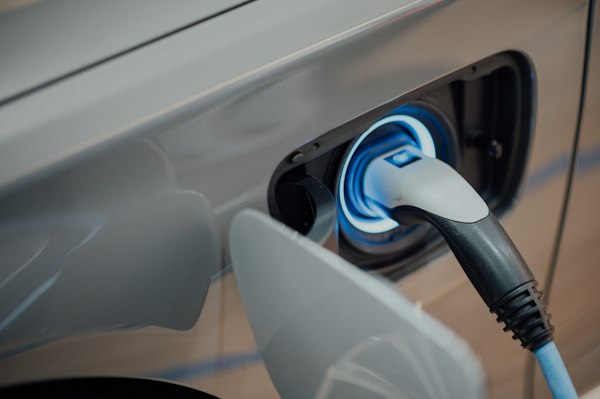
Type 2 EV Charging Cable 7m 32A
Reliable 7m Mode 3 Type 2 to Type 2 cable for public chargepoints — supports up to 7.4kW single-phase charging.
Shop on Amazon