UK Standing Charges Explained: Why You Pay Even When You Use Nothing
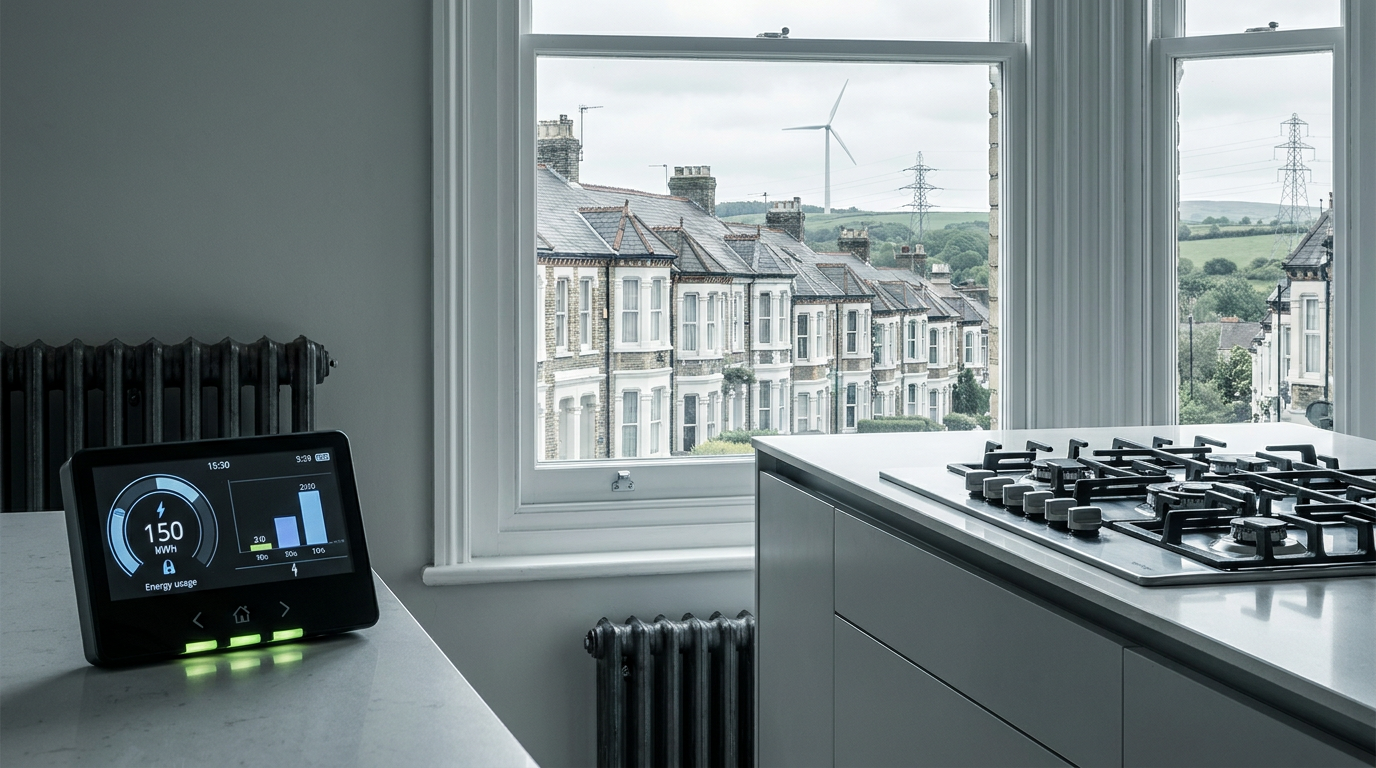
You can switch off everything in your house, go on holiday for a month, and still get a bill. That's the standing charge — and at around 60p/day on average for dual fuel in 2026, it adds up to over £200/year before you've used a single kWh. This charge, largely fixed and unavoidable, has become a significant talking point in the UK energy sector, particularly with its substantial increase in recent years. As senior energy journalists for Power Guardian UK, we delve deep into the intricacies of standing charges, their composition, regional variations, and the ongoing Ofgem reforms that could reshape how we pay for our energy.
What does the standing charge actually pay for?
The standing charge isn't some arbitrary fee; it's a critical component of the UK's energy infrastructure funding. It covers the fixed costs of being connected to the gas and electricity networks, ensuring your supply is reliable and accessible regardless of your consumption habits. Let's break down its key elements:
- Meter Operation & Maintenance: This covers the cost of owning, installing, maintaining, and eventually replacing the physical energy meters at your property. It also includes the meter reading services (whether smart or manual) that ensure accurate billing.
- Network Maintenance, Upgrades, & Expansion: A substantial portion of the standing charge contributes to the upkeep and development of the vast network of pylons, cables, substations, gas pipelines, and pumping stations that deliver energy to your home. This includes routine repairs, emergency fault fixes, and strategic investments to modernise the grid for future demands, such as integrating more renewable energy sources. Distribution Network Operators (DNOs) and Gas Network Operators (GNOs) are responsible for these crucial works.
- Supplier of Last Resort (SoLR) Levies: A significant factor in recent standing charge hikes, these levies recover the costs incurred during the 2021-2022 energy crisis. When numerous energy suppliers collapsed, Ofgem's SoLR mechanism ensured customers were seamlessly transferred to new providers. The financial losses incurred by the receiving suppliers (e.g., buying energy at short notice for new customers) were subsequently mutualised across the industry and are now largely recouped via standing charges. Octopus Energy, for example, took on thousands of customers from failed suppliers like Bulb, requiring substantial capital.
- Policy Costs and Environmental Levies: This includes contributions to various government-mandated environmental and social schemes aimed at decarbonising the economy and supporting vulnerable consumers. Examples include:
- Renewables Obligation (RO): A scheme designed to support large-scale renewable electricity generation.
- Feed-in Tariffs (FiT) Legacy Costs: Payments made to households and businesses generating their own renewable electricity.
- Warm Home Discount Scheme: Reduces energy bills for low-income households. While some of these are recovering from unit rates, a portion has historically been, or proposes to be, recovered through standing charges to spread the burden more evenly.
Crucially, the exact components and their recovery mechanism are reviewed and set by Ofgem as part of the UK energy price cap, which limits the maximum suppliers can charge per unit of energy and per day for the standing charge.
Why do standing charges vary by region?
The UK is divided into District Network Operator (DNO) regions for electricity and Gas Network Operator (GNO) regions for gas, reflecting the operational territories of the companies responsible for maintaining the local networks. The costs associated with these networks differ significantly depending on geographical factors, population density, and infrastructure requirements.
- Geographical Challenges: Supplying electricity across sparsely populated, rural areas like the North of Scotland, with mountainous terrain and long distances between customers, is inherently more expensive per household than delivering energy in densely populated urban centres like London. This involves more extensive cabling, more frequent maintenance needs in harsh weather conditions, and fewer customers to share the fixed costs.
- Infrastructure Age & Upgrades: Some regions have older infrastructure requiring more frequent maintenance and investment in upgrades, which can push up local network costs.
- Demand Density: In areas with high population density, network infrastructure can be used more efficiently, spreading fixed costs across a larger customer base.
Example Regional Variations (Approximate daily rates under April-June 2024 Ofgem price cap):
Let's illustrate with some actual figures for electricity standing charges from the April-June 2024 Ofgem price cap, showing the disparity:
| Region | Electricity Standing Charge (p/day) | Relative Cost |
|---|---|---|
| London | 53.01 | Lowest |
| Southern Electric | 54.76 | |
| East Midlands | 56.12 | |
| North Western | 60.10 | |
| Scotland (North) | 61.35 | Highest |
| Merseyside & North Wales | 61.35 | Highest |
← Swipe to see more →
Please note: These figures are indicative and subject to quarterly changes by Ofgem.
This table clearly demonstrates how a household in Merseyside or the North of Scotland pays almost 18% more in daily electricity standing charges compared to one in London, purely due to the underlying network costs in their respective DNO regions. Similar, though often less pronounced, variations exist for gas standing charges across GNO regions.
Why are UK standing charges so high in 2026?
The current elevated state of UK standing charges is not an accident but the result of a confluence of specific policy and market events since 2021. Their nearly doubling in a relatively short period has surprised and frustrated consumers.
- Cost of Bailing Out Collapsed Suppliers (SoLR Levies): As mentioned, the failure of dozens of energy suppliers in 2021-2022, most notably Bulb Energy (which alone cost taxpayers an estimated £3 billion), created a massive financial hole. Ofgem decided to recover these costs through the price cap, primarily via the standing charge. This was deemed the fairest method to spread the burden across all bill payers rather than exclusively heavy energy users.
- Network Upgrades for Renewables: The UK is committed to a Net Zero future, which requires significant investment in upgrading and expanding our electricity grid to accommodate a growing proportion of intermittent renewable energy sources (wind, solar). This includes building new transmission lines, enhancing grid flexibility, and investing in smart technologies. These essential, long-term investments are funded through network charges, a component of the standing charge.
- Ofgem's Policy Cost Reallocation: In an attempt to protect high-consuming households (often larger families, those with medical equipment, or poorly insulated homes) from the sharp spikes in wholesale energy prices, Ofgem made a deliberate decision to reallocate some policy costs from the unit rate (p/kWh) to the standing charge (p/day). The rationale was that spreading these fixed costs more evenly would insulate vulnerable, higher-usage households from disproportionate bill increases during times of high energy prices. This decision, while well-intentioned, has disproportionately impacted low-usage households and second homeowners, leading to calls for review.
Recommended energy saving products
Independently chosen kit that helps UK households cut energy use.
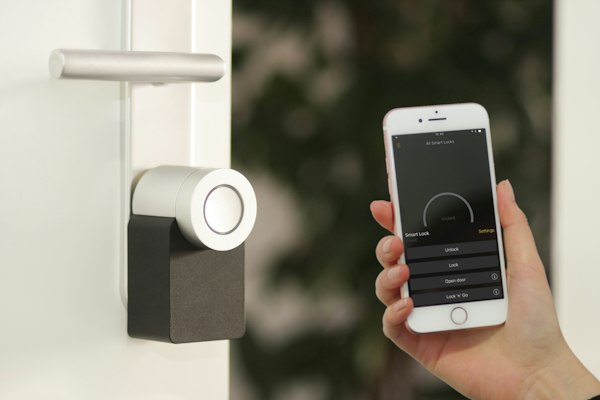
Tapo P110 Smart Plug (Energy Monitoring)
See exactly which appliances are quietly inflating your bill — track real-time watts, kWh and runtime from your phone.
- Real-time energy monitoring
- Cuts standby/vampire power
- Schedule appliances off-peak
Estimated benefit: ~£40/yr standby savings
Shop on AmazonAd – affiliate link. PowerGuardian may earn a commission from Amazon or another approved affiliate partner at no extra cost to you.
Home Energy Monitor (Whole-House)
Track your whole-home electricity use live and find where the kWh are going before the bill lands.
- Whole-house live usage
- Spot expensive habits fast
- App history & alerts
Estimated benefit: Awareness cuts ~5-10% use
Shop on AmazonAd – affiliate link. PowerGuardian may earn a commission from Amazon or another approved affiliate partner at no extra cost to you.
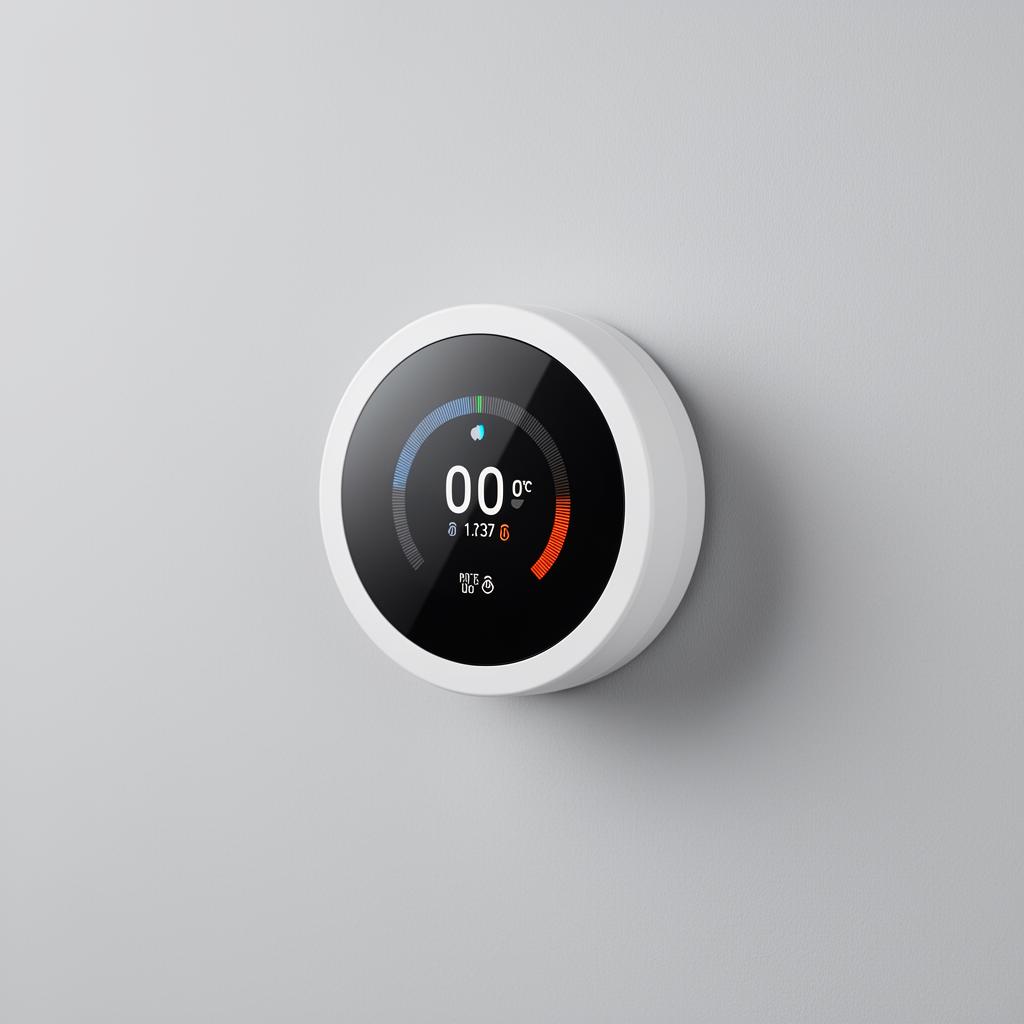
tado Smart Thermostat Starter Kit
Schedule, zone and remote-control your heating — independently shown to cut heating bills meaningfully.
- Heat only when needed
- Geofencing & schedules
- Room-by-room control
Estimated benefit: Up to ~£140/yr
Shop on AmazonAd – affiliate link. PowerGuardian may earn a commission from Amazon or another approved affiliate partner at no extra cost to you.
Affiliate links — we may earn a small commission at no extra cost to you. This keeps PowerGuardian free and independent.
Can I get a tariff with no standing charge?
Yes, a limited number of "zero standing charge" or "low standing charge" tariffs do exist in the UK market, although they are not widely or consistently available. Ofgem is actively consulting on whether to mandate their availability from all suppliers by 2026/27, recognising the consumer demand.
How they work: To compensate for the lack of a daily fixed fee, suppliers offering these tariffs typically charge a significantly higher unit rate per kilowatt-hour (kWh) for both electricity and gas.
Who benefits: These tariffs are most advantageous for:
- Very low energy users: Households with minimal electricity and/or gas consumption, perhaps single occupancy, highly energy-efficient homes, or those frequently away.
- Second homes/holiday lets: Properties that are often unoccupied for extended periods, as they avoid accruing daily charges when no energy is being consumed.
Who is disadvantaged: Conversely, a household with average or above-average energy consumption would likely pay more overall on a zero-standing-charge tariff due to the elevated unit rates.
Practical Step-by-Step for Evaluating Zero Standing Charge Tariffs:
- Find Your Annual Consumption: Locate your most recent annual energy statement or log into your supplier's online portal. Note down your total annual electricity consumption (in kWh) and total annual gas consumption (in kWh). If you estimate, be as accurate as possible.
- Research Available Tariffs: Use comparison websites (e.g., Ofgem-accredited sites like Uswitch, MoneySuperMarket) and directly check supplier websites. Filter specifically for tariffs with "no standing charge" or "low standing charge." Pay close attention to the unit rates.
- Perform a Cost Comparison (The Numbers Game):
- Compare Totals: See which tariff results in a lower overall annual cost for your specific consumption pattern. Do not rely on headline unit rates alone.
What is Ofgem's standing charge reform?
Recognising the significant public concern and the potential for unfair impacts on low consumers, Ofgem initiated a comprehensive review and consultation on the structure of standing charges. This is part of a broader effort to ensure the energy market is fair, transparent, and fit for the future. As of early 2026, Ofgem is considering three main options:
- Keep the Current System (Baseline): Maintain the existing methodology for calculating and applying standing charges, with quarterly adjustments under the price cap. This option prioritises cost recovery and network stability as currently structured.
- Require Every Supplier to Offer a Low- or Zero-Standing-Charge Alternative: This option would introduce a compulsory, market-wide offering, giving consumers a clear choice between a standard tariff and one designed for low users. It aims to empower consumers and address the "no choice" criticism. This would require suppliers to design tariffs that balance their cost recovery with competitive unit rates.
- Move Some Standing-Charge Costs Back into Unit Rates: This option would reverse some of the recent policy cost reallocations, shifting a portion of the fixed charges back into the variable unit rate. This would reduce the daily fixed cost but increase the per-unit cost of energy. Its intention is to make bills more responsive to consumption and potentially benefit very low users, but it would inevitably increase bills for high-usage households.
A decision on these reforms is genuinely anticipated in 2026, with any changes likely to be implemented in 2026/27. This reform could significantly alter the energy landscape for millions.
Do I pay a standing charge if I have a prepayment meter?
Yes, absolutely. Having a prepayment meter (often called "pay-as-you-go") does not exempt you from the daily standing charge. The mechanism for collection is simply different.
When you top up your prepayment meter with credit, any accumulated standing charges (and also debt repayments if applicable) are deducted first. This means that even if you haven't used any energy, the standing charge is still accruing daily. If your meter runs out of credit and "goes off-supply," the standing charge continues to accrue in the background. The next time you top up, a larger amount will be deducted to cover all the standing charges that have built up since your last top-up.
This can be a particular issue for vulnerable households who struggle to keep their meters topped up, as they can quickly build up a significant "debt" in standing charges, making it harder to get back into credit and gain access to energy. Ofgem has recently taken steps to ensure suppliers offer more support to prepayment customers, particularly during colder months, to prevent self-disconnection.
How to lower the impact of standing charges
While the standing charge is largely a fixed cost, there are indeed strategies to mitigate its impact, depending on your energy consumption profile.
- For Very Low Users (Electricity < 1,800 kWh/year, Gas < 6,000 kWh/year) or Infrequent Home Users:
- For Average to High Energy Users:
- Stay Informed on Ofgem Reforms: Keep an eye on announcements from Ofgem in 2026. If a decision is made to shift costs back to unit rates or mandate zero-standing-charge options, it could significantly alter your optimal strategy.
The standing charge is a complex and often misunderstood aspect of our energy bills. While it ensures the lights stay on and gas flows regardless of usage, its recent steep rise has rightly grabbed headlines. Understanding what it pays for, why it varies, and what options are being explored by Ofgem empowers consumers to make informed decisions and advocate for a fairer energy system.
FAQ
Q1: Why do I pay a standing charge if I generate my own electricity with solar panels?
You still pay a standing charge because you remain connected to the national grid. The grid provides a backup supply when your solar panels aren't generating enough power (e.g., at night or on cloudy days) and acts as an "export" route for any excess electricity you produce. The standing charge covers these continuous connection and maintenance services.
Q2: Can I refuse to pay the standing charge?
No, the standing charge is a mandatory component of your energy bill as long as you are connected to the energy network. Refusing to pay it would put you in breach of your contract with your energy supplier and could ultimately lead to debt collection, negative credit ratings, or even disconnection in severe cases, although disconnection is a last resort.
Q3: How often does the standing charge change?
For customers on Standard Variable Tariffs (SVTs), the standing charge is reviewed and adjusted by Ofgem quarterly as part of the overall energy price cap. The new rates typically come into effect on January 1st, April 1st, July 1st, and October 1st. If you're on a fixed tariff, your standing charge will remain constant for the duration of your contract.
Q4: Is the standing charge the same for electricity and gas?
No, typically the daily standing charge rates for electricity and gas are different. They are set separately by Ofgem under the price cap and can vary independently. Gas standing charges are generally lower than electricity standing charges for most regions.
Q5: What happens if I go on holiday for a month with a smart meter?
Even with a smart meter, the standing charge will still accrue daily while you're away. Your smart meter will simply continue to record minimal to no actual energy consumption (kWh), but the fixed daily charge will be added to your bill for each day of your holiday. If you have a prepayment smart meter, your credit will deplete daily to cover this.
Q6: Could the standing charge ever be abolished entirely?
While Ofgem is considering moving more costs to unit rates, a complete abolition of the standing charge is highly unlikely. The fixed costs for maintaining the physical network infrastructure, meters, and basic connection services are fundamental to providing energy. If these costs weren't recovered via a standing charge, they would simply have to be recovered entirely through higher unit rates, potentially making energy very expensive for anyone who uses it.
In conclusion, the UK's energy standing charge, while often perceived as a frustrating and unavoidable cost, plays a crucial role in funding the nation's vast energy infrastructure and critical market services. Its recent surge has brought it to the forefront of parliamentary and public debate, prompting Ofgem to review its structure. As UK households adapt to these changes and await further reforms, understanding the 'why' behind the charge empowers us all to navigate the complexities of our energy bills more effectively. Power Guardian UK will continue to monitor these developments closely, providing timely and in-depth analysis to our readers.
Current Supplier Watch
Recommended kit
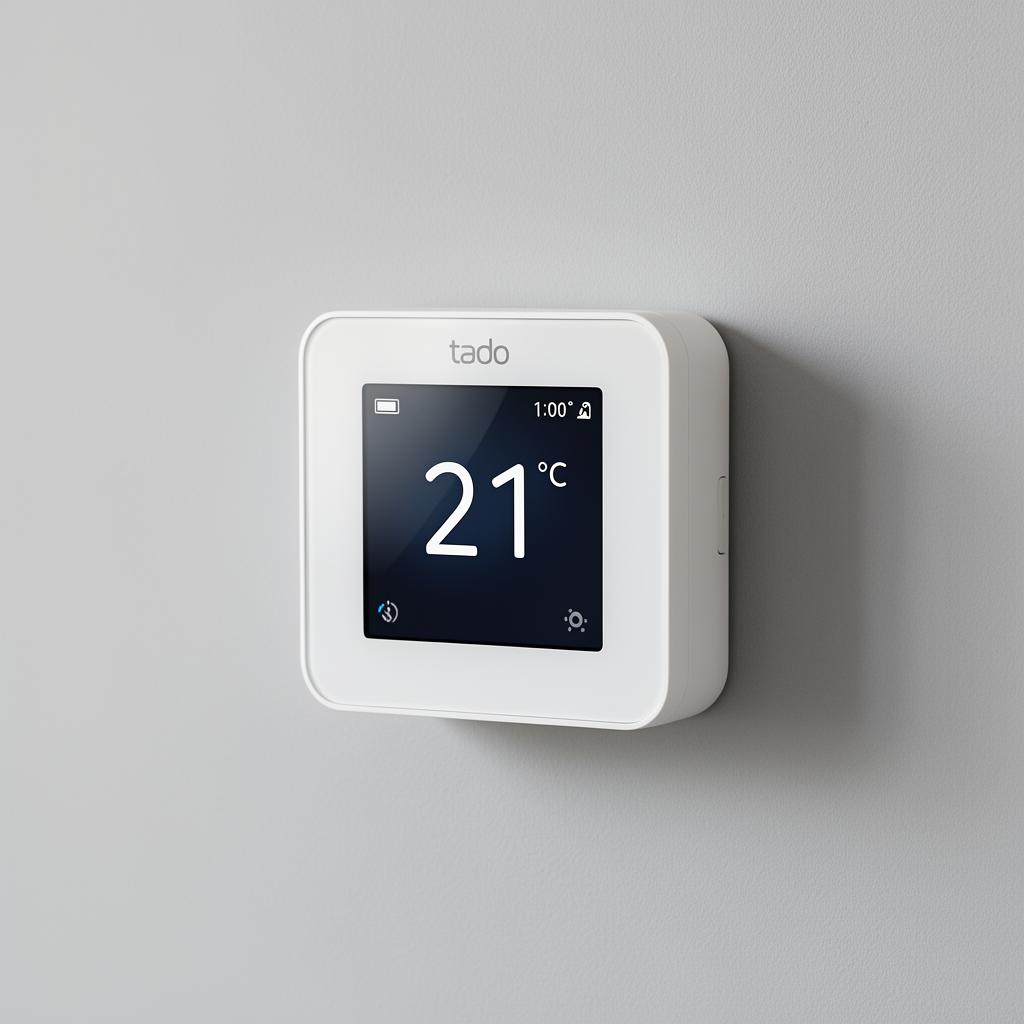
tado Smart Thermostat X
Schedule, zone and remote-control your heating — independently shown to cut heating bills by up to 28%.
Shop on Amazon