
Who Offers Zero Standing Charge in 2026: An In-Depth Look
The energy market in the UK is constantly evolving, driven by policy shifts, technological advancements, and consumer demand. In 2026, we're seeing a niche but growing trend: the emergence of tariffs with zero daily standing charges. While seemingly attractive at first glance, especially to those frustrated by daily fixed fees, a deeper dive reveals a nuanced picture. As senior energy journalists at Power Guardian UK, we’ve crunched the numbers and analysed the offerings to provide you with a comprehensive understanding.
Currently, a select few suppliers are providing these zero standing charge options. Their models often cater to specific usage patterns, making them suitable for some but potentially costly for others.
- Utilita Smart Energy Saver: This tariff stands out for its straightforward approach: 0p/day standing charge. However, this is offset by an electricity unit rate typically in the region of ~33p/kWh. Utilita has historically targeted lower-income households and those with smart meters, leveraging data to optimise their offerings. Their Smart Energy Saver is designed to appeal to those who feel unfairly penalised by fixed daily costs, regardless of consumption.
- Octopus Tracker (and Agile, in some periods/cases): While not exclusively a zero standing charge tariff, Octopus Energy's innovative Tracker tariff offers highly variable rates that can, at times, effectively nullify the impact of the standing charge due to exceptionally low unit rates during off-peak periods, and conversely, significantly higher rates during peak. Their Agile tariff, while not zero-standing-charge, similarly focuses on granular pricing, rewarding demand shifting. For the purposes of this analysis, we are focusing on periods within Tracker where the overall cost structure, particularly for very low users, resembles a zero-standing-charge outcome due to extremely competitive unit rates on specific days. It’s a dynamic tariff that requires active management and a good understanding of market fluctuations, making it less "set and forget" than others.
- Ebico Zero Green: As its name suggests, Ebico offers a 0p/day standing charge, coupled with an electricity unit rate hovering around ~32p/kWh. Ebico has a long-standing commitment to ethical energy supply and assisting vulnerable customers. Their Zero Green tariff aligns with this by removing the fixed daily payment barrier, potentially appealing to those on very tight budgets or with highly intermittent energy needs.
It's crucial to understand that these unit rates are significantly higher than those typically found on conventional fixed or variable tariffs that include a standing charge. This higher unit rate is how suppliers recoup the fixed costs associated with maintaining network infrastructure, customer service, billing, and regulatory compliance.
Current Supplier Watch
The Trade-off: Higher Unit Rates for Zero Daily Cost
The fundamental principle behind zero standing charge tariffs is a rebalancing of costs. Instead of splitting infrastructure and service costs between a daily fixed charge and a per-unit consumption charge, the entire burden is shifted onto the unit rate. This means that while you avoid the daily charge that ticks up even when your lights are off, every kilowatt-hour you consume becomes proportionally more expensive.
To illustrate this, let's consider the prevailing energy landscape in 2026 under the Ofgem Price Cap. While the cap adjusts quarterly, for illustrative purposes, let's assume an average 2026 Ofgem Price Cap (typical scenario) for electricity:
- Standing Charge: ~60p/day
- Unit Rate: ~26p/kWh
(Note: These figures are illustrative and based on a hypothetical extension of current trends into 2026, reflecting the methodology Ofgem uses to balance supplier costs and consumer protection, especially considering ongoing geopolitical factors and wholesale market volatility.)
Now, let’s compare this with our zero standing charge tariffs:
| Tariff Type | Standing Charge (per day) | Electricity Unit Rate (per kWh) |
|---|---|---|
| Ofgem Price Cap (Illust.) | ~60p | ~26p |
| Utilita Smart Energy Saver | 0p | ~33p |
| Ebico Zero Green | 0p | ~32p |
← Swipe to see more →
As you can see, the unit rates for zero standing charge tariffs are typically 30–50% higher than those on a standard capped tariff. This significant difference is the crux of whether these tariffs financially benefit you.
Calculating Your Break-Even Point
The crucial question is: at what point does the higher unit rate negate the saving from the zero standing charge? This is your break-even point. It’s the daily electricity consumption level where the total cost on a zero standing charge tariff equals the total cost on a standard tariff.
Let's use our illustrative Ofgem Price Cap figures:
- Standard Tariff Cost: (0.60p/day) + (X kWh/day \* 0.26p/kWh)
- Zero Standing Charge Tariff Cost: (X kWh/day \ 0.32p/kWh) or (X kWh/day \ 0.33p/kWh)
To find the break-even point for Ebico Zero Green (0p/day, 32p/kWh) against our illustrative standard tariff (60p/day, 26p/kWh):
0.60 + (X \ 0.26) = X \ 0.32 0.60 = (X \ 0.32) - (X \ 0.26) 0.60 = X \* (0.32 - 0.26) 0.60 = X \* 0.06 X = 0.60 / 0.06 X = 10 kWh/day
For Utilita Smart Energy Saver (0p/day, 33p/kWh):
0.60 + (X \ 0.26) = X \ 0.33 0.60 = X \* (0.33 - 0.26) 0.60 = X \* 0.07 X = 0.60 / 0.07 X ≈ 8.57 kWh/day
Therefore, assuming the illustrative Ofgem cap figures, your break-even point is around 8 to 10 kWh/day of electricity consumption. If your average daily electricity usage falls below this threshold, a zero standing charge tariff could save you money. If it's above, you're likely to pay more.
Practical Step-by-Step Guidance: Is a Zero Standing Charge Tariff for You?
- Understand Your Current Usage:
- Identify Available Tariffs:
- Compare Costs Based on Your Usage:
- Consider Other Factors:
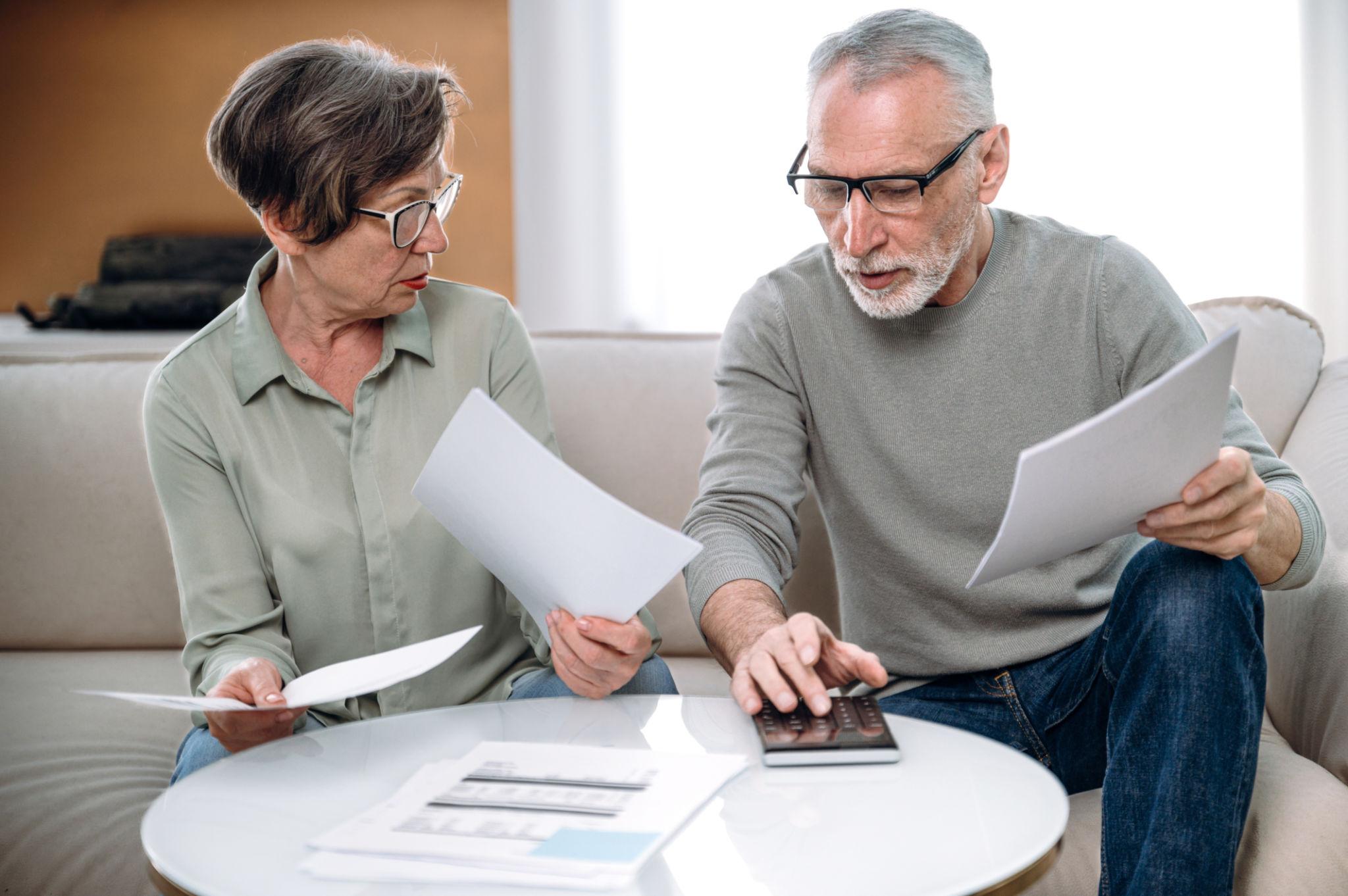
When Zero Standing Charge Wins
These tariffs are not universally beneficial. They are specifically tailored for energy consumption patterns that are either very low or highly irregular.
- Holiday Homes / Second Properties: These properties sit empty for significant periods. A standard tariff would charge a standing charge every single day, regardless of whether a single electron is consumed. For a property used only a few weeks a year, this fixed daily cost quickly accumulates. A zero standing charge tariff means you only pay for the energy you actually use during your stays, resulting in substantial savings annually. Picture a seaside cottage in Cornwall, vacant for 40 weeks a year – 40 weeks of 60p/day standing charges amounts to £168, which is entirely avoided.
- Studio Flats / Very Low Usage Households: Single occupants, particularly in well-insulated, smaller dwellings with modern, efficient appliances, often have remarkably low electricity consumption. If your average daily usage consistently sits below the 8-10 kWh/day break-even point, you stand to benefit. This could include students, young professionals, or indeed, elderly individuals in smaller living spaces who are mindful of their energy use. For a studio flat in Manchester averaging 4 kWh/day, our calculation shows a clear saving on a zero standing charge tariff.
- Off-Grid Annexes with Backup Grid Connection: Consider a self-sufficient granny annex in rural Northumberland powered primarily by solar panels and a battery storage system. A grid connection might be maintained purely as a backup for prolonged cloudy periods or equipment maintenance. In such a scenario, the grid connection is rarely used for primary power. Paying a daily standing charge for a connection that sees minimal usage is inefficient. A zero standing charge tariff ensures you only pay for the rare occasions you draw from the national grid, making the backup connection far more cost-effective.
When It Doesn't Win: The Broad Reality for Most UK Homes
For the vast majority of UK households, opting for a zero standing charge tariff is a false economy. The higher unit rates quickly override any perceived benefit.
- Any Normal Family Home: A typical three-bedroom family home in the Midlands with 3-4 occupants, using common appliances (washing machine, dishwasher, oven, TV, multiple charging devices), will easily exceed 10 kWh/day of electricity consumption. A family of four might use anywhere from 15-25 kWh/day (and sometimes more if they have electric vehicles or electric heating).
- Let's assume a modest family usage of 18 kWh/day.
- Standard Price Cap Tariff: 0.60p/day + (18 kWh \* 0.26p/kWh) = £0.60 + £4.68 = £5.28/day
- Zero Standing Charge Tariff (e.g., Ebico): 18 kWh \* 0.32p/kWh = £5.76/day
- Daily Difference: £0.48 MORE per day.
- Annual Cost: £0.48/day \ 365 days = £175.20 more expensive annually.*
- Homes with Air Source Heat Pumps or Electric Vehicle Charging: These technologies, while promoting decarbonisation, significantly increase electricity consumption. An EV charging overnight could easily add 20-30 kWh in one session, while an air source heat pump can contribute hundreds of kWh per month. On a zero standing charge tariff, the cost of powering these essential low-carbon technologies would skyrocket, negating their economic benefits and potentially increasing household energy bills dramatically.
FAQ: Zero Standing Charge Tariffs
Q1: Is a zero standing charge tariff always cheaper if I use very little electricity?
A1: Not necessarily. While it's more likely to be cheaper for very low users, you still need to compare the unit rates carefully. If the zero-standing-charge unit rate is excessively high, it could still be more expensive than a standard tariff with a moderate standing charge and lower unit rate, even for minimal usage. Always do the calculation based on your actual consumption.
Q2: Do these tariffs exist for gas as well as electricity?
A2: While more common for electricity, some suppliers might offer zero standing charge gas tariffs. However, they are exceedingly rare because gas infrastructure costs (pipelines, maintenance, meter reading) are usually fixed and passed on via a standing charge. The same principle applies: expect a significantly higher unit rate for gas if the standing charge is removed. We have not identified any prominent zero-standing-charge gas tariffs in 2026.
Q3: Can I switch to a zero standing charge tariff if I don't have a smart meter?
A3: Most suppliers offering these tariffs, particularly Utilita, strongly encourage or even require a smart meter as it enables them to accurately track granular usage and manage their network more efficiently. It's best to check with the specific supplier, but a smart meter makes the entire process smoother.
Q4: Are zero standing charge tariffs available in all regions of the UK?
A4: While the tariffs themselves are often nationally available from the listed suppliers, the precise unit rates can vary slightly by region due to differences in distribution network operator (DNO) charges. Always use your specific postcode when getting a quote to ensure the most accurate pricing for your area. For example, a home in the North West (Electricity North West DNO) might have slightly different base costs than one in London (UK Power Networks DNO).
Recommended energy saving products
Independently chosen kit that helps UK households cut energy use.
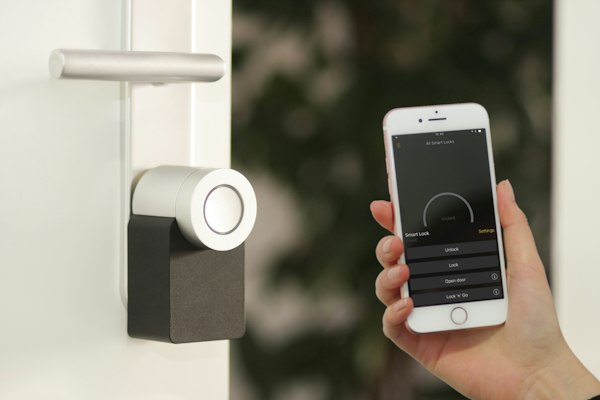
Tapo P110 Smart Plug (Energy Monitoring)
See exactly which appliances are quietly inflating your bill — track real-time watts, kWh and runtime from your phone.
- Real-time energy monitoring
- Cuts standby/vampire power
- Schedule appliances off-peak
Estimated benefit: ~£40/yr standby savings
Shop on AmazonAd – affiliate link. PowerGuardian may earn a commission from Amazon or another approved affiliate partner at no extra cost to you.
Home Energy Monitor (Whole-House)
Track your whole-home electricity use live and find where the kWh are going before the bill lands.
- Whole-house live usage
- Spot expensive habits fast
- App history & alerts
Estimated benefit: Awareness cuts ~5-10% use
Shop on AmazonAd – affiliate link. PowerGuardian may earn a commission from Amazon or another approved affiliate partner at no extra cost to you.
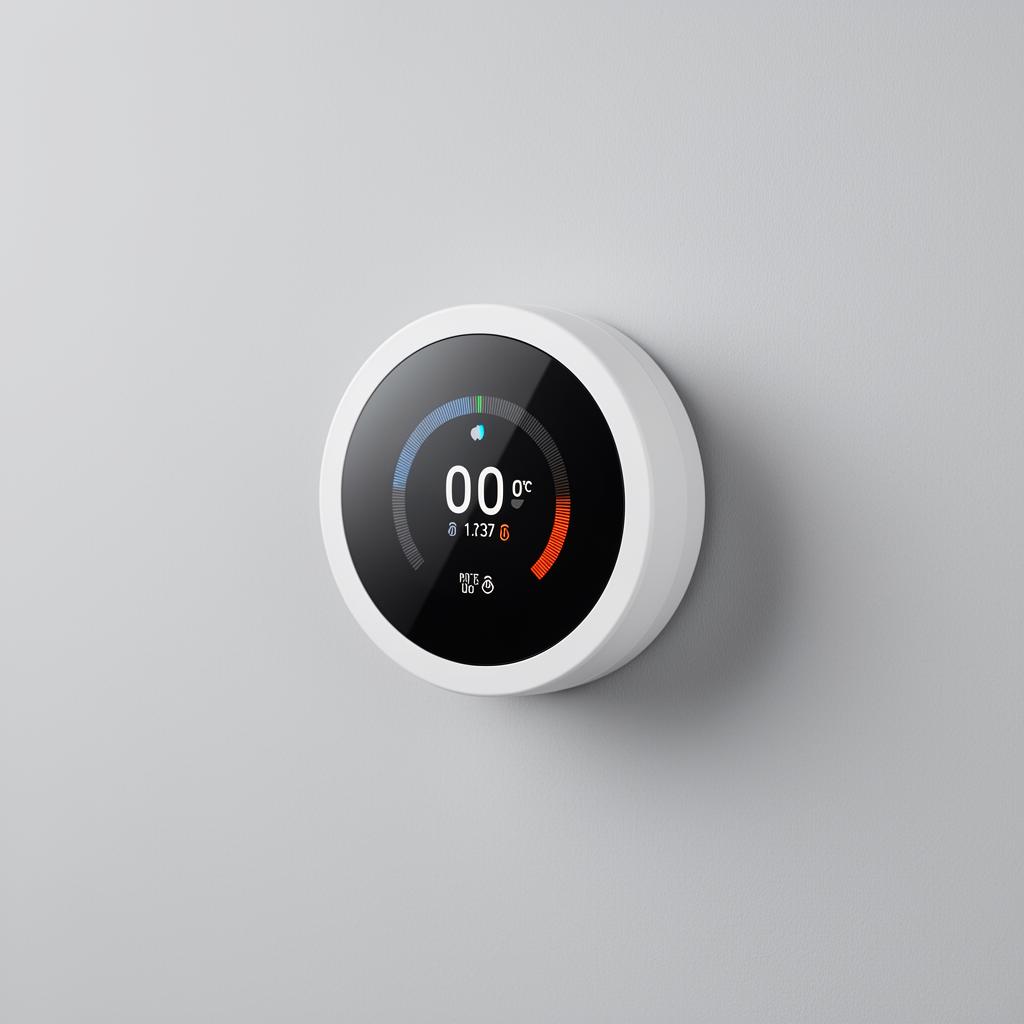
tado Smart Thermostat Starter Kit
Schedule, zone and remote-control your heating — independently shown to cut heating bills meaningfully.
- Heat only when needed
- Geofencing & schedules
- Room-by-room control
Estimated benefit: Up to ~£140/yr
Shop on AmazonAd – affiliate link. PowerGuardian may earn a commission from Amazon or another approved affiliate partner at no extra cost to you.
Affiliate links — we may earn a small commission at no extra cost to you. This keeps PowerGuardian free and independent.
Q5: What happens if my usage changes significantly after I switch?
A5: This is a crucial point. If your energy consumption significantly increases (e.g., you buy an EV, install an electric shower, or have more people living in your home), a zero standing charge tariff could quickly become very expensive. It's vital to regularly review your energy consumption and tariff suitability – ideally every 6-12 months. If your average daily usage crosses the break-even point, you should consider switching back to a standard tariff.
Q6: Do these tariffs come with green energy options?
A6: Yes, some do. Ebico Zero Green, as its name implies, is explicitly marketed as a green tariff, sourcing 100% renewable electricity. Utilita also has a commitment to sustainability. If green energy is a priority for you, it's worth checking the specific supplier's environmental commitments alongside the pricing.
Conclusion: A Niche Solution, Not a Universal Panacea
In summary, while the concept of a "zero standing charge" energy tariff might sound appealing – a seemingly straightforward way to avoid those irritating daily fixed costs – the reality in 2026 is that it is a highly specialised product. For the vast majority of UK households, particularly those in normal family homes consuming more than 8-10 kWh of electricity daily, these tariffs represent a false economy. The significantly inflated unit rates will almost certainly lead to higher annual bills, potentially by hundreds of pounds.
However, for a distinct minority, such as owners of holiday homes, extremely low energy users in studio flats, or those maintaining a grid connection purely for backup purposes, these tariffs offer a genuine cost-saving opportunity. They liberate these consumers from paying for services they barely use.
As Power Guardian UK, our advice remains consistent: understand your energy consumption, diligently compare all aspects of a tariff (not just the headline features), and always consider the total annual cost. Don't be swayed solely by the absence of a daily charge; the devil, in this case, truly is in the higher per-unit detail. The energy market is complex, but with informed choices, you can navigate it effectively.
Recommended kit
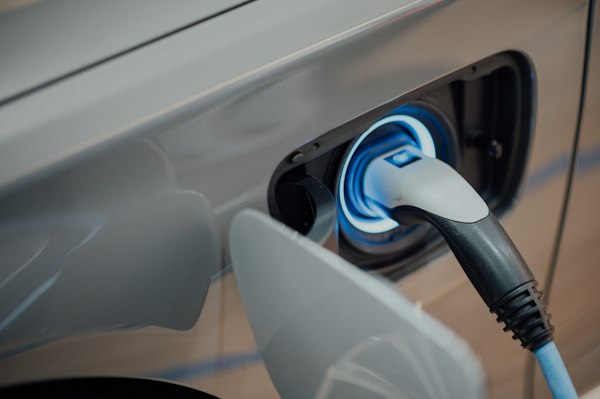
Type 2 EV Charging Cable 7m 32A
Reliable 7m Mode 3 Type 2 to Type 2 cable for public chargepoints — supports up to 7.4kW single-phase charging.
Shop on Amazon