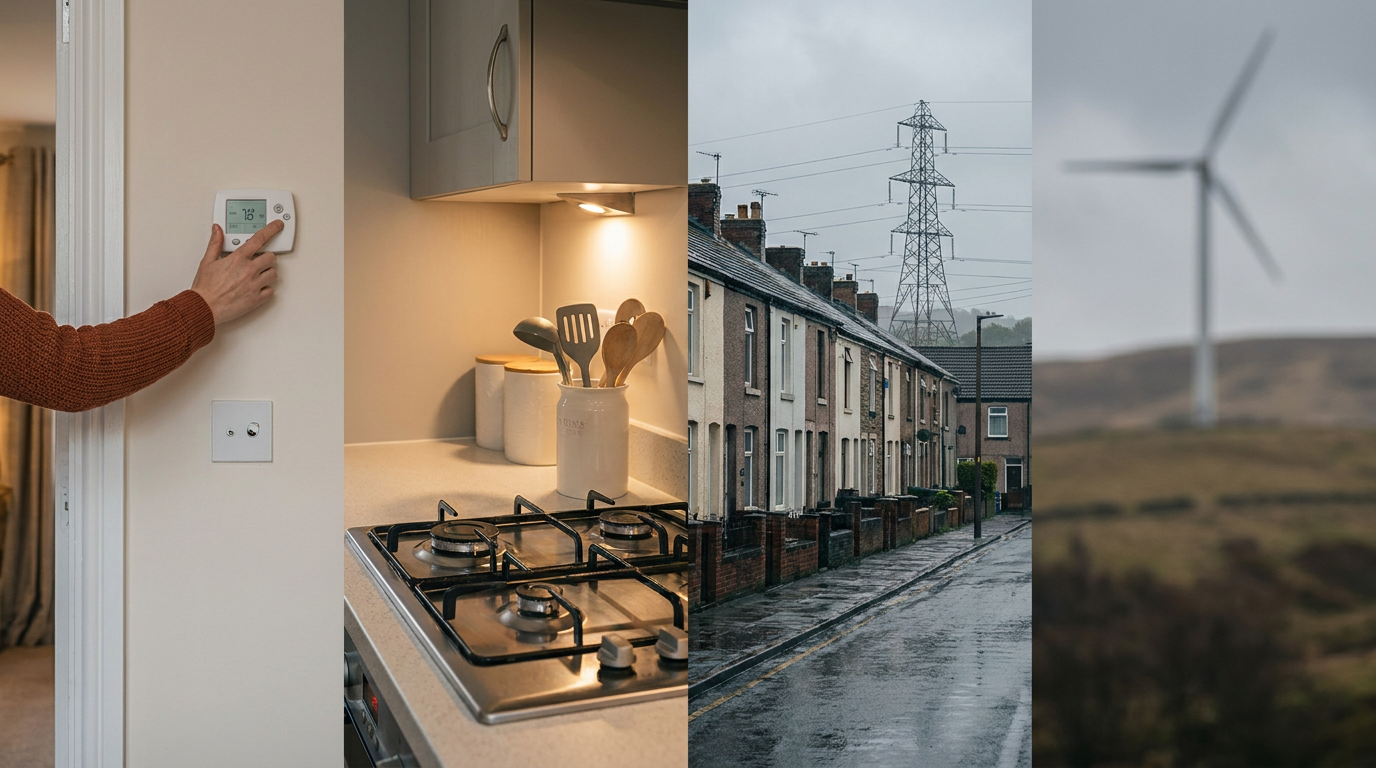
Summary You do not need a heat pump or a full retrofit to cut your energy bill this month. These five changes — turning the boiler flow temperature down, sealing draughts, switching off standby loads, washing at 30°C, and checking your tariff — typically save UK households £150–£400 a year combined. As a senior UK energy journalist, I've seen countless initiatives come and go, but these truly are the low-hanging fruit, requiring minimal investment and offering immediate, tangible returns.
What this means in plain English: Unpacking the "Quick Wins" for UK Households
Most homes leak energy in small, fixable ways. The five biggest "quick wins" are not about sacrificing comfort, but about optimising how you use energy, often correcting inefficiencies that have become standard practice. Let's delve into each, considering the UK context.
1. Optimising Your Boiler Flow Temperature: The Unsung Hero of Gas Savings
Most combi boilers ship at 70-80°C. Turning the flow temperature down to 55-60°C makes the boiler run more efficiently, often saving 6-8% on gas. Your radiators take a little longer to heat up but reach the same room temperature.
This is arguably the most impactful, often overlooked, energy-saving measure for homes with gas combi boilers, which dominate the UK market. The technical reason behind this efficiency gain is that at lower flow temperatures, the boiler's condensing function works more effectively. Condensing boilers recover latent heat from the exhaust gases, significantly boosting efficiency. At higher flow temperatures, the return water temperature is often too high for the boiler to condense optimally.
Practical Step-by-Step Guidance:
- Locate the flow temperature dial: On most combi boilers (e.g., Worcester Bosch, Vaillant, Baxi), this is a rotary dial or digital control panel, often labelled with a radiator icon or a thermometer. It's distinct from the hot water temperature setting.
- Adjust the setting: Turn the dial down or set the digital control to between 55°C and 60°C. You might start at 60°C and gradually reduce it to 55°C if you find heating times are acceptable.
- Monitor comfort: Over the next few days, observe how quickly your home heats up and if your radiators feel adequately warm. It might take slightly longer for rooms to reach your desired temperature, but crucially, they will reach it. Your hot water temperature is usually controlled separately and should remain unaffected.
- Consider a smart thermostat: While not required, a smart thermostat (like a Hive or Nest) can further optimise heating schedules around this lower flow temperature.
UK-Specific Context: Given the average UK gas price under the Ofgem price cap, currently around 7.52 pence per kWh (as of January 2024), a 6-8% saving on heating bills can be substantial. For a typical semi-detached home consuming approximately 12,000 kWh of gas annually, this translates to annual savings of £54 to £72. This is based on heating being the primary gas consumer.
2. Battling the UK's Draughty Homes: Cunning Sealing Strategies
A £20-£40 spend on letterbox brushes, door brushes, and silicone strips around windows can save 2-3% on heating.
The UK's housing stock, with its high proportion of older properties, is notoriously prone to draughts. These aren't just uncomfortable; they can account for a significant portion of heat loss, as warm air escapes and cold air infiltrates.
Common Draught Hotspots in UK Homes:
- Windows: Gaps around frames, perished seals.
- Doors: Around the frame, under the door, letterboxes, keyholes.
- Floorboards: Especially in older properties with suspended timber floors.
- Lofts: Unsealed loft hatches.
- Pipes: Gaps where pipes enter/exit walls.
- Electrical fittings: Socket and switch plates on external walls.
Practical Step-by-Step Guidance and UK-Specific Solutions:
- Conduct a draught audit: On a cold, windy day, light an incense stick or hold a damp hand near suspected draught points. The smoke's movement or the chill on your hand will reveal air leaks.
- Letterboxes & Keyholes: Install a brush or magnetic flap over your letterbox. For keyholes, consider a keyhole cover. These are widely available at DIY stores like B&Q or Screwfix for under £10 each.
- Doors:
- Windows: For older sash windows, brush seals can be installed. For casement windows with small gaps, silicone sealant (check if it's paintable if needed) can fill minor cracks. For larger gaps around frames, consider expanding foam or professional draught-proofing.
- Floorboards: In older homes, mix sawdust with PVA glue to create a filler for gaps between floorboards. Alternatively, use specific draughtex strips designed for this purpose.
- Loft Hatch: Add self-adhesive foam strips around the edge of the hatch and ensure it's well insulated on top.
UK-Specific Context: With an average electricity price of approximately 28.62 pence per kWh (Ofgem price cap, January 2024) and gas at 7.52 pence per kWh, saving 2-3% on heating, which is predominantly gas, is a significant financial gain. For a typical home spending £1,500 a year on gas heating, that's £30-£45 saved for a minimal outlay.
3. Conquering the "Phantom Load": The Case Against Standby Power
TVs, set-top boxes, games consoles, and chargers left plugged in can quietly add £50-£80 a year. A simple multi-socket with a switch sorts it.
This phenomenon, often called "phantom load" or "vampire power," refers to the electricity consumed by appliances when they are switched off but still plugged in, or in standby mode. While each individual appliance may draw only a few watts, collectively they can become a noticeable drain on your electricity bill.
Recommended Smart Heating Product
Control heating remotely and reduce wasted energy with one of the UK’s most popular smart thermostats.
View on Amazon UKCommon UK Standby Culprits:
- Televisions (especially smart TVs): Even when off, they maintain network connectivity or quick-start functions.
- Sky/Virgin Media boxes: These are often significant energy hogs, designed to record and update constantly.
- Games Consoles (PS5, Xbox Series X): Often kept in "rest mode" for quick restarts and updates.
- Desktop PCs and monitors: Unless fully powered down at the wall.
- Phone/laptop chargers: Even when no device is connected, they draw a small amount of power.
- Printers, Microwaves (clock display), coffee machines (standby heaters).
Practical Step-by-Step Guidance:
- Identify the culprits: Walk around your home and note down every appliance that has a light on, feels warm to the touch (especially adapters), or has a display, even when off.
- Invest in switched multi-sockets: These are inexpensive (e.g., £5-£15 from Argos or Currys) and allow you to cut power to multiple devices with a single switch. Group your entertainment centre (TV, Sky box, console) onto one.
- Unplug rarely used chargers: Get into the habit of unplugging phone chargers when not in use.
- Use smart plugs (optional): For a slightly higher upfront cost (£10-£20 per plug), smart plugs allow you to control individual appliances via an app or voice assistant, making it easier to power down devices that are harder to reach.
- Regularly power cycle: Once a week, fully power down devices like routers and smart boxes. It not only saves energy but can also improve performance.
UK-Specific Context: With electricity at around 28.62 pence per kWh, a constant 10-watt draw from multiple devices adds up. If you have 5-6 such devices drawing just 5-10W each in standby, that's a continuous 25-60W. Over 24 hours, that's 0.6-1.44 kWh per day purely from standby, costing around £0.17-£0.41 daily, or £60-£150 annually. Cutting this is pure profit.
4. Cooling Down Your Laundry Routine: The 30°C Revolution
Washing at 30°C cuts the energy used per wash by around 60%. Modern detergents are designed for it.
Heating water is often the most energy-intensive part of any appliance's cycle, and a washing machine is no exception. Modern detergents are formulated to be effective at lower temperatures, making the traditional 40°C or even 60°C wash largely unnecessary for most everyday laundry.
Energy Consumption Breakdown:
- Heating water: Approximately 90% of a washing machine's energy consumption.
- Drum rotation and pump: The remaining 10%.
Practical Step-by-Step Guidance:
- Check your clothing labels: Ensure garments are suitable for 30°C. Most everyday items are.
- Select 30°C: Simply choose the 30°C setting on your washing machine.
- Use appropriate detergent: Most modern detergents (liquid or powder) are suitable for lower temperatures. Some brands even specifically market "cold wash" detergents.
- For heavily soiled items: For bedding, towels, or very dirty clothes, a 40°C wash might still be occasionally necessary. However, make 30°C your default.
- Consider reducing spins (optional): If lines drying, a lower spin speed will save a tiny bit of electricity but mean longer drying times.
UK-Specific Context: With electricity at 28.62 pence per kWh, a typical washing machine cycle at 40°C might consume around 0.5-0.8 kWh. Reducing this by 60% brings it down to 0.2-0.32 kWh per wash. For a household doing 3-4 washes a week, that’s a saving of £0.24-£0.55 per week, or £12-£28 annually. This might seem small individually, but it adds to the cumulative savings.
5. The Grand Finale: Checking Your Energy Tariff
The single biggest one — if you are on a standard variable tariff and have not switched in over a year, you may be £200+ over the cheapest fix.
While the energy market has been volatile, and "switching" hasn't always meant "saving" for the past couple of years due to high wholesale prices, it's always crucial to know what tariff you're on and compare it against the current market. The Ofgem price cap dictates the maximum unit rates and standing charges for Standard Variable Tariffs (SVTs). While SVTs have been the cheapest option for many during the crisis, fixed deals are starting to re-emerge that could offer better value or stability.
Understanding the UK Energy Market & Ofgem Price Cap (January 2024 example):
| Fuel | Unit Rate (Pence/kWh, typical) | Standing Charge (Pence/day, typical) |
|---|---|---|
| Electricity | 28.62p | 53.35p |
| Gas | 7.52p | 29.62p |
← Swipe to see more →
These values are averages and can vary slightly by region due to network costs.
Practical Step-by-Step Guidance:
- Find your current bill: This will state your tariff name (e.g., "Standard Variable," "Fixed Saver 2024"), unit rates, and standing charges.
- Identify your usage: Your bill will also show your annual or monthly kWh consumption for both electricity and gas. If not, use the average consumption figures (2,700 kWh electricity, 12,000 kWh gas for a typical household).
- Use an Ofgem-accredited comparison site: Sites like Uswitch, MoneySuperMarket, or Compare the Market are government-approved and will show you available tariffs. Input your postcode, energy usage, and current tariff details.
- Compare: Look for fixed tariffs that are cheaper than or comparable to the current price cap rates and offer stability. Pay attention to early exit fees if you choose a fixed deal. Many comparisons will show you exact annual savings.
- Consider a 'Green' tariff: Many suppliers now offer 100% renewable electricity tariffs, often at competitive prices.
- Don't forget regional differences: Standing charges and unit rates vary slightly across the 14 UK regions due to differing network costs. Your comparison will account for this.
UK-Specific Context: Regional disparities can mean a few pounds difference in annual bills. For instance, customers in the North West often pay slightly less than those in London or the South West due to infrastructure costs. The potential savings from moving off an historical, uncompetitive fixed deal or finding a new competitive fixed deal can easily be hundreds of pounds annually, far exceeding the other quick wins.
Current Supplier Watch
How this affects your household bill: A Comprehensive Breakdown
The cumulative effect of these seemingly small changes truly adds up. Let's look at the indicative annual savings for a typical UK home given current price cap rates (Jan 2024 figures used for calculation):
| Quick Win | Fuel Impacted | Estimated Annual kWh Savings (min-max) | Estimated Annual Monetary Savings (min-max) |
|---|---|---|---|
| Boiler Flow Temp (6-8% of 12,000 kWh gas) | Gas | 720 – 960 kWh | £54 – £72 |
| Draught-proofing (2-3% of £1500 gas bill) | Gas (primarily) | N/A (based on % money) | £30 – £45 |
| Cutting Standby (25-60W continuous) | Electricity | 219 – 526 kWh | £63 – £150 |
| Washing at 30°C (60% of 3-4 washes/week) | Electricity | 47 – 90 kWh | £13 – £26 |
| Switching Tariff | Both | N/A (tariff comparison based) | £150 – £300+ |
| Combined Total | Varies significantly | £310 – £593+ |
← Swipe to see more →
Note: Monetary savings are illustrative and based on a typical medium-sized home's consumption and Jan 2024 Ofgem price cap rates (gas: 7.52p/kWh, electricity: 28.62p/kWh).
As you can see, for a potential total saving of comfortably over £300 a year for most households, and potentially much more, without giving up any comfort, these quick wins are truly transformative. The initial investment for draught-proofing and smart plugs is minimal, often recouped within weeks or months.
Check My Bill Four of these you can do this weekend. The fifth — checking your tariff — takes 30 seconds. Use our free Bill Checker to see in 30 seconds — most users find savings of £200–£500 per year. Don't leave money on the table; the UK energy market is complex, but making informed choices starts with understanding your options.
FAQs
Q1: Will turning my boiler flow temperature down affect my hot water supply? A1: No, generally not. The flow temperature setting on a combi boiler primarily affects the temperature of the water sent to your radiators. The domestic hot water temperature is usually controlled by a separate setting on your boiler or is a fixed temperature set by the manufacturer. So, your shower and taps should still deliver hot water at the usual temperature.
Q2: I live in a rented property. Can I still implement these changes without upsetting my landlord? A2: Most of these changes are non-invasive. Turning down your boiler flow temperature, switching off standby loads, and washing at 30°C are entirely within your control and don't alter the property. Draught-proofing with self-adhesive strips or brush seals is usually fine, but it's always good practice to check your tenancy agreement regarding minor alterations or discuss it with your landlord first, especially if considering more permanent solutions. Tariff switching needs landlord permission if they pay the bills, but if you're responsible for energy bills, you have the right to switch supplier.
Q3: How often should I check my energy tariff? A3: It's good practice to check your energy tariff at least once every 6-12 months, or whenever there are significant changes in the energy market (e.g., Ofgem price cap announcements) or your current fixed deal is nearing its end. Even if you don't switch, being aware of what's available helps you make informed decisions.
Q4: Do smart meters help with these quick wins? A4: While a smart meter isn't required for any of these tips, it can certainly help by giving you real-time feedback on your energy consumption. Seeing your energy usage drop on the in-home display after you switch off standby devices or lower your boiler flow temperature can be a powerful motivator and help you track your savings more effectively.
Q5: My home is old and very draughty. What if these basic draught-proofing steps aren't enough? A5: For very draughty older homes, these initial steps are a great start. If significant draughts persist, consider professional help. A qualified energy assessor or builder could identify larger air leakage points that might require more substantial work, such as insulating floors, repairing window frames, or sealing around loft hatches more thoroughly. Grants for insulation or draught-proofing may be available in certain regions of the UK; check with your local council.
Q6: Are there any specific regional considerations for these tips in the UK? A6: While the principles are universal, regional variations exist. For example, homes in colder, windier regions (like parts of Scotland or the North East) may experience more significant draught issues. Energy unit rates and standing charges also vary slightly by region due to distribution network costs, meaning the monetary savings from tariff switching or general consumption reduction could differ slightly. However, the percentage savings from these quick wins remain consistent across the UK.
Recommended energy saving products
Independently chosen kit that helps UK households cut energy use.
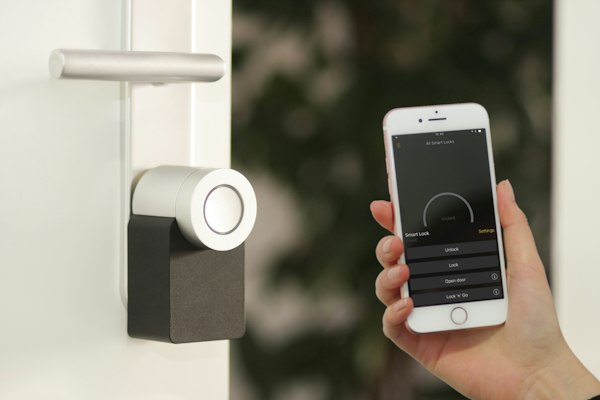
Tapo P110 Smart Plug (Energy Monitoring)
See exactly which appliances are quietly inflating your bill — track real-time watts, kWh and runtime from your phone.
- Real-time energy monitoring
- Cuts standby/vampire power
- Schedule appliances off-peak
Estimated benefit: ~£40/yr standby savings
Shop on AmazonAd – affiliate link. PowerGuardian may earn a commission from Amazon or another approved affiliate partner at no extra cost to you.

Home Energy Monitor (Whole-House)
Track your whole-home electricity use live and find where the kWh are going before the bill lands.
- Whole-house live usage
- Spot expensive habits fast
- App history & alerts
Estimated benefit: Awareness cuts ~5-10% use
Shop on AmazonAd – affiliate link. PowerGuardian may earn a commission from Amazon or another approved affiliate partner at no extra cost to you.
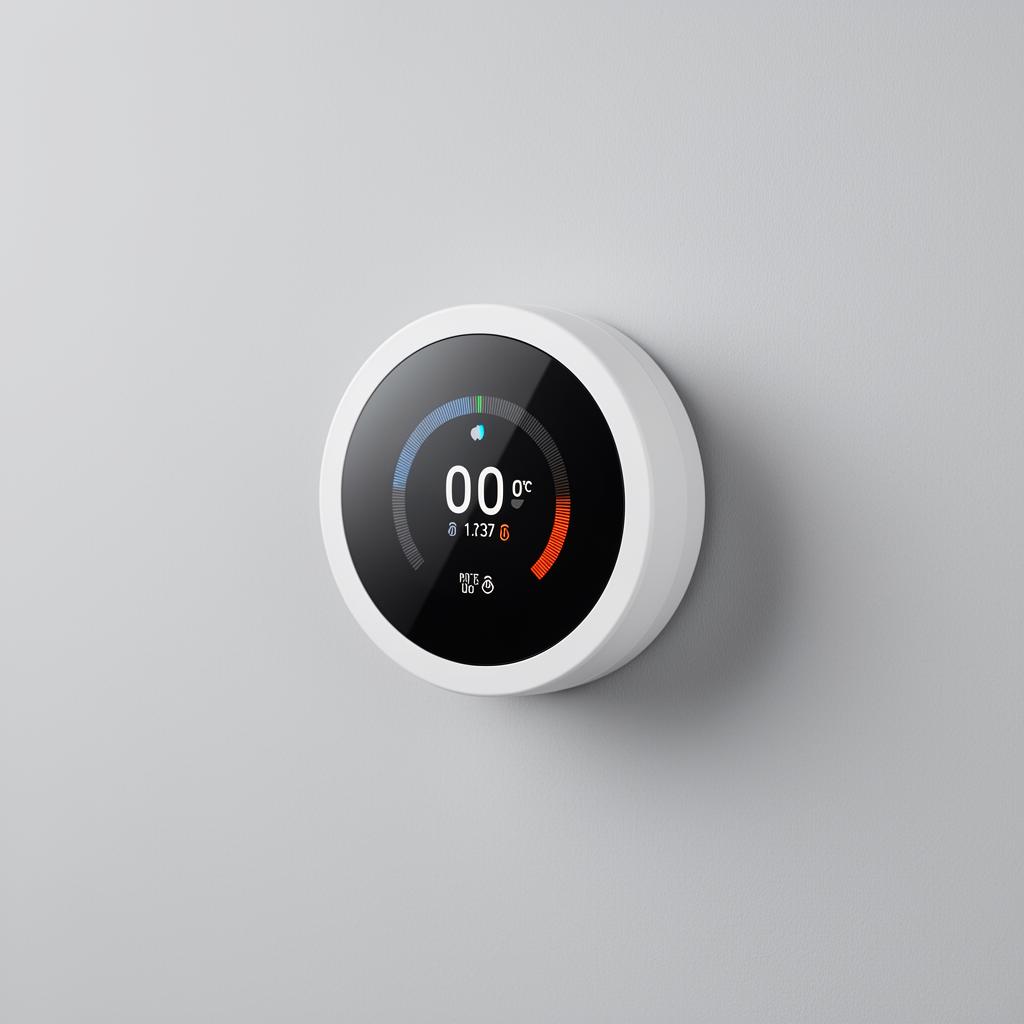
tado Smart Thermostat Starter Kit
Schedule, zone and remote-control your heating — independently shown to cut heating bills meaningfully.
- Heat only when needed
- Geofencing & schedules
- Room-by-room control
Estimated benefit: Up to ~£140/yr
Shop on AmazonAd – affiliate link. PowerGuardian may earn a commission from Amazon or another approved affiliate partner at no extra cost to you.
Affiliate links — we may earn a small commission at no extra cost to you. This keeps PowerGuardian free and independent.
Conclusion
As a journalist dedicated to informing the British public about their energy choices, I cannot stress enough the immediate and profound impact these five simple changes can have. They debunk the myth that energy saving means discomfort or significant investment. Instead, they empower you to reclaim control over your energy consumption and, crucially, your household budget. In an era of fluctuating energy costs and a collective drive towards sustainability, these "quick wins" are more than just money-saving tips; they are foundational steps towards a more energy-efficient and financially secure home for every UK resident. Act today, and feel the difference in your comfort and your wallet this very month.
Is turning down my boiler flow temperature safe for my boiler?
Yes, it's generally safe and can even extend the life of your boiler by reducing wear on internal components. Your hot water temperature is typically controlled separately, so your showers and taps should remain unaffected.
Will turning my boiler flow temperature down affect how quickly my home heats up?
It may take slightly longer for your radiators to warm up and for your rooms to reach the desired temperature. However, they will still reach the same comfortable temperature, just at a more efficient pace for the boiler.
What are the most common draught hotspots I should check in a UK home?
Typical problem areas in UK homes include gaps around windows and doors (especially letterboxes and keyholes), unsealed loft hatches, and gaps between floorboards, particularly in older properties.
How much can I realistically save by tackling draughts in my home?
A modest spend of £20-£40 on simple solutions like letterbox brushes and door seals can typically save 2-3% on your heating bill. For a home spending £1,500 annually on gas, this equates to £30-£45 in savings.
What is "phantom load" and how much does it cost me?
Phantom load, or vampire power, is the electricity consumed by appliances when they are switched off but still plugged in. This "silent" consumption from items like TVs and chargers can add £50-£80 to your annual electricity bill.
Recommended kit
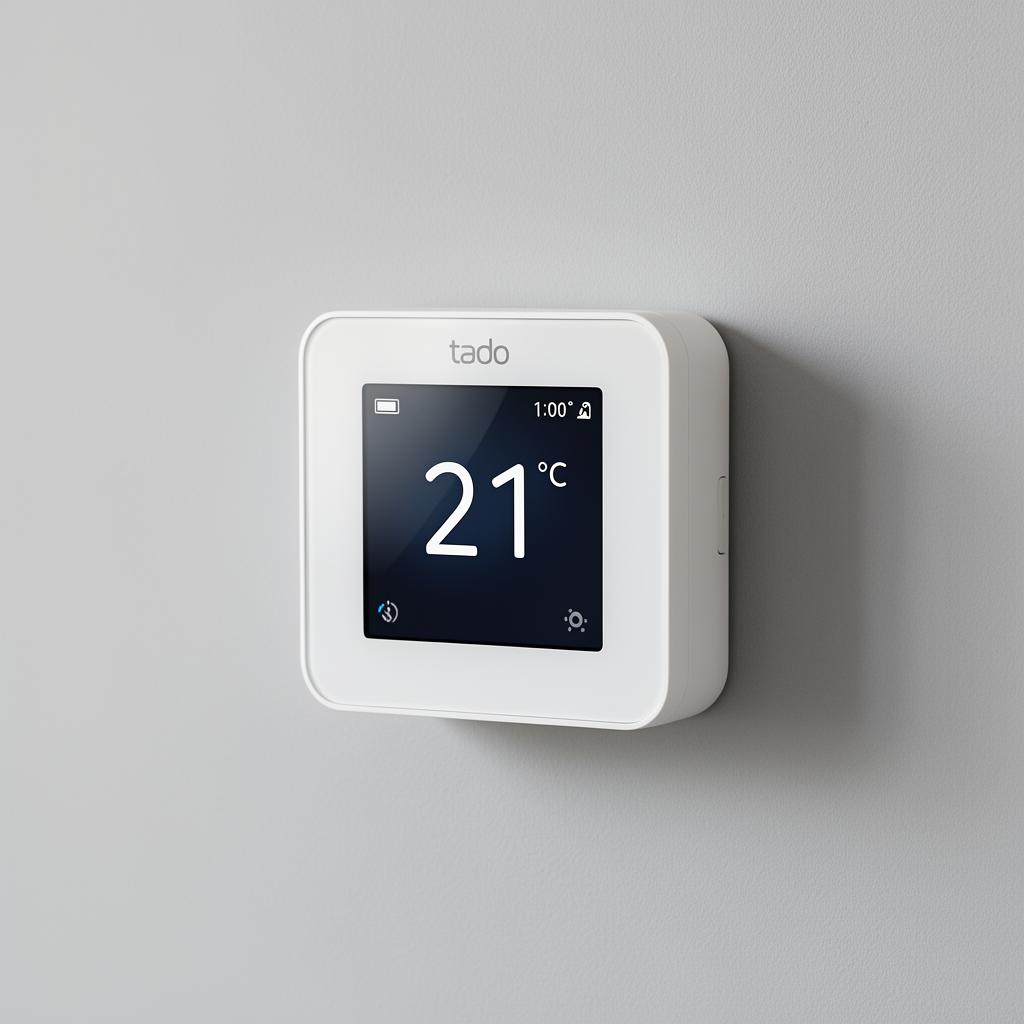
tado Smart Thermostat X
Schedule, zone and remote-control your heating — independently shown to cut heating bills by up to 28%.
Shop on Amazon