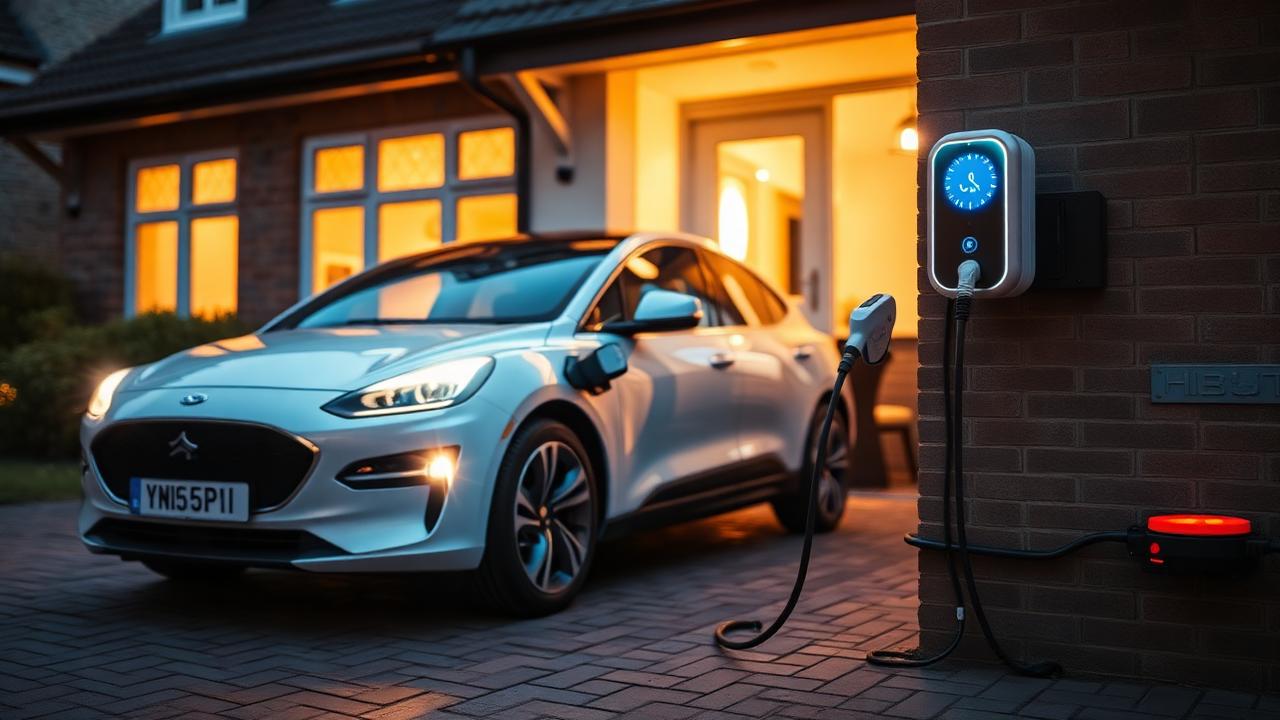
Executive summary
Charging an EV at home on the right tariff is dramatically cheaper than public rapid charging. This report quantifies the gap, compares tariff options for EV owners and shows how to minimise your cost per mile.
The single biggest lever is a dedicated EV or time-of-use tariff with cheap overnight rates.
Key findings
- Home overnight charging can cost a fraction of public rapid charging per mile.
- Dedicated EV tariffs offer the lowest overnight rates but require smart charging.
- Public charging prices vary widely by network and speed.
- Pairing an EV tariff with solar or a battery cuts costs further.
Home versus public charging
Home charging on a standard tariff is already cheaper than most public charging. On a dedicated overnight EV tariff the gap becomes substantial.
Public rapid charging is convenient but carries a significant premium — best reserved for longer journeys.
Download the full PDF report
Get the complete, high-resolution PDF companion — free, with an optional subscription to PowerGuardian Energy Intelligence.
Methodology
- Cost per mile is modelled from typical EV efficiency, current home and public charging rates and EV tariff off-peak prices.
Sources & references
- Ofgem — Energy price cap — UK regulator's quarterly price cap announcements
- DESNZ — UK energy statistics — Department for Energy Security & Net Zero
Figures are checked against primary sources before publication. See our methodology for details.
Editorial note
PowerGuardian publishes independent, UK-focused research, analysis and commentary on household energy costs. Confirmed data, PowerGuardian calculations and attributed third-party forecasts are labelled separately so you can see which is which.
This report is reviewed at each Ofgem price cap announcement and whenever a source dataset it relies on is revised. It was last reviewed on 8 July 2026.
Commercial arrangements never affect the rankings, scores or figures shown here.
Read our editorial policy and corrections policy.