What is a prepayment meter?
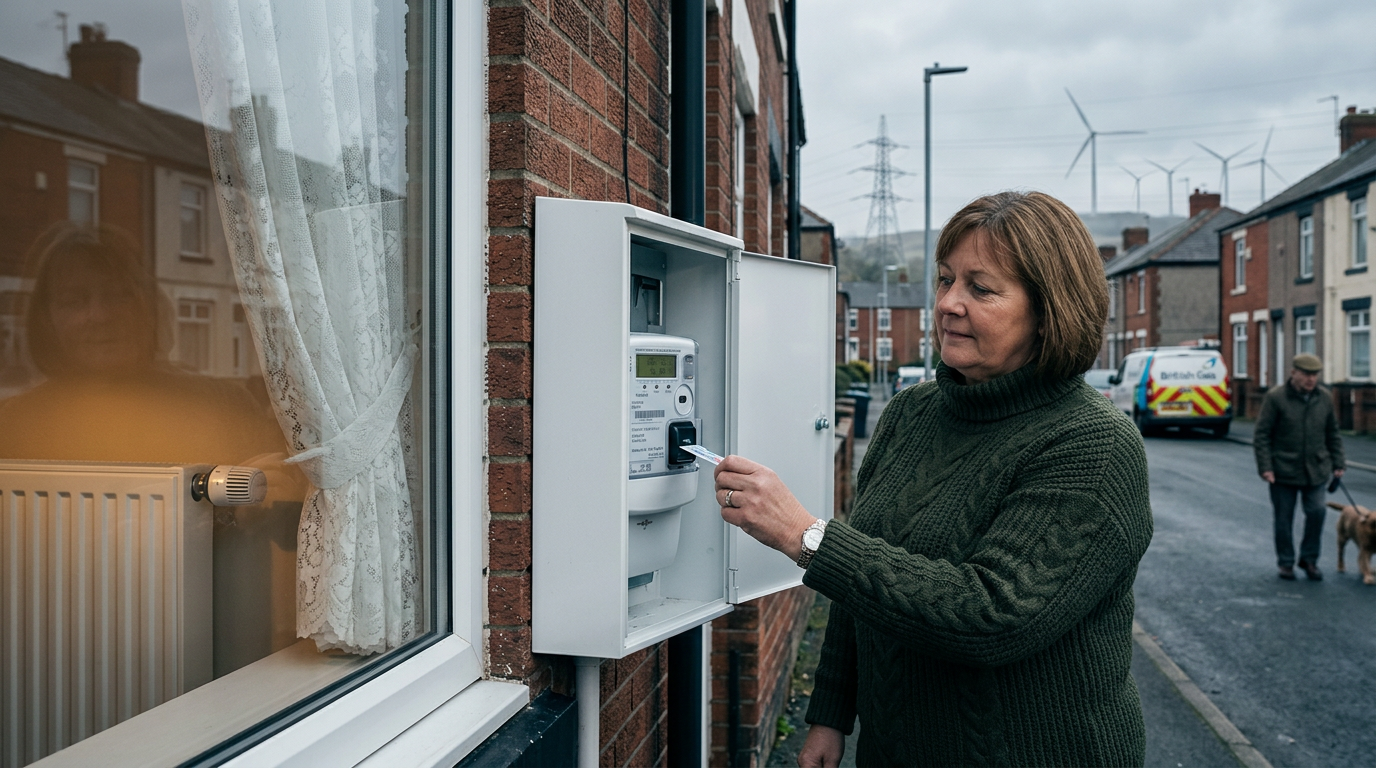
A prepayment, or 'pay-as-you-go', meter fundamentally changes how you pay for your household energy. Instead of receiving a bill after consuming electricity and gas, these meters require you to pay for your energy before you use it. This "pay-as-you-go" model operates much like a mobile phone top-up. Consumers typically add credit to their meter using a reusable key or card at local shops (convenience stores, post offices, some supermarkets) or, increasingly, through dedicated mobile apps or online portals.
In 2026, prepayment meters remain a significant fixture in the UK energy landscape. While precise figures fluctuate, estimates suggest that around 4 million UK households continue to utilise them, representing a substantial portion of the population. These meters were historically common for residents with historical energy debt or those in temporary accommodation, but their distribution has broadened over time. Modern smart meters can often operate in both prepayment and credit modes, adding a layer of flexibility that older mechanical meters lacked.
Current Supplier Watch
Are they more expensive in 2026? A Deep Dive into Costs
The question of whether prepayment meters are more expensive has long been a contentious issue, a source of significant concern for consumer advocates, and a focus of regulatory intervention. For much of their history, prepayment customers faced a "prepayment premium," meaning unit rates for electricity and gas were notably higher than those offered to direct debit customers. This disparity was largely due to the higher administrative costs associated with managing top-up systems, debt recovery (should emergency credit be used and not repaid), and the physical infrastructure required for topping up.
However, significant changes were introduced by the energy regulator Ofgem. Since the start of 2024, Ofgem has mandated that the unit rates for prepayment meters under the price cap are now levelled with direct debit tariffs. This was a landmark move aimed at eradicating the historical "poverty premium" and offering a fairer deal to prepayment customers.
So, on paper, per kWh, you pay the same under the price cap. Let's break down what this means:
- Ofgem Price Cap (Q1 2026 estimate): While the actual cap for Q1 2026 will be announced later, based on current wholesale prices and projections, we can illustrate with approximate historical figures. For example, in Q4 2023, the Ofgem price cap for a typical direct debit customer was around 27p/kWh for electricity and 7p/kWh for gas. For prepayment customers, those figures were roughly 28.5p/kWh and 7.4p/kWh respectively. Since January 2024, these unit rates have been harmonised. This means if the Q1 2026 price cap sets electricity at, say, 25p/kWh and gas at 6.5p/kWh, both direct debit and prepayment customers under the price cap will pay these identical rates for energy consumed.
- Fixed Daily Standing Charge: This charge, levied daily regardless of energy consumption, also applies equally to both payment methods under the price cap. In Q4 2023, this was around 53p/day for electricity and 29p/day for gas. These too are now harmonised for prepayment and direct debit customers under the cap.
TABLE: Illustrative Ofgem Price Cap Rates (Q1 2026 Estimate, Harmonised)
| Charge Type | Unit | Direct Debit (Price Cap) | Prepayment (Price Cap) |
|---|---|---|---|
| Electricity | |||
| Unit Rate | per kWh | ~25.0 p/kWh | ~25.0 p/kWh |
| Daily Standing Charge | per day | ~60.0 p/day | ~60.0 p/day |
| Gas | |||
| Unit Rate | per kWh | ~6.5 p/kWh | ~6.5 p/kWh |
| Daily Standing Charge | per day | ~30.0 p/day | ~30.0 p/day |
← Swipe to see more →
Note: These are illustrative figures for Q1 2026 as actual rates depend on wholesale market fluctuations and Ofgem's quarterly announcements. The key takeaway is the equalisation of rates.
The Hidden Costs: Why Prepayment Can Still Be More Expensive
Despite the equalisation of price cap unit rates, prepayment customers still face potential financial disadvantages:
- Loss of Online-Only Fixed Deals: The most competitive energy tariffs on the market are almost exclusively offered to direct debit customers. These are often "online-only" deals, fixed for a period (e.g., 12 or 24 months), and designed to attract new customers. They typically price their unit rates below the prevailing Ofgem price cap. We estimate these competitive fixed deals can be 5–10% cheaper than the price cap equivalent over a year. For a typical household consuming 2,900 kWh electricity and 12,000 kWh gas annually, this 5-10% saving could translate to £90–£170 per year. Prepayment meters simply do not qualify for these tariffs.
Recommended Backup Power Station
Portable backup power for home working, emergency charging and energy resilience during outages.
View on Amazon UK- Dual Fuel Discounts: Many suppliers offer small discounts (often £10-£20 annually) for customers who take both their electricity and gas from them and pay via direct debit. This incentive is generally not available to prepayment customers.
- Cashback and Switching Incentives: To entice new business, suppliers occasionally offer cashback (e.g., £50-£75) or other switching incentives. These are almost exclusively linked to competitive direct debit tariffs and are not extended to prepayment arrangements.
- Transaction Fees/Surcharges: While less common than in previous years, some small independent shops or third-party top-up services might levy a small transaction fee (e.g., 50p-£1) for topping up. While most major Post Office branches and PayPoint/Payzone locations are mandated not to charge a fee, using less conventional outlets or making frequent, small top-ups can still add up. For instance, topping up £10 twice a week at a shop charging 50p per transaction results in £52 annually in fees.
- Risk of Self-Disconnection and Emergency Credit: Running out of credit, especially during evenings, weekends, or bank holidays, can lead to self-disconnection. This not only means a temporary loss of supply but also the potential for reliance on emergency credit (typically £5-£10), which then needs to be repaid from the next top-up. While a lifeline, consistently relying on emergency credit can make budgeting harder and means a portion of your top-up immediately goes to debt repayment before you can use the energy.
Considering all these factors, the typical extra cost versus a competitive fixed direct debit deal for a medium-to-high consumption household could conservatively be estimated at £90–£170 per year. For larger households or those heavily reliant on electricity, this figure could be even higher. This figure does not include potential transaction fees or the non-monetary stress of managing credit.
When Prepayment Actually Makes Sense
Despite the potential for higher overall annual costs, prepayment meters are not without their merits, and for certain demographics or situations, they can be the most practical or even beneficial option:
- You've struggled with arrears and want hard budget control: This is perhaps the most common and compelling reason. For individuals who have accumulated significant energy debt, suppliers may install a prepayment meter as a condition for managing and repaying arrears. Beyond this, for anyone who finds managing monthly or quarterly credit bills challenging, the pay-as-you-go model offers rigid budget control. You can only spend what you have, making it impossible to overspend on energy. This can be a vital tool for financial discipline and avoiding future debt spirals. The visual feedback of seeing credit diminish can also encourage more mindful energy consumption.
- You're in temporary or shared accommodation: For tenants in short-term rentals, student accommodation, or shared housing (e.g., HMOs), a prepayment meter can simplify energy billing. It means no complicated calculations for splitting bills, no disputes over historical debt, and straightforward "move-in, move-out" energy management. Landlords also appreciate not having to chase tenants for unpaid energy bills.
- You can't pass a direct debit credit check: Energy suppliers, particularly those offering competitive fixed tariffs, often conduct credit checks before allowing customers to sign up for monthly direct debit contracts. This is because they are effectively extending credit to you, allowing you to consume energy before you pay for it fully. If your credit score is poor due to past debt, missed payments, or a limited credit history, you may fail these checks. In such cases, a prepayment meter becomes one of the few viable options for securing an energy supply. Suppliers are typically obligated to provide a supply, and prepayment often becomes the default when credit isn't approved.
How to Switch to a Credit Meter (Free Since 2024)
For the majority of households, especially those with stable incomes and good credit, transitioning from a prepayment meter to a credit meter (which enables direct debit payments) is likely to be financially advantageous. The good news is that the process has become significantly easier and, crucially, free since 2024, thanks to new Ofgem rules.
Here's a step-by-step guide:
- Contact Your Supplier and Request a Credit Meter Swap:
- Understand the Eligibility Criteria:
- Smart Meter Advantage: Remote Switching:
- Confirm the Switch and Compare Deals:
Top Tips If You Stay on Prepayment
While switching to a credit meter offers long-term financial benefits for many, for some, staying on prepayment remains the most practical choice. If this applies to you, here are crucial strategies to mitigate costs and ensure a stable supply:
- Always Keep £5–£10 Emergency Credit to Avoid Self-Disconnection: This is paramount. Most prepayment meters offer an emergency credit facility (typically £5-£10, though some smart meters offer more). Activate this before your regular credit runs out to prevent your supply from cutting off. Running out of credit, especially during unsocial hours, can leave you without power or heat, which is particularly dangerous for vulnerable individuals. Remember that emergency credit needs to be repaid from your next top-up.
- Top Up Larger Amounts Less Often to Reduce Shop Surcharges (if applicable): As mentioned, while major outlets are free, some independent shops might charge a small fee per transaction. To minimise the impact of these potential surcharges, consolidate your top-ups. Instead of topping up £10 three times a week, try to top up £30 once a week. This reduces the number of transactions and thus any associated fees.
- Check for the Warm Home Discount (£150): The Warm Home Discount scheme is a government initiative that provides a one-off payment of £150 directly off your electricity bill (or occasionally gas) during winter.
- Automatic for many prepayment customers: For a significant portion of prepayment customers, particularly those on specific benefits (e.g., Pension Credit Guarantee Credit), this discount is applied automatically between October and March. Your supplier will inform you if you are eligible and if it's being applied automatically.
- Claiming through your supplier: If you believe you are eligible but don't receive notification, contact your energy supplier directly between October and February. Eligibility criteria vary slightly by supplier for the "broader group" (those on certain benefits beyond Pension Credit). Don't miss out on this vital support.
- Utilise Supplier Support Funds: Many energy suppliers offer their own hardship funds or grants for customers struggling to pay their bills, regardless of meter type. If you are facing financial difficulties, contact your supplier to inquire about these schemes. They may be able to offer debt advice, payment plans, or direct financial assistance.
- Monitor Your Usage: Modern smart prepayment meters often come with an In-Home Display (IHD). Use this device to actively monitor your real-time energy consumption and the remaining credit. This visual feedback can help you understand which appliances use the most energy and adjust your habits accordingly, helping your credit last longer.
- Know Your 'Friendly Hours': Prepayment meters generally have 'friendly non-disconnection hours', typically from 4 pm to 10 am on weekdays, and all weekend/bank holidays. If your credit runs out during these hours, your supply should not disconnect until the next working day. This gives you time to top up. However, rely on emergency credit first, as friendly hours are a backup, not a primary strategy.
FAQ
Q1: How quickly can I switch from a prepayment to a credit meter? A1: If you have a smart meter, it can often be switched remotely within a few days once your supplier processes the request. For traditional meters requiring an engineer visit, it typically takes 2-4 weeks to arrange and complete the installation.
Q2: What if I have debt on my prepayment meter when I want to switch? A2: If your debt is under £500 per fuel, your supplier should still allow you to switch to a credit meter. They will move the debt to your new account, and you'll pay it back via a manageable direct debit repayment plan alongside your regular energy payments. If the debt is over £500, they might require you to pay it down further before allowing the switch.
Q3: Can my landlord prevent me from switching to a credit meter? A3: If you are the named account holder and directly pay for your energy, your landlord generally cannot prevent you from switching the meter type. However, it's always good practice to inform them, especially if an engineer visit is required. If the landlord directly pays the bills and recharges you, then the choice is theirs.
Q4: Will a credit check be done if I apply to switch to a credit meter? A4: Yes, your energy supplier will almost certainly conduct a credit check. They need to assess your ability to manage monthly direct debit payments, as they are essentially providing you with credit. A poor credit history might lead to refusal, though they should always explore other options, such as lower usage limits or alternative tariffs.
Q5: I've always been on a prepayment meter, how do I find my energy supplier? A5: You can use the 'Who is my energy supplier?' tool on the Energy Networks Association (ENA) website. For electricity, enter your postcode into their lookup tool. For gas, there’s a similar tool on the National Grid website. Alternatively, check previous top-up receipts or any physical mail you’ve received about your energy supply.
Q6: What happens if my smart prepayment meter loses connection and I can't top up remotely? A6: Most smart meters also come with a traditional emergency top-up card or key. If your remote top-up fails due to connectivity issues, you should still be able to top up at a PayPoint or Payzone outlet using this physical method. Your supplier should also have a phone line for emergency top-ups or advice. Always keep record of your top-up card/key details.
Conclusion
The landscape for prepayment meters in the UK has undergone significant transformation, particularly with Ofgem's decisive action to level the playing field on unit rates under the price cap. This policy shift effectively eliminates the historical "prepayment premium" on a like-for-like cap basis.
However, the journey towards true parity is not yet complete. While the price cap provides a necessary safety net, prepayment customers are still missing out on the most competitive fixed deals, dual fuel discounts, and switching incentives that are almost exclusively reserved for direct debit customers. This financial gap, estimated at £90–£170 annually for many households, represents a continued disadvantage.
For those who can afford it and meet the eligibility criteria, switching to a credit meter and paying by direct debit remains the most financially prudent choice in 2026. The process is now free, less arduous, and opens up the full spectrum of competitive energy tariffs. Power Guardian UK strongly encourages consumers to actively engage with their suppliers and explore this option.
Yet, for some, the inherent budgeting control of a prepayment meter, its utility in managing debt, or its suitability for temporary living arrangements, makes it the preferable, or only, option. For these households, proactive management – utilising emergency credit wisely, consolidating top-ups where possible, and claiming any eligible support such as the Warm Home Discount – becomes vital for ensuring continuous, affordable energy supply.
Ultimately, understanding the nuances of prepayment meters in 2026 is about making informed choices. While the regulatory environment has improved, consumer vigilance and action remain key to navigating the UK energy market effectively.
What exactly is a prepayment meter and how does it work?
A prepayment meter, also known as a 'pay-as-you-go' meter, requires you to pay for your energy before you use it, similar to topping up a mobile phone. You add credit using a key or card at local shops, or digitally via apps or online portals, to consume electricity and gas.
Are prepayment meter unit rates and standing charges still more expensive than direct debit rates in 2026?
No, since January 2024, Ofgem has mandated that unit rates and daily standing charges for prepayment meters under the price cap are levelled with direct debit tariffs. This means on-paper, per kWh and per day, you pay the same for energy consumed under the price cap.
Why might prepayment meters still cost more overall, even with harmonised price cap rates?
Prepayment customers cannot access the most competitive online-only fixed deals, which are typically 5-10% cheaper than the price cap. They also miss out on dual fuel discounts and switching incentives, which are almost exclusively offered to direct debit customers.
How much could I potentially save by switching from a prepayment meter to a competitive direct debit tariff?
By accessing online-only fixed deals that are 5-10% cheaper than the price cap, a typical household could save £90–£170 annually. Prepayment meters do not qualify for these more affordable tariffs.
What was the "prepayment premium" and why was it abolished?
The "prepayment premium" was a historical disparity where prepayment meter customers faced higher unit rates than direct debit customers due to administrative costs. Ofgem abolished this premium in January 2024 to create a fairer deal for prepayment users and eradicate the "poverty premium."
Recommended kit

Philips Hue White LED Smart Bulbs
Energy-efficient LEDs you can schedule and dim — a quick win for cutting lighting electricity use.
Shop on Amazon