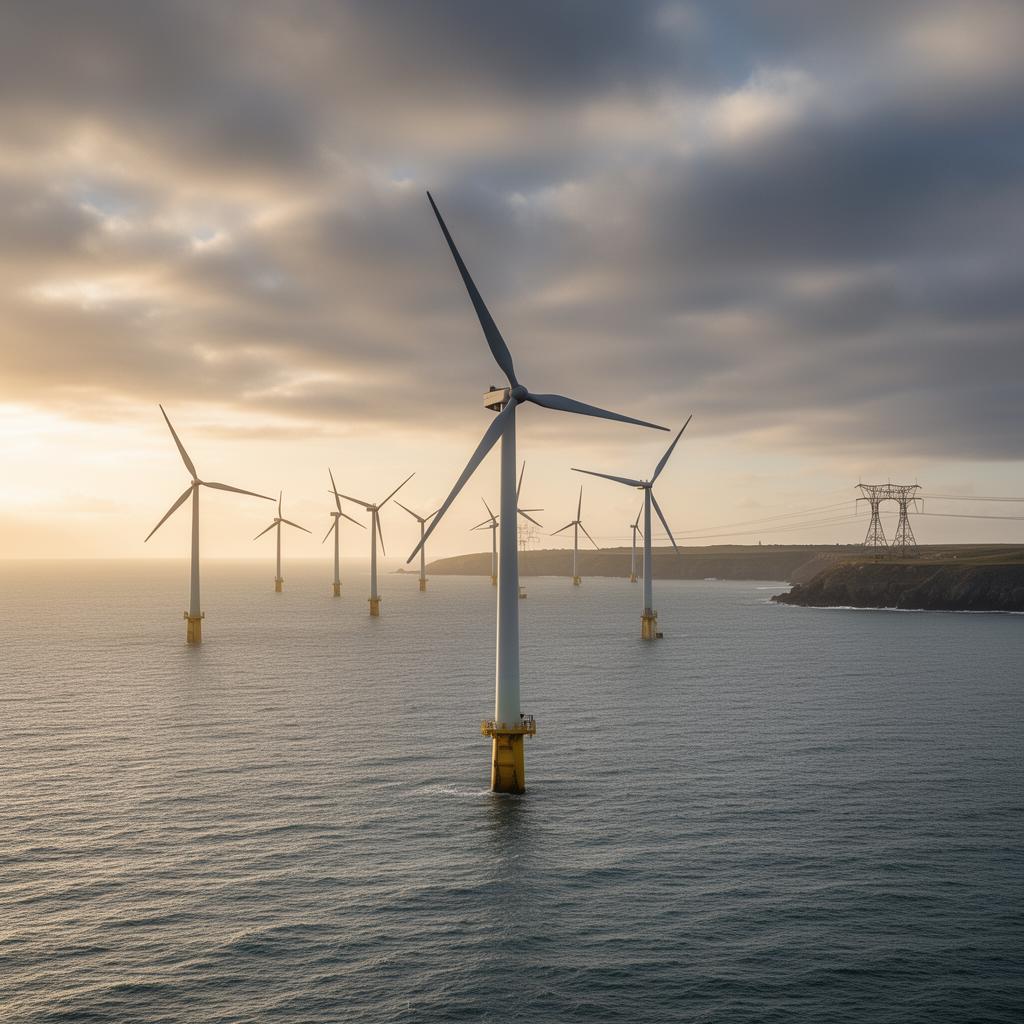
For years, British households have been told that renewable energy would eventually make electricity cheaper. Wind turbines on hillsides, solar farms across farmland and vast offshore wind projects in the North Sea were all sold partly on one promise: lower bills.
Yet millions of households are still staring at energy statements that look more like ransom notes than utility bills. Humans built one of the world's largest offshore wind fleets and somehow still managed to create a system where pensioners fear turning the heating on in January. Remarkable species.
The real question is not whether green energy can reduce UK energy bills. It is when ordinary households will actually notice the difference.
The answer is more complicated than political slogans suggest.
The short answer: probably gradually between 2027 and 2035
Energy analysts broadly agree that renewable electricity generation should begin exerting stronger downward pressure on wholesale electricity prices during the late 2020s and early 2030s.
But cheaper generation alone does not automatically translate into dramatically lower household bills.
The UK energy system is tangled up with:
- Global gas prices
- Network upgrade costs
- Standing charges
- Supplier margins
- Policy costs
- Infrastructure spending
- Grid balancing expenses
- Electricity market rules
Green electricity can become cheaper while household bills still remain frustratingly high.
Current Supplier Watch
Why renewable energy is supposed to be cheaper
Wind and solar have no fuel cost
Gas-fired power stations constantly need fuel purchases. When global gas prices surge, electricity prices surge too.
Wind turbines and solar farms work differently. Once built:
- Wind is free
- Sunlight is free
- Operating costs are relatively low
- Price volatility is lower
This is why renewable projects increasingly produce some of the cheapest electricity in Europe.
According to the UK Government's Contracts for Difference (CfD) auction system, newer offshore wind projects have secured strike prices far below the levels seen during the gas crisis of 2022.
The gas problem still controls UK electricity prices
The UK pricing system is the real issue
One of the least understood parts of the UK electricity market is this: the price of electricity is often set by the most expensive generator needed at that moment.
In practice, that usually means gas.
Even if renewable energy supplies large amounts of electricity, gas plants often determine the final wholesale market price.
This became painfully obvious during the energy crisis after Russia's invasion of Ukraine. Gas prices exploded. Electricity prices followed. Bills surged. Even though Britain generated significant electricity from wind, households still paid prices heavily influenced by gas.
Why bills have not fallen much yet
Green infrastructure costs are still being added
Britain is still in the expensive build-out phase of the green transition. That means consumers are indirectly paying for:
- Offshore wind expansion
- National Grid upgrades
- Battery storage projects
- Interconnectors
- EV charging infrastructure
- Smart meter rollouts
Many of these investments should reduce long-term costs, but right now they add pressure to bills.
This is one reason why households often feel misled when politicians claim renewable energy is already making everything cheaper. Technically, generation costs may be falling. Practically, total system costs remain high.
Standing charges are hiding some of the savings
Bills are no longer just about usage
Even households that reduce energy consumption are often shocked by how little their total bill falls. That is because standing charges have climbed sharply in many areas of the UK.
Standing charges help fund:
- Grid maintenance
- Supplier failures
- Network balancing
- Infrastructure upgrades
- Policy costs
In some regions, electricity standing charges exceed 60p per day. That means many households are paying hundreds of pounds annually before switching on a single appliance.
Offshore wind could change the equation

Britain has a major advantage
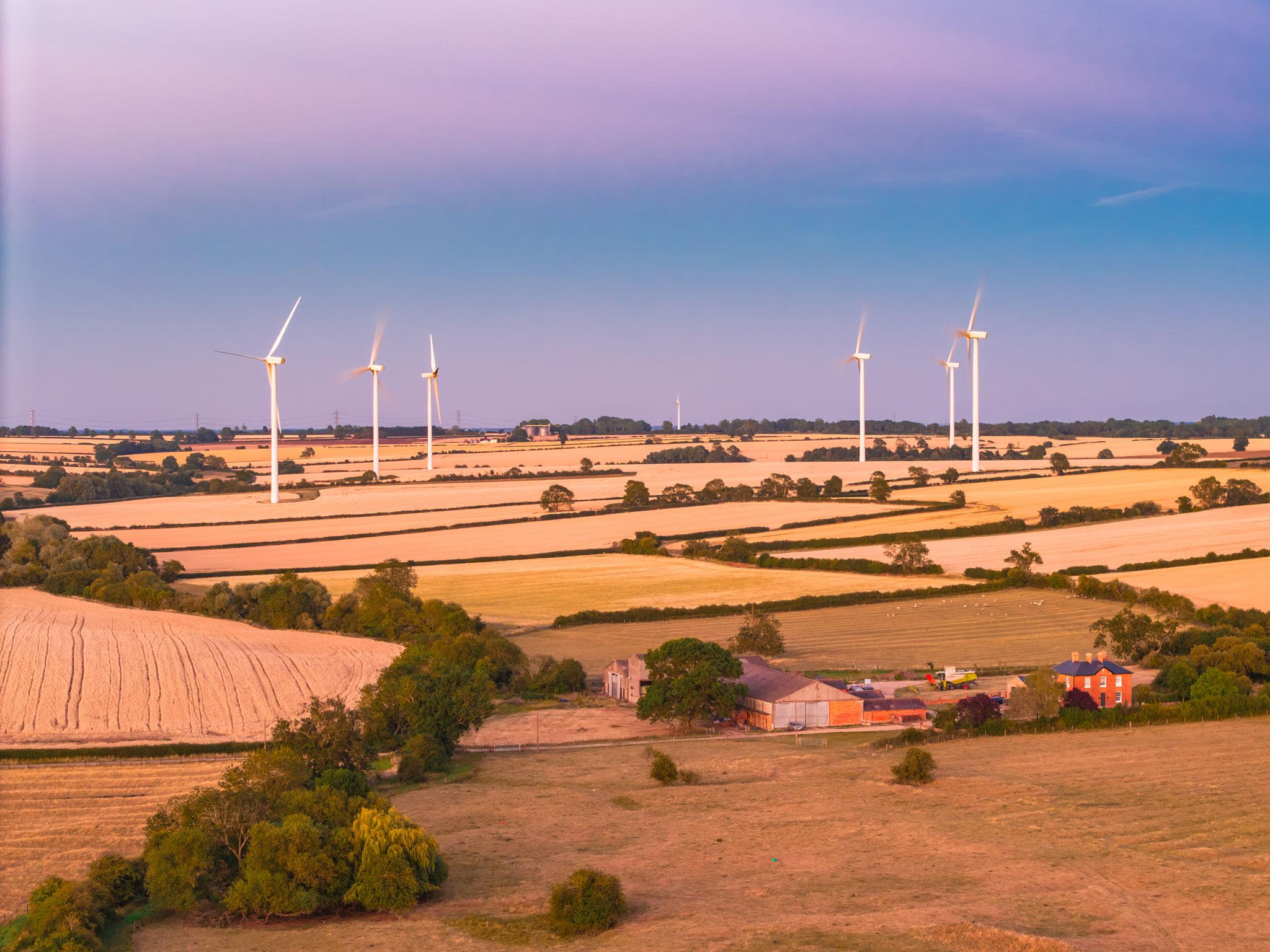
The UK possesses one of the best offshore wind resources in Europe. Large projects across the North Sea are expanding rapidly, including developments linked to SSE plc, Ørsted and RWE.
If deployment continues at scale, offshore wind could substantially reduce reliance on imported gas over time. The long-term theory is straightforward: more domestic renewable generation means less exposure to volatile global fossil fuel markets. That could eventually stabilise prices far more effectively than temporary government subsidies.
The National Grid problem
Cheap electricity is useless if the grid cannot deliver it
One major obstacle is Britain's ageing electricity grid. Renewable generation is often located far from where electricity demand is highest. For example:
- Offshore wind generation occurs in coastal areas
- Electricity demand is concentrated around cities and industry
The grid requires enormous upgrades to transport power efficiently. Without those upgrades, renewable electricity gets wasted, constraint payments increase, and bills rise further.
Constraint payments occur when wind farms are paid to switch off because the grid cannot handle the electricity being generated. Consumers ultimately fund many of those costs.
In some cases, Britain has paid wind farms not to produce electricity while simultaneously importing power elsewhere. A beautifully British administrative achievement. Like building extra lanes on a motorway and then closing them with cones for three years.
Could energy bills fall significantly by 2030?
Possibly, but not equally across all households
Analysts increasingly believe wholesale electricity prices could become less volatile by 2030 if renewable deployment continues successfully. However, there are several catches.
Homes with heat pumps, solar panels, batteries, EVs and smart tariffs may benefit more from cheaper renewable electricity. Households without access to those technologies may see smaller reductions.
This risks creating a two-tier energy economy where wealthier households capture most of the savings first.
Why some experts think bills may never return to "cheap"
The energy system is becoming more complex
The UK is electrifying more of society: heating, transport, industry, AI infrastructure and data centres. Electricity demand is expected to rise significantly over the next two decades.
At the same time:
- Grid expansion costs are huge
- Cybersecurity requirements are increasing
- Storage systems must expand
- Backup generation remains necessary
Renewables may reduce fuel costs, but the wider energy system itself is becoming more expensive and technologically complicated.
What could accelerate lower bills?
Electricity market reform
The UK Government has explored reforms to separate renewable electricity pricing from gas pricing. If successful, this could allow consumers to benefit more directly from cheap renewable generation.
Potential reforms include:
- Regional electricity pricing
- Renewable-only tariffs
- Decoupling gas from electricity pricing
- Expanded battery storage
These changes could have more impact on bills than simply building additional wind farms alone.
What real households are seeing today
Some savings already exist
Households with solar panels and battery storage are already reducing costs dramatically in some cases. Examples include:
- Charging home batteries overnight on cheap tariffs
- Selling excess solar electricity back to the grid
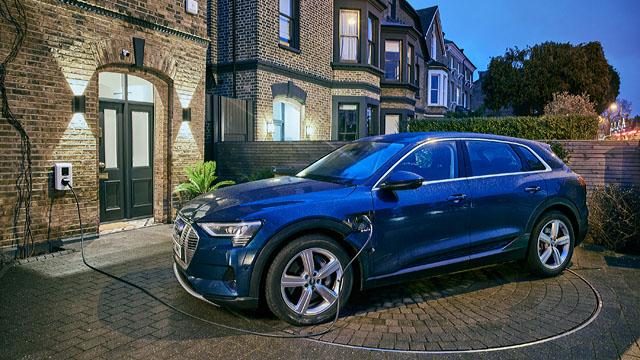
- Charging EVs during low-demand periods
Some agile tariffs now offer overnight electricity rates far below standard daytime prices. However, these benefits are uneven. Renters and lower-income households often have limited access to such technology.
The political reality
Governments need the public to believe the transition is worth it
Public support for green investment partly depends on whether people feel financially better off. If bills remain painfully high throughout the transition, political backlash could grow, net zero policies may face resistance, and investment uncertainty could increase.
That creates pressure on governments to demonstrate visible household savings during the next decade.
So, when will green energy actually lower UK bills?
The most realistic answer
Green energy is already reducing the cost of generating electricity during many periods. The problem is that generation costs are only one part of the final bill.
For most households:
- Noticeable stabilisation may emerge from around 2027 onwards
- More meaningful structural reductions may take until the early 2030s
- Truly "cheap" electricity is far from guaranteed
The biggest long-term benefit may not be ultra-low bills. It may simply be avoiding future energy crises caused by global fossil fuel shocks.
After the chaos of recent years, many households would probably settle for bills that stop behaving like cryptocurrency charts designed by exhausted economists.
Sources
- Ofgem
- National Grid ESO
- UK Department for Energy Security and Net Zero
- Climate Change Committee
- International Energy Agency
Recommended kit
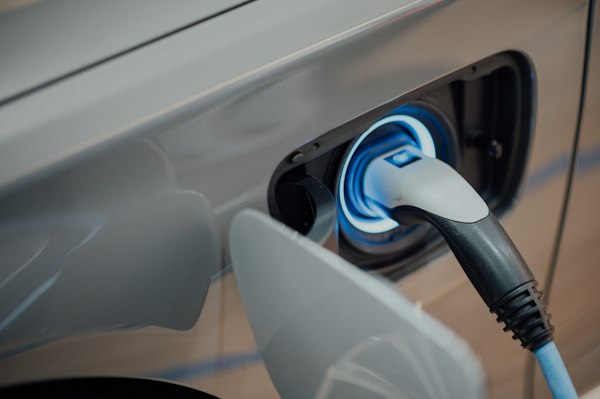
Type 2 EV Charging Cable 7m 32A
Reliable 7m Mode 3 Type 2 to Type 2 cable for public chargepoints — supports up to 7.4kW single-phase charging.
Shop on Amazon